

The "sugar-free" label on a protein bar doesn't mean what you think - this guide shows how to check the ingredients in 30 seconds and choose a sugar-free protein bar that actually makes sense in the 2026 diet.
- A good sugar-free protein bar has a minimum of 20 g of protein and a maximum of 5 g of sugars per 100 g of the product.
- The "0% sugar" label does not protect against maltitol or agave syrup - read the list of ingredients from the top.
- Erythritol in small doses is safe, but over 20 g a day often causes flatulence and diarrhea.
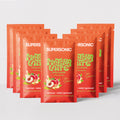
- SUPERSONIC Protein Cream Peanut has no added sugar and provides a high dose of protein - buy it as a replacement for the bar.
- The price per gram of protein, not the price per item, shows whether a sugar-free protein bar is profitable.
Why is it important
The market for sugar-free protein bars in Poland is growing every year, and 2026 brings even more variants with the "0% sugar" label on the front packaging. Problem: the front of the packaging and the table of nutritional values do not match so often that it is worth checking the composition, not the marketing slogan.
The manufacturer may write "sugar-free" and the composition still contains agave syrup, honey or maltitol in a dose that has a laxative effect. For someone who counts macros or watches their weight, the difference between a good and a bad bar is not aesthetics - it's 8-12 g of sugar a day that shouldn't be there.
If you're looking for a ready-made alternative without this risk, Protein Nut Cream from SUPERSONIC has a clean composition with no added sugar and high protein content - without reading the table in the supermarket.
What do you need
- Product label - a photo of the table of nutritional values, not only the front of the package
- Macro calculator or application for calculating the diet - 2 minutes to check before purchasing
- Knowing the threshold of 20 g of protein and 5 g of sugar per 100 g
- List of "red flags" of ingredients: glucose-fructose syrup, honey, large amounts of maltitol
- An alternative to start, e.g. SUPERSONIC Protein Nut Cream or a protein shake when no bar on the store shelf passes the test
How to choose a sugar-free protein bar in 7 steps
1. Check the protein per serving, not per 100 g
Turn the bar over, find the nutritional value table and count the protein in grams per real portion - the bar usually weighs 35-60 g. Manufacturers advertise 30 g of protein per 100 g, but the bar itself weighs 45 g, so you realistically get 13-14 g. Look for a minimum of 15 g of protein per serving for a 45-50 bar g, i.e. about 20 g per 100 g. Error: comparing bars by the "high protein" label without converting to portion weight.
2. Read the ingredients list from top to bottom
The ingredients are arranged from largest to smallest amount - if sugar, honey or high fructose corn syrup is in the top three, it is not a sugar-free protein bar, regardless of the label on the front. Look for the words erythritol, stevia, xylitol, allulose - this is a signal of a low-sugar recipe. Error: trusting the claim "no added sugar" without checking honey or fruit juice, which count as simple sugars.
3. Count sugars and sugar alcohols together
Sum up "including sugars" from the nutritional table - more than 5 g per 100 g is no longer a low-sugar bar. Some brands hide sugar in the chocolate icing or caramel filling, which adds 3-4 g per serving. If the total exceeds 5g per 100g, put the bar back on the shelf.
| Indicator | Sugar-free bar threshold |
|---|---|
| Protein per 100 g | min. 20 g |
| Sugars per 100 g | max. 5 g |
| Erythritol or maltitol per day | max. 20 g |
| Price per gram of protein | below PLN 0.50-0.60 |
4. Check the dose of sugar alcohols
If the composition contains maltitol or erythritol, check its position on the list - the higher it is, the higher the dose. More than 20 g of erythritol a day, often 2 bars, causes flatulence, gas and diarrhea in some people. Stick to one sugar alcohol bar a day, not two or three. Error: eating 2-3 sugar-free protein bars a day and being surprised that your stomach hurts.
5. Compare the price per gram of protein
Divide the price of the bar by the number of grams of protein - this is the real cost, not the price per unit. A bar for PLN 9 with 12 g of protein is more expensive than a bar for PLN 7 with 20 g of protein. Look for a result below PLN 0.50-0.60 per gram of protein as a reasonable threshold in 2026. Error: choosing a bar at the lowest price per unit without conversion to protein.
6. Verify the coating and filling separately
Chocolate topping, caramel filling and topping are often where sugar returns, despite the "sugar-free" nature of the bar's core. Check the description of the topping separately if the manufacturer separates it in the table. Error: ignoring icing because "it's just decoration."
7. Check the protein source
Whey protein isolate and concentrate digest faster and have a cleaner composition than soy-collagen blends in some budget bars. If you want to supplement your diet with a solid source of protein beyond bars, Whey 360 Grass Fed protein supplement provides a full amino acid profile without added sugar. Error: evaluation of the bar only based on the protein weight, without checking its source.


The most common problems
- The bar is hard as a rock after putting it in the fridge. This is normal for bars with sugar alcohols - keep them at room temperature or warm them up in your hands for 10 seconds before eating.
- The bar causes flatulence. and gases. Check the dose of erythritol or maltitol, limit it to one bar a day and drink more water.
- The taste is "artificial" or chemical. It is usually stevia or sucralose in high concentration - look for bars with erythritol as the main sweetener, it has a cleaner taste.
- Sugar-free protein bars cost more more than a regular one, and it has less protein. Go back to step 5 and calculate the price per gram of protein - it often turns out that the cheaper bar with higher protein wins.
- The label says "no sugar", but it contains honey or agave syrup. This is an unacceptable marketing trick - honey is sugar, regardless of the name. Put the product aside.
Tools and resources
- Macro counting application on your phone - 2 minutes of checking before purchasing
- Photo of the nutritional table from the product page in the online store
- SUPERSONIC Protein Nut Cream as a ready-made alternative when no bar on the shelf passes the step test 1-6
- If you mainly eat in the office, the protein shake for office workers guide shows you how to organize high-protein snacks throughout the day
What's next
Once you have your criteria, test one bar, one serving of protein cream and one shake over the course of a week. Compare what actually keeps you full between meals without a spike in sugar - it's a better test than reading another label in the supermarket.
FAQ
What does a sugar-free protein bar mean?
A sugar-free protein bar is a product without added sugar (sucrose, glucose, glucose-fructose syrup) and with sum sugars below 5 g per 100 g. The sweetness comes from erythritol, stevia or xylitol, not from honey or agave syrup.
Is erythritol safe in protein bars?
Erythritol is safe in doses up to about 20 g per day, above this threshold it causes flatulence and diarrhea in some people. One protein bar usually contains 8-15 g of erythritol, so two bars a day is already approaching the limit.
How much protein should a good sugar-free protein bar have?
A good sugar-free protein bar has a minimum of 20g of protein per 100g of product, or about 9-12g for a typical 45-50g serving. Below this threshold, the bar acts more as a snack than a real support for a high-protein diet.
Is a sugar-free protein bar better than a protein shake?
It depends on the situation - the bar wins due to its mobility and lack of mixing, and a protein shake usually gives a higher dose of protein per serving. Both make sense in the 2026 diet if they meet the threshold of 20 g of protein and 5 g of sugar per 100 g.
Is maltitol in a protein bar worse than erythritol?
Maltitol raises blood sugar levels more than erythritol and is more likely to cause a laxative effect in higher doses. If you have a choice, erythritol or xylitol in a moderate amount is a safer option.
How much does a reasonable sugar-free protein bar cost in 2026?
The price of the bar itself is a less important indicator than the price per gram of protein, which should be below PLN 0.50-0.60 per gram in 2026. The bar is several zlotys more expensive, but with a higher protein, it is usually cheaper per gram.
Can you replace the protein bar with a nut cream?
Yes, a high-protein nut cream without added sugar, like SUPERSONIC Protein Nut Cream, gives a similar dose of protein and sweetness without having to analyze the list of ingredients of the bar. This is a convenient alternative when no bar on the shelf passes the test in this guide.
One additional thing
“If sugar is in the top three ingredients, it is not a sugar-free bar - it is a bar with marketing.”
The most common mistake when choosing a sugar-free protein bar is to stop at the label on the front of the packaging. In 2026, regulations still allow writing "0% sugar" while adding honey or agave syrup to the composition - technically it is not "sugar" in the marketing sense, but the body breaks it down identically. One minute reading the nutritional table saves more calories than an hour at the gym.
Worth checking out


