

You increase protein in a vegetarian diet without supplements by combining legumes, eggs, dairy products, nuts and seeds in each meal to provide 1.2-1.6 g of protein per kilogram of body weight per day. The key problem is not the lack of sources, but their dispersion throughout the day - the body will absorb a maximum of 25-40 g of protein at a time, so one large plate of beans for dinner will not replace it.
- The protein in a vegetarian diet without supplements increases when you combine legumes, dairy products, eggs and nuts in each meal.
- The daily goal is 1.2-1.6 g of protein per kilogram of body weight, spread over 3-4 meals.
- Lentils, chickpeas, tofu and seitan provide 18-25 g of protein per 100 g - without powder and capsules.
- Breakfast without a portion of protein is the most common mistake that spoils the entire day. balance.
- High-protein products for vegetarians help you plan your menu without guessing portions.
Why does it matter
Vegetarians are less likely to have a real protein deficiency than is commonly believed, but they are much more likely to break it down incorrectly during the day. Breakfast without a portion of dairy products or eggs, dinner without legumes - the sum of the day is not complete, although the calories are within the norm. In 2026, dietitians increasingly emphasize that the problem is not whether plant protein works, but whether you eat it enough and at the right time.
The list of high-protein products for vegetarians helps you sort it out without guessing about portions and weight.
How to increase protein in a vegetarian diet without supplements?
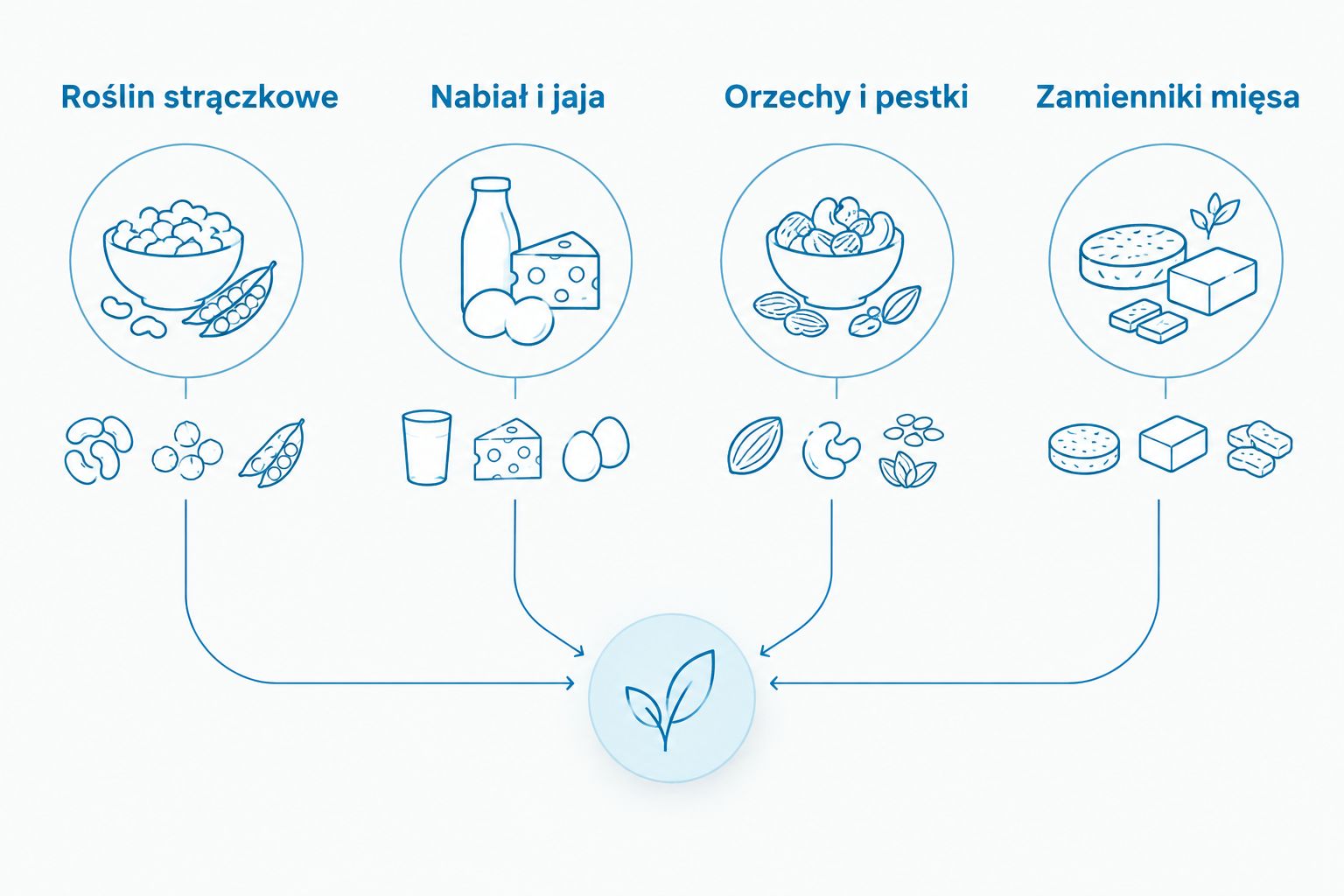
The answer lies in the combination of three groups of products on the plate: legumes, dairy products or eggs, and nuts or seeds. The table below shows how much protein actually comes from popular plant and dairy products - the numbers are average data from commonly used nutritional tables, also valid in 2026.
| Product | Protein per 100 g | Typical portion |
|---|---|---|
| Lentils (dry) | approx. 25 g | 70 g dry = approx. 17 g after cooking |
| Chickpeas (dry) | approx. 19 g | 70 g dry = approx. 13 g after cooking |
| Tofu | approx. 8 g | 180 g = approx. 14 g |
| Tempeh | approx. 19 g | 100 g = 19 g |
| Seitan | approx. 25 g | 100 g = 25 g |
| Jajka | ok. 13 g | 2 eggs (100 g) = 13 g |
| Semi-fat cottage cheese | approx. 18 g | 150 g = 27 g |
| Greek yogurt | approx. 9 g | 200 g = 18 g |
| Almonds | approx. 21 g | 30 g = approx. 6 g |
| Pumpkin seeds | approx. 19 g | 30 g = approx. 6 g |
The table shows a simple conclusion: one product will never meet the daily norm. Only the sum of 3-4 portions from different groups during the day gives a real 1.2-1.6 g of protein per kilogram of body weight without reaching for powdered nutrients.
Legumins: 18-25 g of protein per 100 g of dry matter
Lentils, chickpeas, beans and peas are the densest source of protein in a vegetarian diet, but their amino acid profile is incomplete - they lack methionine. Combining it with a grain product (rice, groats, whole grain bread) in the same meal completes the profile to a level comparable to animal protein. A ready-made portion of 150-200 g of cooked legumes is 12-20 g of protein without any supplement.
Dairy and eggs: 9-20 g of protein per 100 g of product
Cottage cheese, Greek yogurt, kefir and eggs have a full amino acid profile and high digestibility, close to 90-99%. This is the easiest way to meet your daily quota without counting grams - two eggs for breakfast and a portion of cottage cheese for dinner give a total of about 40 g of protein. Disadvantage: with large portions of dairy products, it is easy to exceed the saturated fat limit, so it is worth rotating with plant products.
Nuts, seeds and nut butters: 19-26 g of protein per 100 g
Almonds, pumpkin seeds, sunflower seeds and nut butters add protein in small portions, but are high in calories, so they work best as a supplement, not the main source. If you are looking for a quick way to increase protein without reaching for powdered supplement, nut protein cream SUPERSONIC spread on a slice of bread or added to oatmeal is still food, not a supplement in a capsule.
Meat substitutes - tofu, tempeh, seitan: 8-25 g of protein per 100 g
Tempeh and seitan have the highest protein density among meat substitutes and good digestibility after proper preparation (marinating, grilling, frying). Tofu has a lower density per 100g, but it makes up for it in its elasticity - it works in any dish, from curry to salad. None of these products require supplementation if the portion exceeds 150 g per meal.
Why it's hard to get enough protein without supplements
- Low protein density in vegetables - most vegetables have less than 3g of protein per 100g, so it's easy to overestimate them contribution to the daily balance.
- Incomplete amino acid profile of individual plants - you need to consciously combine cereals and legumes in the same meal.
- Lower digestibility of plant protein - 70-90% compared to 90-99% of animal protein, so the real contribution is smaller than the number on label.
- Too small portions of legumes on the plate - 100 g of dry beans on the plate is rare, and smaller portions do not meet the norm.
- Skipping protein for breakfast - oatmeal without the addition of dairy products, eggs or nuts starts the day with a deficit that is difficult make up for it.
- No meal planning - protein is "added" at the end of the day when there is no room for it in the calorie budget.
“If the first meal of the day has less than 15 g of protein, you are chasing the norm for the rest of the day.”
Is plant protein as good as animal protein?
Plant protein has lower digestibility (70-90%) than animal protein (90-99%), but the difference practically closes when you combine several sources during the day. The combination of grains and legumes, such as rice and beans, creates an amino acid profile comparable to meat - without any supplement.
How many servings of legumes per day are enough for a vegetarian?
3-4 servings of 150-200 g of cooked legumes per day cover most of the protein norm for a vegetarian without supplements. Adding one dairy product or egg to each meal completes the rest of the balance.
Does creatine make sense for vegetarians who do not want supplements?
The level of creatine in the body of vegetarians is usually lower, because the natural sources are meat and fish, not plants - no set of vegetables can replace it. If you only care about protein from food, you can leave the topic of creatine for another time, and you can find more on this topic in creatine guide for vegans and vegetarians.
FAQ
How to quickly increase protein in a vegetarian diet without supplements?
Add one portion of legumes and one dairy product or egg to each meal - this increases the daily balance by 20-30 g from the first day. The effect lasts only if you spread the protein over 3-4 meals, not on one large plate.
Are eggs and dairy products enough to cover the daily protein norm?
Two eggs and 150 g of cottage cheese a day give a total of about 40 g of protein, which for many people is half of the daily norm of 1.2-1.6 g per kilogram of body weight. The rest must be covered with legumes or nuts.
What legumes have the most protein?
Lentils and seitan have about 25 g of protein per 100 g of dry matter - this is the highest result among popular legumes. Chickpeas and tempeh give about 19 g per 100 g.
Does tofu have a lot of protein?
Tofu has about 8g of protein per 100g, which is less than lentils or seitan, but it makes up for it with its versatility in the kitchen. A serving of 180 g of tofu provides approximately 14 g of protein without a supplement.
How much protein does an active vegetarian need per day?
An active vegetarian needs 1.2-1.6g of protein per kilogram of body weight per day, so for a 70 kg person it is 84-112g. Strength training pushes this closer to the upper end of the range.
Are nuts Are they a good source of protein for vegetarians?
Almonds and pumpkin seeds have 19-21g of protein per 100g, but a typical serving is only 30g, so they only provide 6g of protein. They work best as an addition to oatmeal or salad, not as the main source.
Is it possible to build muscle mass on a vegetarian diet without supplements?
Yes, if the daily protein intake exceeds 1.6 g per kilogram of body weight and comes from 4-5 different sources during the day. The key is the regularity of meals, not one product considered miraculous.
One thing at the end
Most vegetarians have no problem with the amount of protein during the day - they have a problem with its distribution. If breakfast contains less than 15 g of protein, you will miss the norm for the rest of the day, even if lunch and dinner are composed correctly. More practical tips on this topic can be found in the SUPERSONIC guide on high-protein products for vegetarians, and if you are looking for a ready-made breakfast idea with added protein, check out how to balance your diet with ready-made high-protein meals.
Related guides


