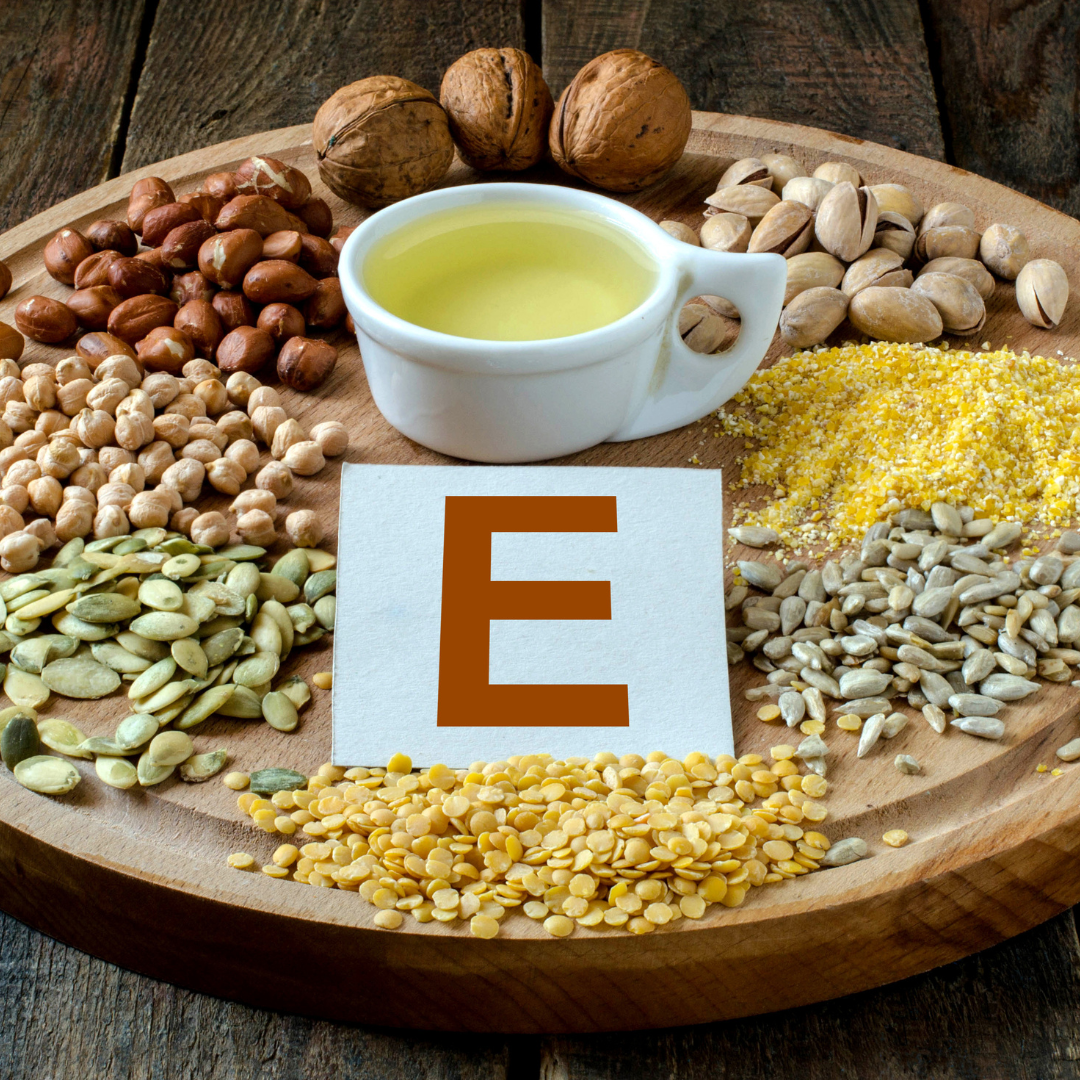

Vitamins are important nutrients necessary for the proper functioning of the body. One of the most important, but often underestimated vitamins is vitamin E. In this article I will discuss what vitamin E is, why it is important to health, which threatens it with deficiency or excess, and where it can be found in food.
Vitamin E - Why is it important for health?
Vitamin E, also known as tocopherol, is a group of compounds with strong antioxidant properties. There are eight different forms of this vitamin, of which alpha-tocopherol is the most common and biochemically active form in the human body. Vitamin E is one of the most important lipophilic antioxidants, helping to protect cells from oxidative stress by neutralizing free radicals - unstable particles that can damage cells and contribute to the development of many diseases, including cancer and heart disease. Vitamin E is an integral component of cell membranes, where it stabilizes the structure of lipids, which is important for their protection. In addition, it supports the immune system, improving cell response and antibody production. Vitamin E also supports the production of prostacyclin, which has a dilatation effect of blood vessels and prevents platelet aggregation, thus supporting cardiovascular health.Vitamin E deficiency - what threatens?
Vitamin E deficiency is relatively rare, but it can occur in specific populations, especially in people with fat absorption disorders such as cystic fibrosis or Crohn's disease.Symptoms of deficiency
Symptoms of vitamin E deficiency include various neurological problems, such as myopathy, manifested by muscle weakness, ataxia, i.e. the awkwardness of movements, and peripheral neuropathy, which involves damage to the peripheral nerves. In addition, a deficiency of this vitamin can lead to eye problems, including retinopathy, i.e. retinal damage, which can lead to eye loss.Potential health consequences
Prolonged vitamin E deficiency can lead to serious neurological and muscle problems, because its lack causes damage to cell membranes as a result of oxidative stress.Risk group
- Babies and children: Especially prematurely born, which did not receive enough tocopherol transferred by the placenta.
- People with gastrointestinal diseases: Fat absorption disorders causing vitamin E absorption disorders.
Excess vitamin E - what happens?
While vitamin E deficiency has its health implications, also an excess of this vitamin can be problematic.Symptoms of excess
Gastrointestinal problems: may include nausea, diarrhea, stomach cramps. Bleeding: vitamin E acts as an anticoagulant, and its excess can disturb the blood clotting process, increasing the risk of bleeding4.Excess consequences
Chronic high doses of vitamin E can lead to serious health problems, including the risk of hemorrhagic stroke (bleeding to the brain).Safe doses
It is recommended that the daily intake of vitamin E does not exceed 1000 mg alpha-tocopherol for adults. In practice, excess vitamin E usually comes from supplements, so it is important not to exceed the recommended doses and consult a doctor before starting supplementation.What is vitamin E - sources in food
Vitamin E is widely available in various food products, both plant and animal origin.Plant products
- Vegetable oils: The richest source of vitamin E are vegetable oils, such as sunflower oil, wheat embryo oil and rapeseed oil.
- Nuts and seeds: Almonds, hazelnuts, sunflower seeds and walnuts are an excellent source of tocopherol.
Animal products
- Eggs: Egg yolk contains significant amounts of vitamin E.
- Fish and seafood: Fish such as salmon and seafood supply vitamin E.
What is vitamin E for?
Vitamin E has many different biological functions in the body that translate into specific health benefits.1. Heart health
Vitamin E helps to prevent the formation of atherosclerotic plaques that can lead to cardiovascular disease. It also has anti -inflammatory, which further supports heart health.2. Leather
Vitamin E has moisturizing and regenerating properties, thanks to which it is often used in skin care cosmetics. It helps to protect the skin from UVB radiation and accelerates wound healing.3. Cancer protection
Studies suggest that vitamin E may have a chemoprenewen function, especially in cases of skin and prostate cancer. Its antioxidant properties support the removal of free radicals, which can reduce the risk of DNA mutation.4. Eye health
Vitamin E can help protect the eye against age -related macular degeneration (AMD). Studies indicate that vitamin E supplementation in combination with other antioxidants can slow down the progression of this disease.5. Neurological functions
As a strong antioxidant, vitamin E protects neurons against oxidative damage, which is important in the context of neurodegenerative diseases such as Alzheimer's disease.Interactions and supplementation
Drug interactions - Vitamin E may interact with some drugs, including anticoagulants (anticoagulants) and cholesterol lowering drugs. High doses of vitamin E may intensify the effect of anticoagulants, increasing the risk of bleeding Supplementation - Although vitamin E supplementation can be beneficial in some cases, it is always worth consulting a doctor before starting it, especially at high doses. For most people, a balanced diet is sufficient to ensure adequate consumption of vitamin E.Summary
Vitamin E is an essential nutrient that plays an important role in protecting cells against oxidative damage and supports the health of the heart, skin and immune system. Both deficiency and excess vitamin E can lead to serious health problems, so it is important to take care of its proper consumption through a balanced diet and, if necessary, supplementation.Sources:
TREBER, M. G., & Atkinson, J. (2007). Vitamin E, Antioxidant and Nothing More. Free Radical Biology and Medicine, 43 (1), 4-15. ↩ Brigelius-Flohé, R., & Treber, M. G. (1999). Vitamin E: Function and Metabolism. The Faseb Journal, 13 (10), 1145-1155. ↩ Sheppard, A. J., Pennington, J. A. T., & Weihrauch, J. L. (1993). Analysis and distribution of vitamin e in vegetable oil and foods. In vitamins & hormones (Vol. 45, pp. 25-65). Academic Press. ↩ Meydani, S. N. (1995). Vitamin E. The Lancet, 345 (8943), 170-175. ↩ Dietary Reference Intakes for Vitamin C, Vitamin E, Selenium, and Carotenoids. Institute of Medicine (US) Panel on Dietary Antioxidants and Related Compounds; Washington (DC): National Academies Press (US); 2000. ↩ USDA. (2019). Fooddata Central. ↩ Rimm, E. B., Stampfer, M. J., Ascherio, A., Giovannucci, E., Colditz, G. A., & Willett, W. C. (1993). Vitamin E Consumction and the Risk of Coronary Heart Disease in Men. New England Journal of Medicine, 328 (20), 1450-1456. ↩ Thiele, J. J., Traber, M. G., & Packer, L. (1998). Deplation of human stratum corneum vitamin e: an early and sensitive in vivo marker of uv induced photo-oxidation. Journal of Investigative Dermatology, 110 (5), 756-761. ↩ Klein, E. A., Thompson JR, I. M., Tangen, C. M., Marberger, M., Crawford, E. D., & Goodman, P. J. (2011). Vitamin E and the Risk of Prostate Cancer: The Selenium and Vitamin E Cancer Prevention Trial (Select). Jama, 306 (14), 1549-1556. ↩ Age-Related Eye Disease Study Research Group. (2001). A Randomized, Placebo-Controlled, Clinical Trial of High-Dose Supplementation with Vitamins C and E, Beta Carotene, and Zinc for Age-Related Macular Degeneration and Vision Loss. Archives of Ophthalmology, 119 (10), 1417. ↩ Morris, M. C., Evans, D. A., Bienias, J. L., Tangney, C. C., & Wilson, R. S. (2002). Vitamin E and Cognitive Decline in Older Persons. Archives of Neurology, 59 (7), 1125-1132. ↩ Liss, G. M., & Smith, P. M. (1993). Vitamin e and increated hemorrhage in patients on warfarin. BMJ, 305 (6853), 159. ↩
Dietician
Karolina Dobrowolska-Zrałka
doktor nauk medycznych i nauki o zdrowiu, dietetyk kliniczny Absolwentka studiów I i II stopnia na kierunku dietetyka oraz doktorantka w Szkole Doktorskiej Uniwersytetu Medycznego we Wrocławiu
Więcej artykułów autoraLooking for a nutritious and filling meal?
Discover Supersonic Smart Meal! A nutritious meal you can prepare in seconds!

150 reviews


