
Dietician
Karolina Dobrowolska-Zrałka
Oolong tea, often referred to as "turquoise tea" due to its unique color of the infusion, is a unique type of tea that combines the characteristics of both green and black tea. Popular in Asian countries, especially China and Taiwan, Oolong tea is gaining more and more recognition around the world due to its unique health properties, characteristic taste and wide use in natural medicine. In this article, we will take a closer look at this unique tea, discuss its types, health properties, potential side effects and practical aspects of brewing it.
Oolong tea - characteristics and types
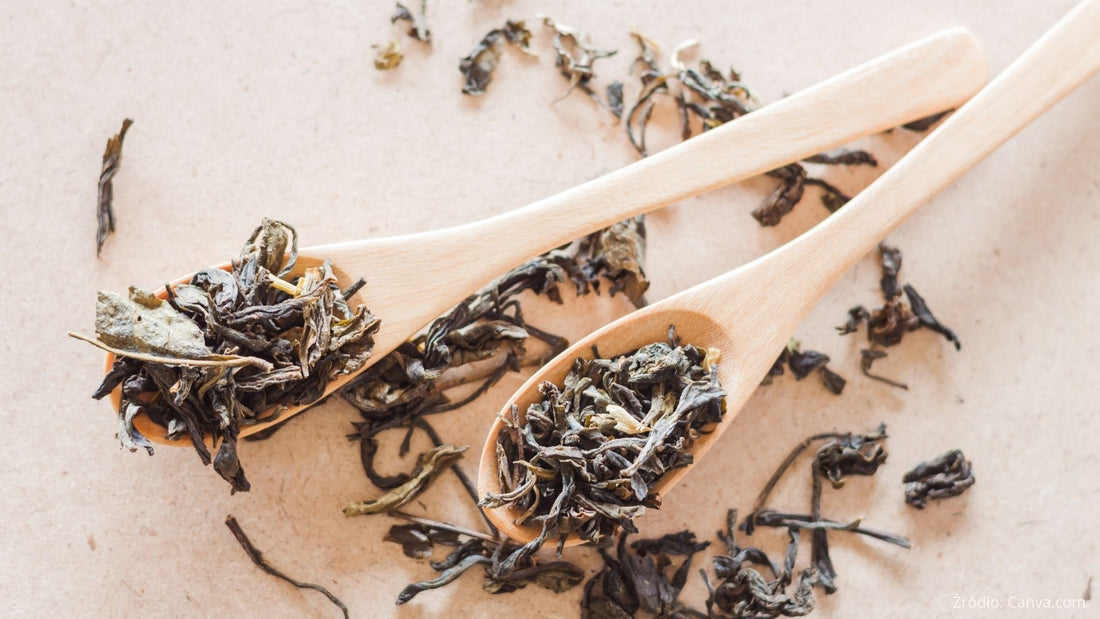
Oolong tea is a semi-fermented type of tea that falls between green and black tea in terms of its degree of oxidation. The Oolong production process is extremely complicated and requires great precision. The tea leaves are first withered in the sun, then gently twisted and partially fermented. The fermentation time is strictly controlled, which allows you to obtain a variety of flavor profiles - from delicate and floral, reminiscent of green tea, to more intense, reminiscent of black tea. There are various types of Oolong tea available on the market, which differ not only in taste, but also in the method of production. The most popular types include: Tie Guan Yin - also known as the "Iron Goddess of Mercy", is one of the most valued Oolongs, characterized by a delicate, floral aroma and light green infusion. Da Hong Pao - one of the most famous Oolongs, coming from the Wuyi Mountains in China. Its leaves are heavily oxidized, which gives the tea a deep, earthy flavor. Dong Ding - from Taiwan, is a medium oxidized tea with a rich, buttery flavor and subtle notes of caramel. Each type of Oolong offers a slightly different flavor and aroma profile, which makes this tea extremely versatile and interesting for connoisseurs.Oolong tea - properties and health benefits
Oolong tea is appreciated not only for its unique taste, but also for the numerous health benefits that result from its unique chemical composition. It contains many valuable bioactive compounds, such as polyphenols, catechins, theaflavins and thearubigins, which have strong antioxidant and anti-inflammatory effects. Health Benefits of Oolong Tea:- Support for the cardiovascular system - studies show that regular consumption of oolong tea can help reduce blood cholesterol levels, which in turn reduces the risk of heart disease. The polyphenols present in Oolong tea help maintain the elasticity of blood vessels and reduce inflammation, which supports cardiovascular health.
- Metabolism support and weight loss - Oolong tea is known for its effect on accelerating metabolism, which can support the fat burning process. Research suggests that consuming Oolong tea may increase thermogenesis, which promotes weight loss. This is especially beneficial for people who want to support the weight loss process in a natural way.
- Improving oral health - Oolong tea contains compounds that may inhibit the growth of bacteria in the oral cavity, which in turn may reduce the risk of tooth decay and gum disease. Drinking Oolong tea regularly can also help keep your breath fresh.
- Support for bone health - some studies suggest that regular consumption of Oolong tea may help improve bone density, which is especially important for older people who are at higher risk of osteoporosis. The content of minerals such as fluoride can support bone and tooth health.
- Improved cognitive functions - Oolong tea, thanks to the content of caffeine and L-theanine, can support cognitive functions, improving concentration, attention and memory. L-theanine has a calming effect, reducing the level of stress, which in combination with caffeine creates a synergy effect, promoting mental efficiency.
Oolong tea - are there side effects?
Although olong tea is generally considered safe and healthy, it can cause some side effects, especially if it is consumed in excess. The caffeine content in Oolong can lead to symptoms such as nervousness, insomnia, accelerated heartbeat and digestive system problems, especially in caffeine sensitive people or suffering from heart disease, so it is recommended to eat it in moderation. Oolong can also affect the absorption of iron from food, which can be problematic for people with anemia, so it is worth avoiding drinking this tea immediately after meals rich in iron. In addition, olong tea may interact with some drugs, especially those that affect the cardiovascular system or blood sugar level, which is why people taking medicines should consult a doctor before regularly consuming this tea. Despite these potential side effects, olong tea is safe for most people, if it is consumed in moderation.Oolong tea - what exactly is it?
Oolong tea is one of the oldest and most respected types of teas in the world. She comes from China, where her traditions reach millennia. What distinguishes Oolong from other teas is its unique production process, which combines the features of both green and black tea. The Oolong tea production process begins with the wilting of freshly collected leaves in the sun, and then they are slightly twisted and partially oxidized. Unlike green tea, which is not oxidized, and black tea, which is fully oxidized, Oolong is only partially oxidized, which gives it a unique taste and aromatic profile. The degree of oxidation of oolong tea can range from 10% to 70%, which affects the variety of flavors - from light, floral notes to deep, earthy flavors. In traditional Chinese tea ceremonies, olong is considered to be high -quality tea, which is served in special small cups to fully appreciate its aroma and taste. For many tea lovers, Oolong is a symbol of elegance and sophistication, combining the richness of tradition and modern health benefits.How to brew oladg tea - tips and tips
Browling olong tea is an art that requires attention and precision to fully bring out its unique taste and aromatic qualities. It is best to use spring or filtered water to keep the tea delicate taste. The optimal water temperature for oolonga brewing is 85-95 ° C, because too hot water can destroy subtle aromas, and too cool does not bring out full of taste. For a cup (200 ml), it is recommended to use one teaspoon of oolong tea leaves, and in the case of loosely rolled leaves, such as Tie Guan Yin, you can use a little more because the leaves develop during brewing. Oolong tea should be brewed for 2-5 minutes, depending on the desired taste-shorter brewing gives a more delicate taste, and longer more intense. Interestingly, Oolong's leaves can be brewed many times, and each subsequent brew can discover other, subtle taste notes; It is recommended to brew the leaves 2-3 times, but each time you need to slightly extend the brewing time. Traditionally, Oolong is burned in small porcelain or clay teapots, which helps in keeping heat and releasing the full aroma, and the cups should also be small so that the infusion can be drunk slowly, enjoying each sip.Oolong tea and the slimming process
Oolong tea has gained a reputation of a slimming drink, which attracts the attention of many people looking for natural methods for weight loss. But is it really effective in this area? Scientific research suggests that Oolong tea can support weight reduction through several mechanisms. First of all, olong tea contains catechins and caffeine, which can increase thermogenesis - a process in which the body burns calories to produce heat. Secondly, Oolong can affect fat metabolism, increasing their burning and reducing accumulation in adipose tissues. In addition, olong tea can help in regulating blood sugar levels, which is important in controlling appetite and preventing hunger attacks. Regular consumption of Oolong, especially as part of a sustainable diet and an active lifestyle, can contribute to achieving and maintaining healthy body weight.Summary
Oolong tea is a unique drink that combines a wealth of tradition, a sophisticated taste and numerous health benefits. Thanks to its unique properties, Oolong supports heart health, helps in weight loss, improves oral and bone health, and also supports cognitive functions. Despite some potential side effects, olong tea consumed in moderation is safe and can be a valuable element of a healthy diet. The right brewing of Oolong allows you to bring out its full taste and aroma, which makes every cup a real feast for the senses.Sources
Balentine, D. A., Wiseman, S. A., & Bouwens, L. C. (1997). The chemistry of tea flavonoids. Critical reviews in food science & nutrition, 37 (8), 693-704. Wu, C. H., & Wei, S. L. (2005). Tea as a functional food for oral health. Nutrition Bulletin, 30 (2), 91-99. HSU, C. H., Tsai, T. H., & Kao, Y. H. (2003). Effect of oolong tea on energy metabolism in humans. Journal of Nutrition, 133 (9), 2855-2859. Yang, C. S., & Landau, J. M. (2000). Effects of tea consumption on nutrition and health. Journal of Nutrition, 130 (10), 2409-2412. Lee, W., & min, W. (2014). The Impact of Tea Drinking on Bone Health: A Meta-Analysis. Osteoporosis International, 25 (6), 1439-1451.Looking for a nutritious and filling meal?
Discover Supersonic Smart Meal! A nutritious meal you can prepare in seconds!

150 reviews


