
Dietician
Karolina Dobrowolska-Zrałka
Chaga, also known as Inonotus Oblquus, is a mushroom with a characteristic appearance that has been used in traditional medicine in different parts of the world for centuries. It is particularly valued for its potential health properties, which include immunomodulatory, anti -cancer and anti -inflammatory effects. This article provides comprehensive information about the Chaga, its properties, side effects, contraindications, and the latest scientific research on its health benefits.
Chaga - what is it?
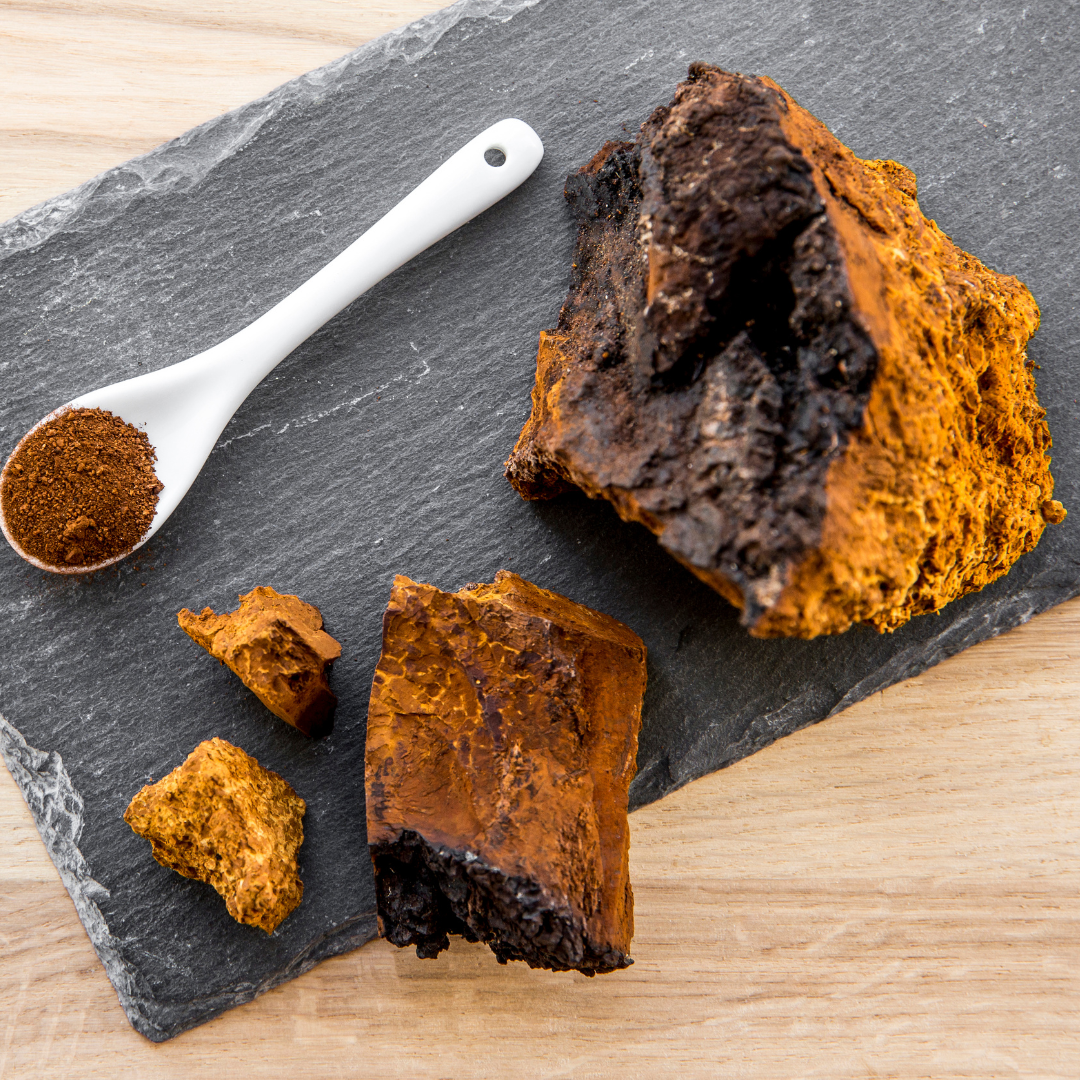
Chaga is a parasitic fungus, which grows mainly on birch tree trunks in a cold climate, such as in the regions of Siberia, Scandinavia and Canada. It is characterized by a black, hard and uneven surface that resembles coal, hence its popular name "black mushroom". The inner part of the Chaga, known as the crumb, has a brown color and is rich in various nutrients. Chaga contains a number of bioactive compounds, such as polysaccharides, triterpenoids, phenols and other antioxidants. It is these ingredients that contribute to its health properties. The Chaga mushroom is traditionally used to treat various ailments and is particularly valued in natural medicine for its resistance and health support system.Side effects of the use of chaga - potential adverse effects and caution in its use
Although Chaga is widely used in natural therapy, its use may be associated with certain side effects, especially when used in excess or in combination with other drugs. Potential side effects include:- Gastrointestinal problems: In some people, Chaga may cause stomach ailments such as abdominal pain, flatulence or diarrhea.
- Allergic reactions: Although rare, allergic reactions such as skin rashes, itching or swelling may occur.
- Drug interactions: Chaga may affect the absorption of some drugs, including anti -diabetic and anticoagulant drugs. It can also intensify the effect of immunosuppressive drugs.
Contraindications about the Chaga - when it is worth being careful or avoiding its use
The use of chaga requires special caution in several important cases. People with autoimmune diseases, such as multiple sclerosis or lupus, should avoid its use or take it only under strict doctor's control, due to its potential immunomodulatory effect. In addition, Chaga can affect blood clotting, which increases the risk of bleeding, especially in people using anticoagulants. Also, the safety of the use of chags during pregnancy and lactation is not well documented, so it is recommended to avoid its use in these periods or use it only under the supervision of a specialist.Scientific research on the chaga mushroom - what scientific evidence says about the health benefits of Chaga
Research on Chaga focuses mainly on its antioxidant, anti -inflammatory and anti -cancer properties.Antioxidant effect
Chaga is rich in antioxidants, such as melanins and triterpenoids, which neutralize free radicals and can protect cells from oxidative stress. Studies indicate that the high concentration of antioxidants in Chada can contribute to reducing the risk of chronic diseases.Anti -cancer properties
In vitro and animal studies suggest that Chaga may have anti -cancer effects through induction of apoptosis (cell death) in cancer cells and inhibition of tumor growth. The compounds contained in Chada, such as betulin, have shown cytotoxic effects on various cell linesImpact on the immune system
Chaga may modulate an immune response by stimulating the production of cytokines and strengthening the activity of immune cells such as macrophages and T. lymphocytes. Although the results are promising, further clinical trials are needed to fully understand the effectiveness and safety of chaga in natural therapy.Chaga - tradition and contemporary use of fungus in natural therapy
Chaga has a long history of use in traditional folk medicine, especially in northern Europe and Asia. In traditional medical practices, it was used as a tonic that strengthens the overall condition of the body, improving immunity and as an agent supporting cancer treatment. Nowadays, the Chaga mushroom has gained popularity in alternative medicine as a natural dietary supplement that can support health and well -being. Currently, Chaga is available in various forms, such as powder, capsules, extracts and teas. Thanks to its health potential, it is widely used in dietary supplements and functional products.Sources
Khalil, M. M., et al. (2019). "Antioxidant and Anticancer Activities of Inonotus Ompus (Chaga) Extracts." Journal of Ethnopharmacology, 230, 36-46. Pan, W., et al. (2020). "Anti-tumor effect of chaga mushroom (inonotus pupus) on human cancer cells and it mechanism of action." Phytomedicine, 68, 153195. Mori, T., et al. (2017). "Immunomodulators and anti-inflammators effect of inonotus pupus." International Journal of Immunopathology and Pharmacology, 30 (2), 203-212.Looking for a nutritious and filling meal?
Discover Supersonic Smart Meal! A nutritious meal you can prepare in seconds!

150 reviews
additional 5% discount


