
Dietician
Karolina Dobrowolska-Zrałka
Palo Santo, also known as "Holy Tree", is an extremely valued species of trees from the Bursraceae family, which has been used for centuries in traditional healing practices and spiritual rituals in South America. Due to its unique fragrance and potential health benefits, Palo Santo has gained immense popularity around the world. In this article, we will take a closer look at what exactly Palo Santo is, what properties it has, how to use them correctly, and what controversy can be associated with its use.
Palo Santo - what is it and what does it matter?
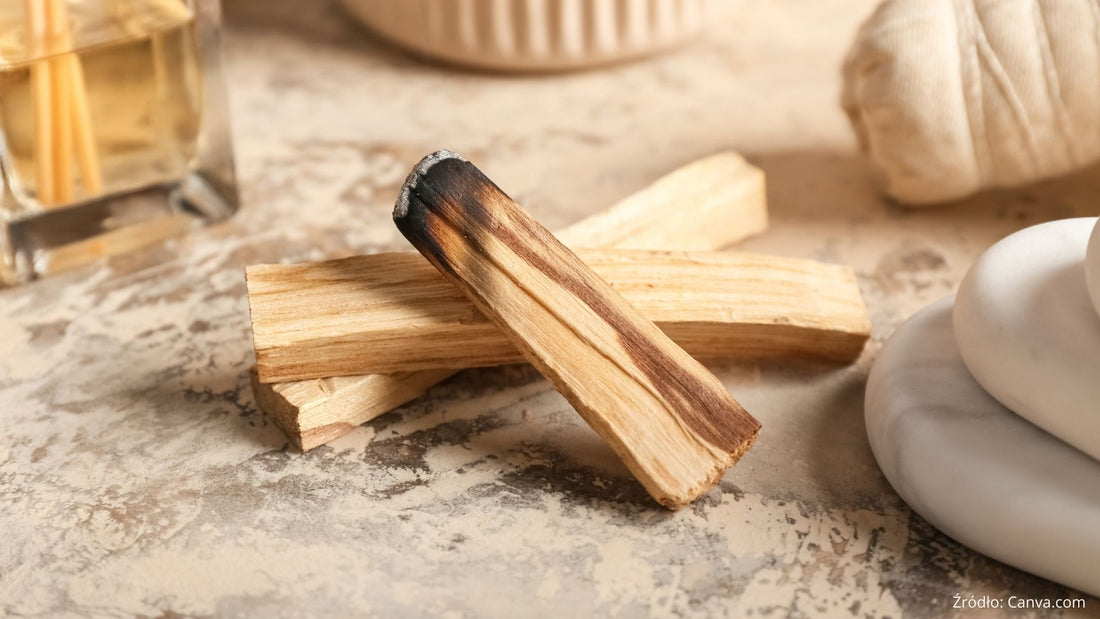
Palo Santo, or Burser Graveolens, is a tree that grows mainly in South America, such as Peru, Ecuador and Bolivia. This tree is known for its strong, sweet smell that releases after burning its wood. In the indigenous traditions of South America, Palo Santo was and is still used to cleanse the space of negative energy, protect against evil spirits and improve mood. Palo Santo wood is collected from naturally dead trees, which is important from the point of view of ethics and sustainable development. Traditionally, it is believed that a tree that naturally dies and lies for several years is gaining additional healing properties. Incense, essential oils and other products used for therapeutic and ritual purposes are produced from this wood.Why not use Palo Santo? Existing controversy and contraindications
Despite many advantages, the use of Palo Santo is associated with some controversies, both ecological and health. On the one hand, the popularity of Palo Santo has contributed to the increase in the demand for the wood of this tree, which can lead to excessive exploitation of natural resources. Although Palo Santo wood should be obtained only from dead trees, in practice this is not always the case, which threatens the population of this species. From a health point of view, the use of Palo Santo, especially in the form of smoke from incense, may not be indicated for people with respiratory diseases, such as asthma or chronic obstructive lung disease (COPD). Inhaling smoke, even with a delicate smell, can lead to respiratory tract irritation and severity of disease symptoms. People with allergies to fragrances should also be careful, because contact with Palo Santo essential oil can cause allergic reactions such as rash or itching.Palo Santo properties - what benefits can it bring for health and well -being?
Palo Santo is valued for its numerous health properties, which are used in both traditional medicine and modern aromatherapy. Here are the most important of them:- Anti -inflammatory and analgesic effect - compounds contained in Palo Santo, such as limonen, have a proven anti -inflammatory effect that can help soothe pain, especially muscle and joint pain.
- Supporting the immune system - Palo Santo has antibacterial and anti -virus properties, which can support the body in the fight against infections. It is also traditionally used to strengthen the body during periods of increased risk of diseases.
- Mood improvement and stress reduction - Thanks to its aromatherapy properties, Palo Santo can calm down, reducing stress and anxiety. Its smell is also often used in meditation practices, where it supports concentration and helps in achieving internal balance.
- Energy cleansing - Traditionally, Palo Santo was used to clean the space of negative energy. It was believed that smoke from Palo Santo drives away evil spirits and protects against evil. Nowadays, many people use Palo Santo to clean up houses and jobs, believing in its positive energy operation.
How to properly smoke palo santo? Practical tips and techniques
Proper smoking Palo Santo requires a proper technique to fully use its benefits and avoid unwanted effects. It should be ensured that the wood comes from balanced sources, preferably from certified suppliers who obtain wood only from naturally dead trees. Preparation for the ritual is to keep one end of wood over the flame of the candle or lighter until it begins to smolder, and when the wood begins to glow and releases smoke, blow the flame. Palo Santo smoke spreads throughout the room, especially focusing on the corners and places that require purification. After the ritual, the smoldering wood should be placed on a non -flammable surface, such as a ceramic plate or incense stand, so that it goes out safely. It is recommended to avoid direct inhalation of smoke up close to prevent the respiratory tract. Palo Santo can be used regularly, but in moderation to avoid excessive exposure to smoke.Palo Santo as incense - traditions and spiritual use
Palo Santo has been used for centuries as incense in spiritual and religious rituals. In the indigenous traditions of South American peoples, his smoke was considered a saint, capable of cleansing people, spaces and objects of negative energy. Palo Santo cleansing ceremonies were and are still practiced to restore harmony and protection against evil spirits. The contemporary use of Palo Santo as incense includes both spiritual rituals and meditation practices. Its smell is considered calming and supporting concentration, which is why it is often used in meditations and yoga sessions. In addition, Palo Santo is often used in fragrance therapy (aromatherapy) as a natural support and relief of stress.Summary
Palo Santo is an extremely valuable gift of nature, whose health and spiritual properties have been valued for centuries. Its unique anti -inflammatory, antibacterial and calming effect makes it a popular means supporting health and mental well -being. However, due to potential contraindications and ecological controversies, its use should be thought out and responsible. Palo Santo can be a valuable tool in spiritual and therapeutic practices, if it is used in accordance with traditions and respecting natural resources.Sources
Quispe-Cruz, J., & Llontop-Rivera, I. (2017). Chemical composition and medinal property of the essential oil from Bursra Graveolens (Palo Santo). Journal of Essential Oil Research, 29 (6), 493-499. Burt, S. (2004). Essential oil: their antibacterial properties and potential applications in foods -a review. International Journal of Food Microbiology, 94 (3), 223-253. Balick, M. J., & Cox, P. A. (1996). Plants, People, and Culture: The Science of Ethnobotany. Scientific American Library.Looking for a nutritious and filling meal?
Discover Supersonic Smart Meal! A nutritious meal you can prepare in seconds!

150 reviews
additional 5% discount


