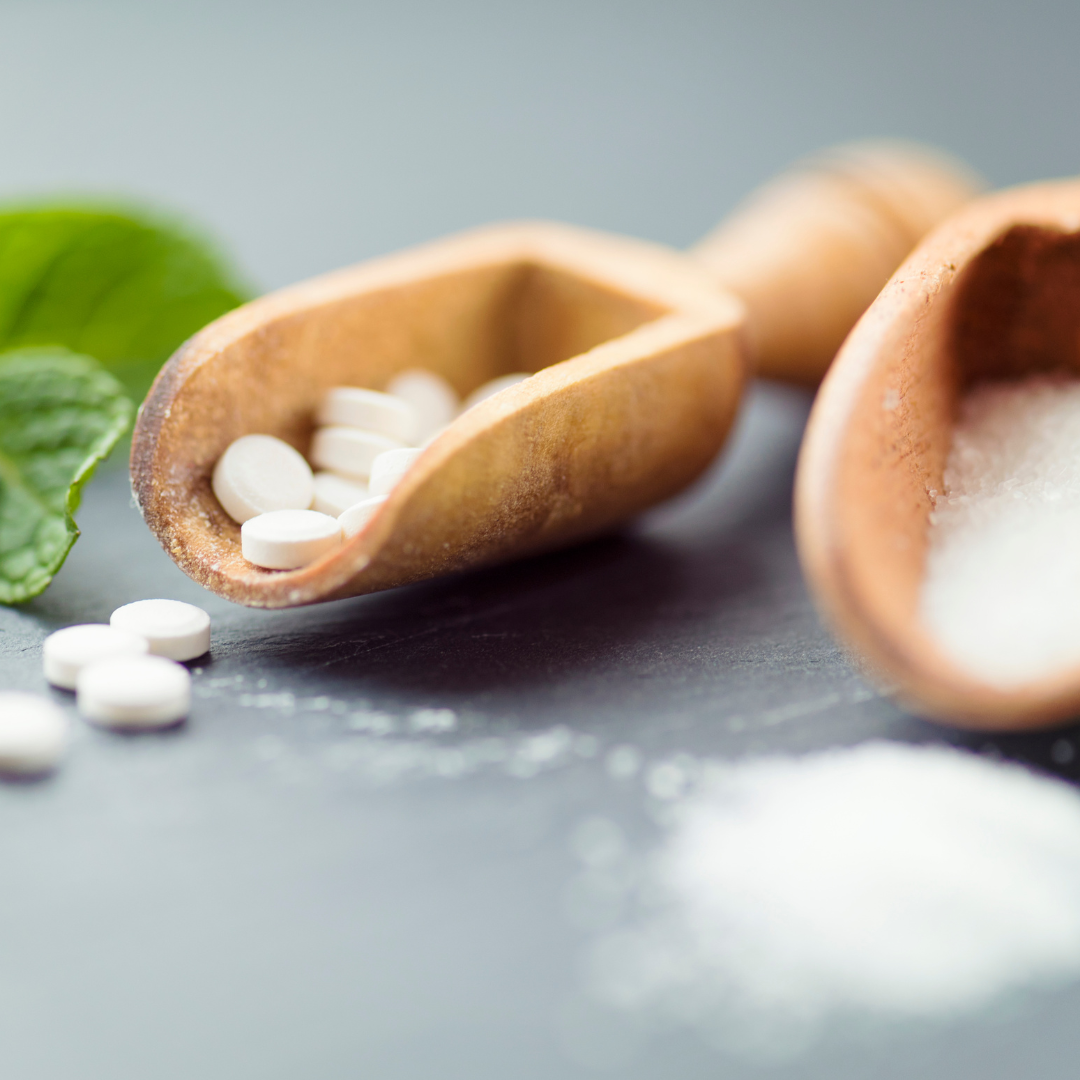

Choosing the right sweetener is becoming more and more important in the context of growing health awareness and the need to reduce sugar consumption. Among the many sugar substitutes available on the market, erythritol and xylitol are gaining more and more popularity. Both of these sweeteners are natural sugar alcohol that offer lower caloric content compared to traditional sugar, and also have other beneficial health properties. But which one should you choose? In this article, we will look at the differences between erythritol and xylitol, their influence on health, the use of diabetics in the diet, suitability for baking and safety in children.
Erythritol or xylitol - a comparison of two popular sweeteners
Erythritol and xylitol are natural sugar alcohols that gain popularity as healthier alternatives to traditional sugar. Erythritol is a chemical that is naturally found in fruit and fermented products. It is produced by fermentation of glucose using yeast. In turn, xylitol, obtained mainly from birch bark or corn butt, also occurs naturally in fruit and vegetables. The basic difference between these sweeteners is their caloric value. Erythritol practically does not provide calories, which makes it an ideal choice for people on a reduction diet. It also has a zero glycemic index, which means that it does not affect blood sugar levels. On the other hand, xylitol contains about 2.4 kcal per gram, which is much less than in the case of sugar (about 4 kcal per gram), but still provides a certain amount of energy. Its glycemic index is 13, which means that it affects the level of blood sugar to a much lesser extent than sugar, but it is not completely neutral.Xylitol or erythritol - which sweetener is better?
The assessment which of these sweeteners is better depends on the individual needs and health purposes. If the goal is to completely eliminate the effect of sweetener on blood sugar and minimize calorie consumption, erythritol seems to be a better choice. It is also less sweet than xylitol, which allows for greater control over the level of sweetness of dishes and drinks. On the other hand, xylitol has stronger antibacterial properties, especially in the context of oral health. Xylitol is often used in chewing gums and toothpastes because it inhibits the growth of bacteria that cause humus. For people who want to take care of the health of their oral cavity, xylitol can be more suitable.Erythritol or xylitol for diabetic - choosing the right sweetener
People with diabetes must especially take care of controlling blood sugar levels, which is why choosing the right sweetener matters to them. Erythritol, due to the zero glycemic index, is a safe choice for diabetics. It does not increase blood glucose, which allows you to sweeten dishes without the risk of hyperglycemia. Xylitol, although it has a low glycemic index, is not completely neutral for blood sugar levels. It can be used by diabetics, but in moderate amounts. For people with a more sensitive metabolic system, erythritol can be a better alternative.Erythritol or xylitol for baking - which is more suitable?
Many people wonder which of these sweeteners works better in baking. Both can be used as sugar substitutes in recipes, but they have slightly different properties. Erythritol tends to crystallize, which can cause baked goods to become more fragile and have a slightly granular texture. This may be desirable in some regulations, but in others it may be a challenge. Xylitol, due to its consistency and the ability to maintain moisture, can be a better choice in the recipes for cakes and soft pastries. In addition, its level of sweetness is closer to sugar, which can facilitate the adaptation of the rules without having to modify them significantly.Xylitol or erythritol for children - safe sweetening for the youngest
The issue of safety of using sweeteners in children is extremely important. Erythritol is considered safe for children because it is metabolized in the body without involving insulin, and the excess is excreted in the urine. Its use does not involve the risk of sudden increase in blood glucose, which is especially important in children with diabetes or the risk of its development. Xylitol is also safe for children, but it should be remembered that in large quantities it can cause a laxative effect. This is the result of its fermentation by intestinal bacteria. Therefore, in the case of the youngest, especially those with a sensitive digestive system, erythritol can be a more appropriate choice.Summary
The choice between erythritol and xylitol depends on individual needs and preferences. Erythritol is an ideal choice for people seeking to minimize calorie consumption and completely eliminate the effect on blood sugar levels. In turn, xylitol can be a better choice for those who want to use its antibacterial properties, especially in the context of oral health. Both sweeteners have their advantages and can be used interchangeably, depending on the needs and situation.Sources
Livesey, G. (2003). "Health Potential of Polyols as Sugar Replacers, with Emphasis on Low Glycaemic Properties". Nutrition Research Reviews, 16 (2), 163-191. DOI: 10.1079/NRR200372 Grembecka, M. (2015). "Sugar Alcohols - Their Role in the Modern World of Sweteteners: A Review". European Food Research and Technology, 241, 1-14. DOI: 10.1007/S00217-015-2449-2 Joubert, L. M., & Klein, A. V. (2013). "Erythritol: a review of it roles in dental health. Journal of Applied Oral Science, 21 (5), 453-457. DOI: 10.1590/1678-775720130010 EFSA PANEL ON FOODADIVES AND NUTRIENT SOURCE ADDED TO FOOD (ANS). (2010). "Scientific Opinion on the Safety of Erythritol (E 968) as a food additive". EFSA Journal, 8 (7), 1650. DOI: 10.2903/J.EFSA.2010.1650 Mäkinen, K. K. (2010). "Sugar Alcohols, Caries Incidence, and reminaralization of caries lesions: a literature review". International Journal of Dentistry, 2010, 981072. DOI: 10.1155/2010/981072
Dietician
Karolina Dobrowolska-Zrałka
doktor nauk medycznych i nauki o zdrowiu, dietetyk kliniczny Absolwentka studiów I i II stopnia na kierunku dietetyka oraz doktorantka w Szkole Doktorskiej Uniwersytetu Medycznego we Wrocławiu
Więcej artykułów autoraLooking for a nutritious and filling meal?
Discover Supersonic Smart Meal! A nutritious meal you can prepare in seconds!

150 reviews


