

Collagen synthesis This is one of the processes that take place in the body unnoticed for a long time. Until their slowdown begins to give clear signals. Looser skin, joints that regenerate slower, hair losing density. Most people associate this with normal aging. But behind this colloquial term there is a specific biology and understanding it is the first step to conscious action. This article is not about creams or which supplement to choose. It is about what happens in the body at the cellular level and why collagen production inevitably declines with age. And by the way, what has a real impact on this process?
What is collagen synthesis and how does it occur?
Collagen is a structural protein and the most abundant protein in the human body. It builds skin, cartilage, tendons, bones, blood vessel walls and many other tissues. In order to fulfill its functions, it must be constantly produced and renewed. A collagen synthesis are primarily responsible for fibroblasts, i.e. specialized connective tissue cells. Osteoblasts play a similar role in bones, and smooth muscle cells play a similar role in vessel walls. The production process is multi-stage:
- Fibroblasts produce procollagen, an early form of protein composed of amino acid chains, mainly glycine, proline and hydroxyproline.
- Procollagen is secreted outside the cell and transformed into tropocollagen.
- Tropocollagen molecules combine into stable ones collagen fibers. This step requires copper as a cofactor for an enzyme called lysine oxidase.
It plays a key role at every stage vitamin C. Without it, hydroxylation of proline and lysine is impossible, a reaction that stabilizes the entire structure of the collagen chain. This is not a supplement issue, it is an absolute metabolic requirement. Zinc and copper, in turn, act as enzyme cofactors, without which the entire reaction chain is disturbed.
Since when and how quickly does collagen synthesis decline?
Collagen production peaks in youth and begins to systematically decline around 25 years old. The annual loss is estimated at 1-1.5%, which sounds inconspicuous, but after a decade it produces a measurable and visible effect. In women, this process significantly accelerates around menopause. Research shows that in the first 5 years after menopause, women may lose even weight 30% of skin collagen resources. This is when significant changes in the appearance of the skin, its elasticity and the condition of the joints most often occur. In men, the decline is more spread over time, but equally inevitable. Testosterone and growth hormone support collagen synthesis, and their natural decline with age has a direct impact on tissues.
Biological causes of the decline in collagen synthesis
There is no single cause. There are several mechanisms that work simultaneously and reinforce each other.
Fibroblast senescence (cellular senescence)
Fibroblasts, like all cells, lose their functionality with age. Studies by Varani and colleagues have shown that in aging skin, fibroblasts produce significantly less procollagen, respond less strongly to stimulating signals and have impaired cellular metabolism. This is one of the most important, although least popular, mechanisms of collagen loss. The problem is not just that collagen wears out, but that the cells that produce new collagen become less and less active.
Hormonal changes
Estrogen stimulates fibroblasts and inhibits enzymes responsible for collagen degradation. Its decline during menopause is the direct cause of accelerated loss of skin collagen and reduced bone mineral density. It is equally important growth hormone and IGF-1, whose levels decrease with age, limiting collagen synthesis in muscle and connective tissues.
Increased activity of metalloproteinases (MMP)
Matrix metalloproteinases (MMPs) are collagen-degrading enzymes needed for natural tissue remodeling. The problem is that with age, their activity increases and the balance between collagen synthesis and degradation shifts to the detriment of production. UV radiation is one of the main factors activating MMPs, which explains why photoaging accelerates skin aging more than the passage of time itself.
Oxidative stress
Free radicals damage the DNA of fibroblasts, cell membranes and the collagen molecules themselves. The body's natural antioxidant mechanisms weaken with age. The enzymatic system (superoxide dismutase, catalase, glutathione peroxidase) becomes less efficient, which makes oxidative stress an increasingly serious factor limiting the quality and quantity of collagen produced.
Glycation and AGE formation
High blood glucose levels promote glycation, which is the non-enzymatic binding of sugar molecules to proteins, including collagen. The resulting glycation end products (AGE, advanced glycation end-products) change the structure of collagen fibers. They become stiffer, less flexible and more difficult to replace. This is one of the reasons why people with chronically elevated glucose levels experience faster changes in the condition of their skin, joints and blood vessels.
What external factors accelerate collagen loss?
In addition to biological processes resulting from age, there are environmental and lifestyle factors that significantly accelerate collagen degradation:
- UV radiation activates MMPs, generates free radicals and damages the DNA of fibroblasts. The effect is photoaging, i.e. accelerated aging of tissues resulting from exposure to the sun without protection.
- Smoking limits the supply of oxygen to tissues, increases oxidative stress and inhibits the activity of fibroblasts. In smokers, collagen synthesis is measurably lower than in non-smokers of the same age.
- A diet rich in simple sugars promotes glycation and chronic inflammation, which indirectly weaken collagen production.
- Chronic stress increases the level of cortisol, which inhibits the activity of fibroblasts and increases tissue catabolism. Long-term high levels of cortisol have a documented impact on the condition of the skin and joints.
- Sleep deficiency impairs tissue regeneration processes, including collagen reconstruction, which occurs mainly during night rest.
- Alcohol increases oxidative stress and interferes with the absorption of ingredients necessary for collagen synthesis, including vitamin C and zinc.

What actually supports collagen synthesis?
There is no single ingredient that will turn back the biological clock. But a few items have solid science to back them up collagen synthesis. Vitamin C it is absolutely necessary for the hydroxylation of proline and lysine. Research by Shaw and colleagues has shown that vitamin C supplementation before exercise significantly increases collagen synthesis in connective tissues. This is not a supporting ingredient, it is a biochemical requirement of the entire process. Zinc and copper they act as cofactors of enzymes involved in the synthesis and cross-linking of collagen fibers. Their deficiencies directly translate into the quality and quantity of collagen produced. Glycine, proline and hydroxyproline these are the amino acids that make up collagen. Glycine constitutes about one third of all amino acids in the collagen chain. Providing them with the diet or by supplementing with hydrolyzed collagen provides ready-made material for production. Antioxidants limit oxidative stress damaging fibroblasts and collagen molecules. Particularly interesting are plant polyphenols, grape seed extract, resveratrol and vitamin E, which neutralize free radicals and protect existing collagen fibers against degradation.
Does collagen supplementation support its synthesis?
This is a question that many people rightly ask. If collagen is digested in the intestines, how would it affect its production in tissues? The answer lies in research on hydrolyzed collagen. In this form, the protein is pre-degraded into short peptides that are absorbed as di- and tripeptide fragments, not only as free amino acids. These peptides reach the tissues and act as a biological signal: the body sees collagen fragments and activates fibroblasts to produce their own. Clinical trials with patented peptides Peptan® i Verisol® confirm the real impact of supplementation on the density of collagen in the skin, reducing wrinkles and improving elasticity. The mechanism is described and measurable. However, what is important is bioavailability, i.e. how much collagen is actually absorbed before it reaches the tissues. Technologies such as Liposovit®, which enclose peptides in lipid microcapsules, increase the protection of ingredients while passing through the digestive system. Probiotics play a similar role: healthy intestines absorb ingredients more effectively, which is why some advanced formulas combine collagen with bacterial cultures that support the microbiome.
Are you sure your collagen is absorbing?
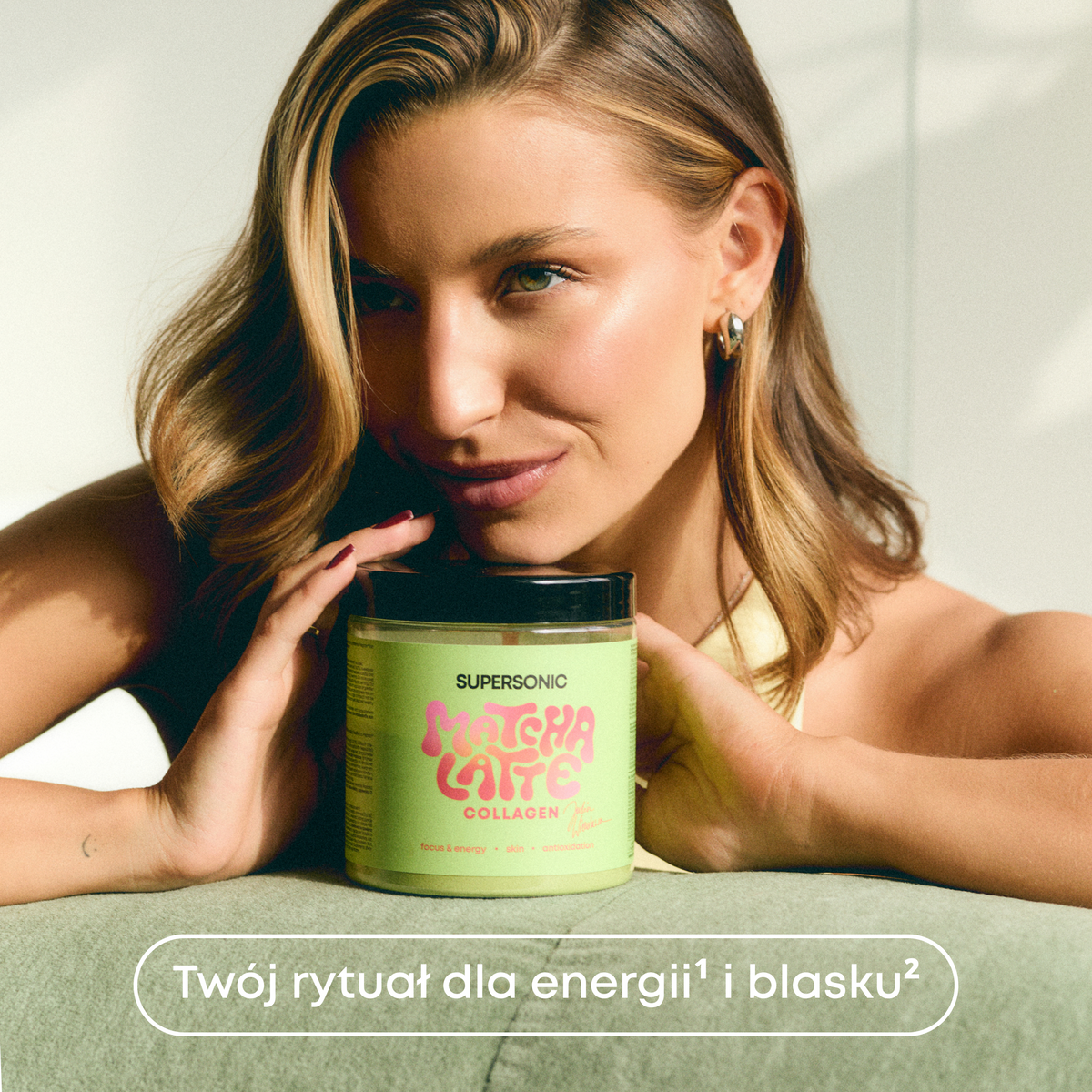
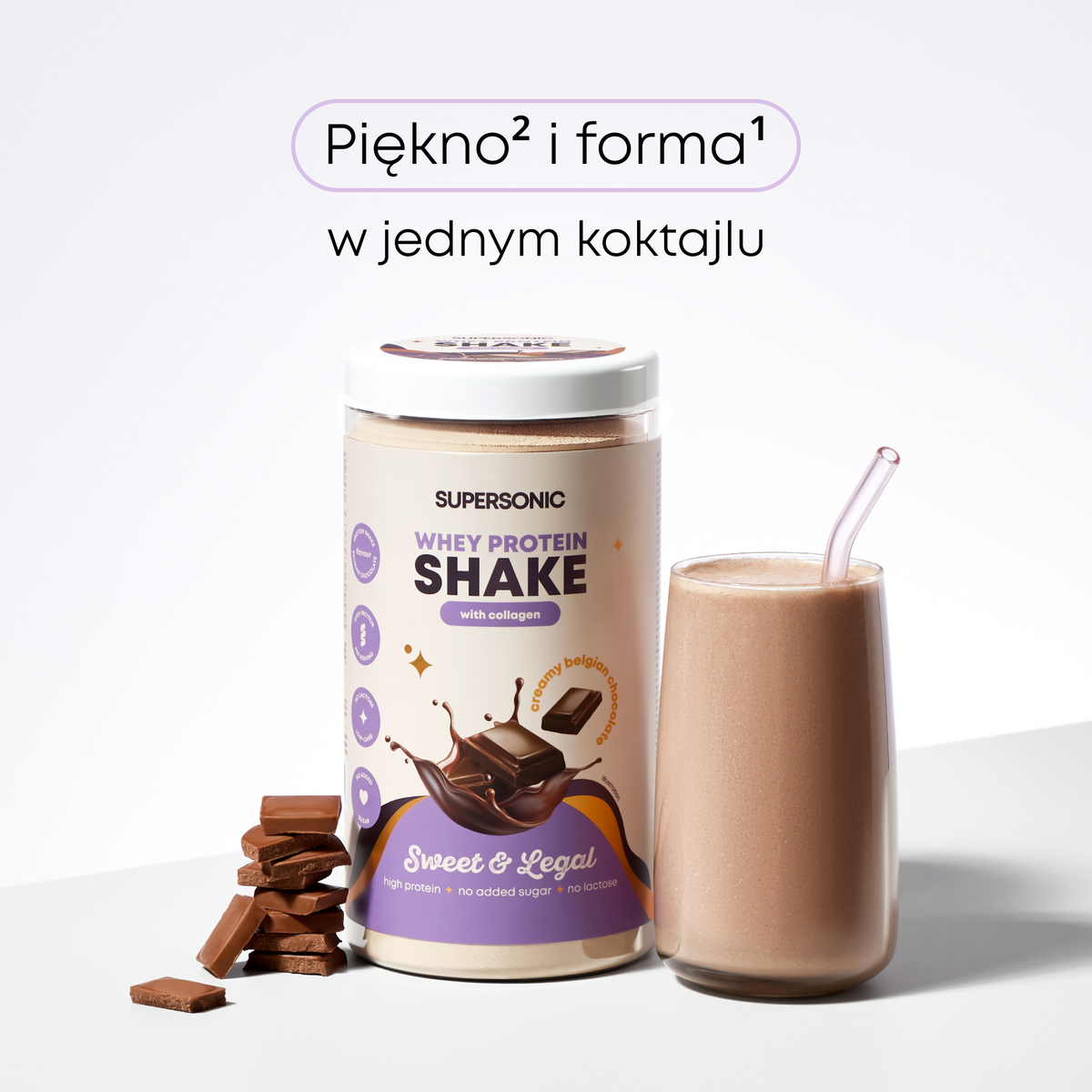
Most collagens on the market are based on a simple hydrolyzate and mainly communicate the dose. This is not enough if you want a formula refined for the skin, absorption and protection of the effects. When it comes to collagen, what matters is not only the number of grams per serving, but also the quality of peptides, bioavailability, microbiome support, the presence of hyaluronic acid and ingredients that protect the skin against oxidative stress. If you want to assess whether the collagen you drink has a really well-thought-out formula, check the composition in more detail than just the dose. Collagen drinks they differ much more than you might think. Some of them provide only one type of hydrolyzate, while more advanced formulas work in multiple stages: they build, support the absorption and protect what the skin develops with regular supplementation. SUPERSONIC Beauty Collagen Drink combines three complementary forms of fish collagen: Peptan®, Verisol® i Liposovit®. Peptan® provides high-quality collagen peptides, Verisol® supports areas related to skin elasticity and wrinkles, and Liposovit® uses liposomal technology developed for bioavailability. This approach is not based on the simple assumption of "more grams", but on the quality of the raw material, different peptide profiles and the way they are administered. It is also included in the formula LactoSpore®, i.e. a stable probiotic that supports the intestinal microbiome. This is important because effective beauty supplementation does not end with the supply of collagen. The body still needs to digest, absorb and use the active ingredients. Therefore, the combination of collagen with a probiotic creates a more complete formula than a classic hydrolyzate without support for the intestines. The composition is supplemented hyaluronic acid, VinOmerix®, vitamin C from wild rose and sweetening with stevia. Hyaluronic acid supports the skin's hydration and comfort, VinOmerix® provides grape seed polyphenols and helps protect the skin against oxidative stress, and vitamin C supports the proper production of collagen. Stevia allows you to maintain a pleasant taste without the classic sweetening with sugar, which is important for everyday use. This is a formula designed to ensure that collagen is not only present in the composition, but also works in a broader system: it provides peptides, supports their use and helps protect the effects. If you care about skin tension, hydration and radiance, start with the composition, technology and mechanism of action - not just the number of grams on the label.
Summary
Collagen synthesis it decreases with age for biological reasons over which we have no full control: aging of fibroblasts, hormonal changes, increase in the activity of collagen-degrading enzymes. But the pace of this process depends largely on what we do every day. How we eat, how much we sleep, how we deal with stress and whether we protect our skin against UV radiation. Supplementation with hydrolyzed collagen may be a sensible addition, but only if the formula is well designed and ensures real bioavailability. The dose on the packaging itself doesn't say much about how much collagen will actually reach your tissues.
FAQ
When does collagen production begin to decline?
Collagen synthesis begins to gradually decrease around the age of 25, at a rate of approximately 1-1.5% per year. In women, a significant acceleration occurs around menopause; in the first 5 years, women may lose up to 30% of skin collagen.
Does collagen supplementation really increase its synthesis in the body?
Clinical studies with hydrolyzed collagen peptides (Peptan®, Verisol®) show that supplementation can stimulate fibroblasts to produce their own collagen. The form and bioavailability of the supplement are crucial, not every hydrolyzate works with the same effectiveness.
What vitamins and minerals are necessary for collagen synthesis?
Vitamin C is absolutely crucial, without it collagen synthesis is biologically impossible. Zinc (a cofactor of transcription enzymes) and copper (a cofactor of lysine oxidase stabilizing collagen fibers) are also important.
Does stress affect collagen production?
Yes. Cortisol inhibits the activity of fibroblasts and increases tissue catabolism. Chronic stress has a measurable negative impact on the condition of the skin, joints and the rate of regeneration of connective tissues.
What is collagen glycation and why is it a problem?
Glycation is the binding of sugar molecules to proteins, including collagen. The resulting products (AGE) change the structure of collagen fibers, becoming stiffer, less flexible and more difficult to replace. A diet rich in simple sugars and chronically elevated glucose levels significantly accelerate this process.
Can diet replace collagen supplementation?
Diet provides the amino acids and cofactors necessary for collagen synthesis, but obtaining an amount equivalent to an effective supplemental dose from food alone is difficult. Bone broth, gelatin, offal and vegetables rich in vitamin C are good sources, it is best to treat them as a supplement to your diet, not the only support.
Sources
Varani J, Dame MK, Rittié L et al., Decreased Collagen Production in Chronologically Aged Skin, The American Journal of Pathology, 2006. pubmed.ncbi.nlm.nih.gov/16723701/
Proksch E, Segger D, Degwert J et al., Oral Supplementation of Specific Collagen Peptides Has Beneficial Effects on Human Skin Physiology: A Double-Blind, Placebo-Controlled Study, Skin Pharmacology and Physiology, 2014. pubmed.ncbi.nlm.nih.gov/23949208
Shaw G, Lee-Barthel A, Ross ML et al., Vitamin C–enriched gelatin supplementation before intermittent activity augments collagen synthesis, The American Journal of Clinical Nutrition, 2017. pubmed.ncbi.nlm.nih.gov/27852613
Danby F.W., Nutrition and aging skin: sugar and glycation, Clinics in Dermatology, 2010. pubmed.ncbi.nlm.nih.gov/20620757

Looking for a nutritious and filling meal?
Discover Supersonic Smart Meal! A nutritious meal you can prepare in seconds!


