
Kalanchoe, also known as Kalanchoe, is a plant that has gained great popularity due to its numerous medicinal properties. Used in natural medicine for centuries, the plant is valued for its anti-inflammatory, regenerative and antibacterial properties. Modern research increasingly confirms the health benefits of its use, which makes it an attractive alternative to conventional methods of treating many ailments. In this article, we will take a closer look at what properties the viviparous plant has, what its different species are, how it can be recognized and what it can be effective for in therapy.
Viviparous - What are its medicinal properties and health benefits?
The common arborvitae, especially species such as Kalanchoe pinnata and Kalanchoe daigremontiana, is distinguished by a wide range of health-promoting properties. This plant is rich in bioactive compounds such as flavonoids, tannins, tannins, alkaloids and organic acids. These ingredients give it an anti-inflammatory effect, which is extremely beneficial in the treatment of skin inflammation, as well as in the case of injuries and burns. External use of the plant can accelerate wound healing processes, which is why it is often used in dermatology. The antibacterial effect of the plant makes it effective in fighting various types of bacterial infections, both of the skin and mucous membranes. In traditional medicine, it was used to alleviate symptoms related to throat and gum infections and gastrointestinal problems. In addition, it has the ability to neutralize free radicals, which means it can act as an antioxidant, protecting cells against damage and delaying the aging process.Which viviparous plant is medicinal? An overview of the different species and their uses
Among the many species of viviparous plants, the most famous for their medicinal properties are Kalanchoe pinnata and Kalanchoe daigremontiana. Kalanchoe pinnata, often called the "miracle plant", is particularly valued for its regenerating and anti-inflammatory effects. Kalanchoe daigremontiana, also called "devil's spine", has gained popularity thanks to its properties that strengthen the immune system and support the detoxification of the body. Both of these species of viviparous plants contain high concentrations of bioactive substances, which makes them extremely effective in treating a variety of ailments, from skin problems to internal infections. Both fresh leaves and juices squeezed from these plants are used in natural medicine. Their versatility means that they are used in the treatment of wounds, burns, inflammation, and even as an adjunct to the treatment of chronic diseases.What does a medicinal aviparous plant look like? Characteristic features and appearance of the plant
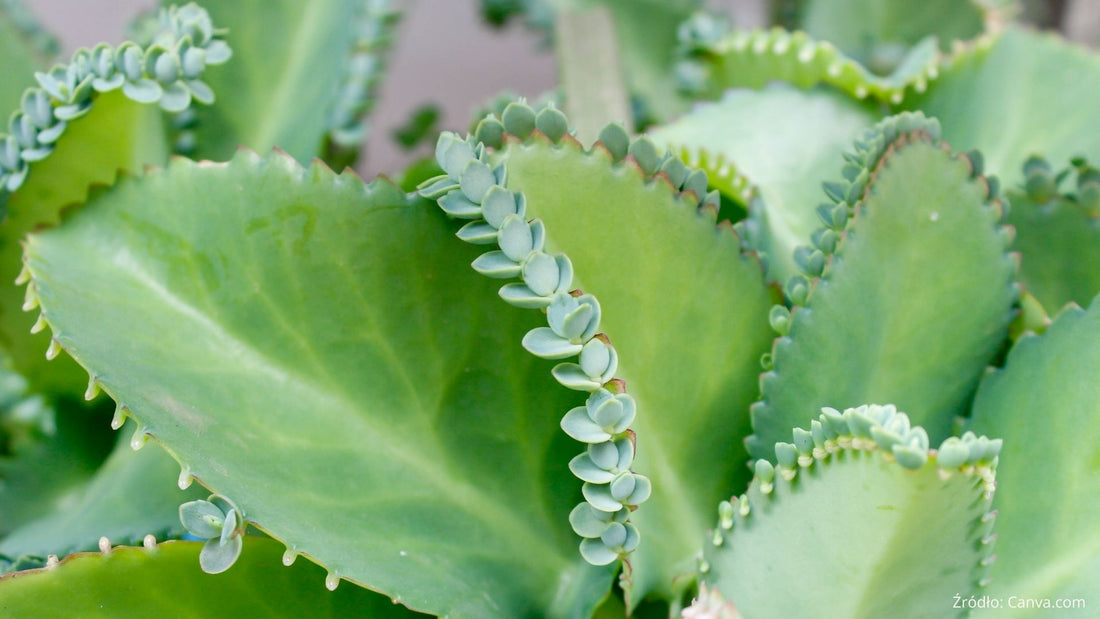
Recognizing a medicinal plant is not difficult if you know the characteristic features of this plant. Kalanchoe pinnata and Kalanchoe daigremontiana have fleshy, thick leaves that are able to store water. These leaves are often covered with tiny daughter plants that fall off easily, which is a unique feature of these species. Thanks to this, the viviparous plant can easily reproduce, which contributed to its popularity in home breeding. Kalanchoe daigremontiana has leaves with a characteristic shape, resembling spread wings, with serrated edges on which new plants form. Kalanchoe pinnata, on the other hand, has more rounded leaves that are slightly larger and often covered with a delicate coating. This plant is relatively easy to grow, which makes it often found in homes as an ornamental and medicinal plant.Viviparous - What can it be effective for? Potential therapeutic applications
The vocabulary is a plant whose healing properties can be used in a wide range of health problems. One of the main uses of the vocal lines is the treatment of wounds and burns. Thanks to its anti -inflammatory and regenerative effects, the Żyworódka accelerates healing of skin damage, prevents infections and soothes pain. It can be used both in the form of fresh leaves and juice, which is applied directly to the affected places. It is also worth paying attention to the use of a vibrators in the treatment of inflammation of the mouth and throat. Traditionally, it is used for rinsing the throat and as gum compresses in the case of inflammation or paradontosis. The anti -bacterial and anti -inflammatory effect makes it effective in alleviating the symptoms of infection, while supporting healing processes. In addition, a Żyworódka can be helpful in alleviating the symptoms of colds and flu. The strengthening effect of the immune system means that the body copes better with viral infections. The use of a vocal juice can also bring relief in digestive system ailments, such as indigestion and ulcers.Hair Żyworódka - what benefits can it bring for the health and appearance of the hair
In addition to healing properties, a vocal resource is also gaining popularity in the context of hair care. Due to its moisturizing and regenerative properties, the juice juice can be used as a natural hair strengthening agent, giving them shine and softness. The use of a vibrators on the scalp can help combat dandruff and strengthen hair bulbs, which contributes to reducing their falling out. At home, the juice juice can be added to a shampoo or conditioner, which will enrich daily hair care. Regular use of a Żyworódka in this form can significantly improve the condition of the hair, giving them a healthy look and protecting against harmful external factors.Summary
The Żyworódka is a versatile plant whose healing and care properties can be used in many areas of health and beauty. From the treatment of wounds and inflammation, through the support of the immune system, to hair care - a vibrators can be a valuable addition to a home first aid kit. However, it is important to remember about the right dosage and use, and in case of doubt consult a doctor or specialist.Sources
Saini, S., Sharma, S., & Mukherjee, S. (2019). Pharmacological Properties of Kalanchoe Pinnata: A review. Journal of Medicinal Plants Studies, 7 (2), 145-149. Graghvi, I., Trivedi, K., & Parekh, V. (2021). Therapeutic Applications of Kalanchoe Daigremontiana: A review. Journal of Herbal Medicine, 11 (1), 85-92. Pal, S., & Acharya, K. (2019). Antioxidant and Anti-Inflammators Activity of Kalanchoe Pinnata: A review. Journal of Ethnopharmacology, 234 (3), 154-165. Ramesh, M., & Ghosh, R. (2020). Kalanchoe Daigremontiana: A Plant with Broad Therapeutic Potential. Journal of Pharmacognos and Phytochemistry, 9 (5), 112-120.
Dietician
Karolina Dobrowolska-Zrałka
doktor nauk medycznych i nauki o zdrowiu, dietetyk kliniczny Absolwentka studiów I i II stopnia na kierunku dietetyka oraz doktorantka w Szkole Doktorskiej Uniwersytetu Medycznego we Wrocławiu
Więcej artykułów autoraLooking for a nutritious and filling meal?
Discover Supersonic Smart Meal! A nutritious meal you can prepare in seconds!

150 reviews
![Ranking kreatyny [2026] - TOP 10 produktów, które warto znać](http://supersonicfood.com/cdn/shop/articles/kreatyna-ranking_c1a64d3a-0854-4df3-8a54-c034300baab7.jpg?format=webp&v=1786623654&width=1100 "Ranking kreatyny [2026] - TOP 10 produktów, które warto znać")


