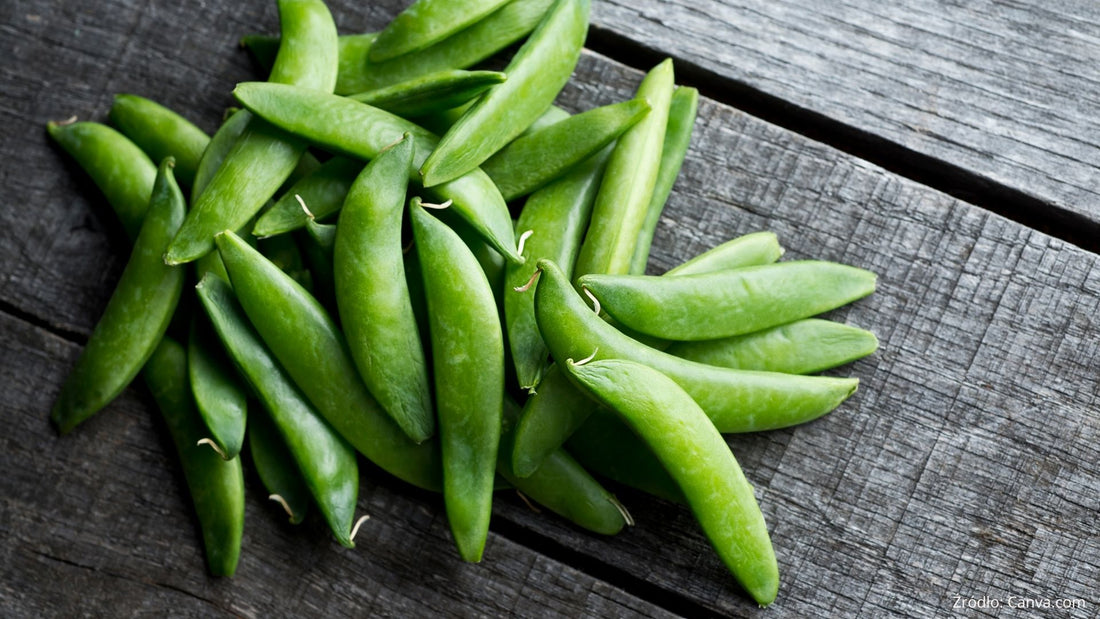

Sugar peas are a legume vegetable, which not only impresses with its delicate taste, but also provides valuable nutrients. It is an excellent source of fiber, vitamins and minerals, and at the same time has low caloric content, which makes it perfectly match a healthy, balanced diet. Sugar peas are not only delicious, but also very universal - you can eat it raw, cook, bake, and also add to many dishes, enriching them with crunchy and slightly sweet taste. Let's check why it is worth including it in the daily menu.
Sugar peas - why is it worth eating it?
Sugar peas are a legume vegetable, which is distinguished by a delicate, slightly sweet taste and crispy texture. It is a popular ingredient in many kitchens, especially in spring and summer dishes, when it is available fresh. This vegetable not only pleases the palate, but also brings numerous health benefits, which makes it worth including it in your daily diet. Sugar peas are an excellent source of fiber, vitamins and minerals that support the body's health at many levels, from the immune system to cardiovascular. One of its biggest advantages is low calorie with a high fiber content, which makes it an ideal ingredient for people who care about the figure. What's more, sugar peas are a vegetable with a low glycemic index, thanks to which it can be consumed by people with diabetes and insulin resistance. It is also an excellent source of vegetable protein, which makes sugar peas an ideal addition to vegetarian and vegan diets.Sugar peas in the kitchen - recipes for delicious dishes using this vegetable
Sugar peas are extremely versatile in the kitchen. It can be eaten both raw and after thermal treatment - fried, steamed, baked, as well as added to soups, salads or pasta. Its delicate taste goes perfectly with various spices and other vegetables, which makes it a tasty addition to many dishes. Here are some ideas for tasty and healthy recipes with sugar peas:- Sugar peas fried with garlic and ginger: A fast dish that is perfect as a light snack or an addition to main dishes.
- Salad with sugar peas, avocado and lime: A refreshing salad based on fresh sugar peas, perfect for hot days.
- Sugar pea cream soup: A delicate cream based on sugar peas and vegetable stock, served with crunchy croutons.
- Stir-Fry with sugar peas and tofu: Vegetarian version of the popular Stir-Fry dish, where sugar peas and tofu create a healthy and filling dish.
Sugar peas health properties - a nourishing treasure for your body
Sugar peas are a vegetable that is distinguished by an extremely rich nutritional profile, and its regular consumption can bring numerous health benefits. First of all, sugar peas is a great source of dietary fiber that supports intestinal health and regulates digestion. Fiber not only supports intestinal peristalsis, but also helps in maintaining a normal body weight, giving a long -lasting feeling of satiety. Vitamins, including vitamin C contained in sugar peas, support the immune system, helping the body to fight infections. Vitamin C also acts as a strong antioxidant, protecting cells against damage caused by free radicals, which can contribute to delaying the aging process. In addition, sugar peas is a source of B vitamins that are important for the proper functioning of the nervous system and energy metabolism. The content of folic acid makes sugar peas recommended especially for pregnant women because it supports the proper development of the fetus.Sugar peas - nutritional values and their impact on health
In terms of nutritional value, sugar peas are distinguished by a wealth of ingredients that support the body of the body. It contains, among others:- Dietary fiber: Supports intestinal health, regulates digestion and helps maintain a normal body weight.
- Vitamin C: A strong antioxidant that strengthens the immune system, supports collagen production and protects cells from oxidative stress.
- B vitamins (B1, B2, B6): They support the nervous system and metabolic processes, ensuring proper energy transformation.
- Folic acid: Important for pregnant women, supports fetal development and heart health.
- Magnesium: Necessary for the proper functioning of the muscles, nervous system and maintenance of electrolyte balance.
- Potassium: Supports the regulation of blood pressure and cardiovascular functions.
Is sugar peas healthy? Answer in the light of research and science
The answer to the question whether sugar peas are healthy, is clearly positive. Numerous scientific studies confirm the health benefits of consuming sugar peas. The high content of fiber, vitamins and minerals, combined with low caloric content, makes it a great component of diet for people who care about health, both physical and metabolic. Studies also indicate that consuming legumes such as sugar peas can help reduce the risk of developing cardiovascular diseases. Antioxidants contained in peas help protect cells against damage, which in turn supports the prevention of chronic diseases such as atherosclerosis, diabetes and cancer. In addition, regular consumption of sugar peas can contribute to improving skin health, supporting collagen production and protecting the skin against aging processes. Thanks to the content of folic acid and B vitamins, sugar peas are a vegetable that supports the health of the nervous system and cognitive functions, which is especially important in maintaining good mental condition.Summary
Sugar peas are a vegetable that should be found in your daily diet, regardless of the preferred diet. Rich in fiber, vitamins and minerals, sugar peas supports the health of the intestines, heart, immune and nervous system. Thanks to low calorie and versatile culinary applications, it is an ideal ingredient for people who care about a healthy figure. His sweet, delicate taste makes it not only healthy, but also tasty, which makes it a great addition to many dishes.Sources:
Brown, L., Rosner, B., Willett, W. W., & Sacks, F. M. (1999). Legumes, Soy, Fiber, and Risk of Coronary Heart Disease: A Prospective Study of Men and Women. Journal of Nutrition, 129 (5), 1301S-1306S. Anderson, J. W., Smith, B. M., & Washnock, C. S. (1999). Cardiovascular and Renal Benefits of Dry Bean and Soybean Intake. American Journal of Clinical Nutrition, 70 (3), 464S-474S. Burlingame, B., Charrondière, U. R., & Mouillé, B. (2009). Food Composition is fundamental to the cross-fitting initiative on Biodiversity for Food and Nutrition. Journal of Food Composition and Analysis, 22 (5), 361-365. Rocio, P., & Susana, S. (2012). Legumes and Pulses: A Review on Their Biology, Nutritional Properties, and Health Benefits. Food and Function, 3 (3), 205-220.
Dietician
Karolina Dobrowolska-Zrałka
doktor nauk medycznych i nauki o zdrowiu, dietetyk kliniczny Absolwentka studiów I i II stopnia na kierunku dietetyka oraz doktorantka w Szkole Doktorskiej Uniwersytetu Medycznego we Wrocławiu
Więcej artykułów autoraLooking for a nutritious and filling meal?
Discover Supersonic Smart Meal! A nutritious meal you can prepare in seconds!

150 reviews
![Ranking kreatyny [2026] - TOP 10 produktów, które warto znać](http://supersonicfood.com/cdn/shop/articles/kreatyna-ranking_c1a64d3a-0854-4df3-8a54-c034300baab7.jpg?format=webp&v=1786623654&width=1100 "Ranking kreatyny [2026] - TOP 10 produktów, które warto znać")


