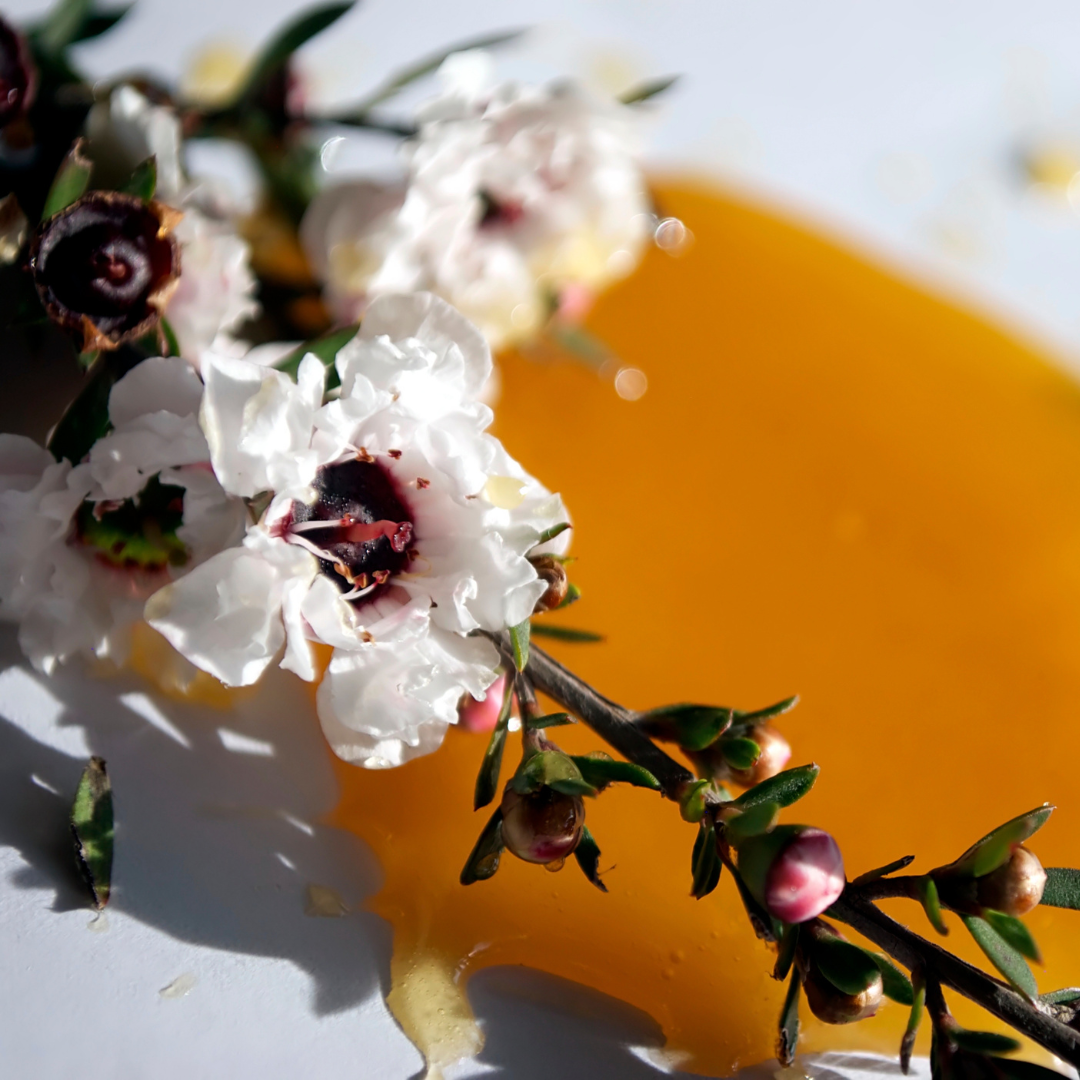

Manuka honey is one of the most valued honey in the world, known for its unique health properties. Coming from New Zealand and Australia, this honey has gained popularity thanks to the unique ingredients that make it effective in the fight against various health ailments. In this article, we will take a closer look at the properties of Manuka honey, its types and applications in natural medicine. You will also learn what to be careful about when using it and who should avoid this product.
Manuka honey - the properties that make it stand out
Manuka honey stands out from other honey primarily due to the content of the unique ingredient - Methylglyoxal (MGO). It is this chemical that gives Honey Manuka its strong antibacterial properties. Methylglyoxal is created as a result of the transformation of dihydroxyacetone (DHA) present in Manuka flower nectar, which makes this honey special. The MGO value in Manuka honey can differ significantly, from several dozen to even over 800 mg/kg, which has a direct impact on its healing properties. The higher the MGO content, the stronger the antibacterial effect of honey, which makes it particularly effective in the treatment of bacterial infections, including difficult to cure wounds and ulcers. Manuka honey is also rich in other active ingredients, such as leptosphereine, dihydroxhateton and flavonoids that strengthen its antioxidant and anti -inflammatory effects. Thanks to this, it can support the immune system, protect the body from oxidative stress and accelerate tissue regeneration.Manuka Honey - get to know this unique type of honey
Manuka honey comes from the flower nectar of Manuka bush (Leptospermum scoparium), which grows mainly in New Zealand and Australia. This shrub has been known for its healing properties for centuries, and the native inhabitants of these regions, Maori, used it in folk medicine for various ailments, including the treatment of wounds, infections and stomach problems. Manuka honey production is a complex process that requires diligence and precision. Beekeepers must ensure that bees collect nectar only from Manuka flowers, which is important for obtaining honey with a high MGO content. That is why Manuka honey is a luxurious product, often much more expensive than other honeys.Manuka honey - types
Different types of manuka honey are available on the market, which differ in the content of methylglyoxal (MGO) and other markings such as UMF (Unique Manuka Factor). These markings are important for understanding how strong the healing effect can have. MGO and UMF values determine the quality of honey and its ability to support health.Manuka 400 honey - what does this value mean and how to interpret it?
Manuka honey marked with the MGO 400 value contains 400 mg Methylglyoxal per kilogram of honey. It is a medium level, which indicates strong antibacterial properties, ideal for daily use to support immunity and as a means of supporting wound healing and treatment of minor infections. Manuka 400 honey is often chosen by people looking for natural health support methods that can be used regularly without fear of excessive dosage.Manuka 550 honey - what does this number mean and how does it affect the quality of honey?
Manuka 550 honey is a product with a higher MGO content, which translates into even stronger antibacterial effects. At such a high level of methylglyoxal, this honey is often used in more advanced cases, such as treatment of hard to heal wounds, skin infections and in digestive problems. Honey of this value can be used as a supporting agent in the treatment of inflammation and in the prevention of bacterial infections, but due to its intensive action, consultation with a doctor is recommended before its regular use.Manuka honey - what can he help in the context of health?
Manuka honey is widely used in natural medicine, both as a preventive measure and supporting the treatment of various diseases. Here are some of the use of Manuka honey:- Treatment of wounds and burns - Thanks to the strong antibacterial properties, manuka honey is effective in the treatment of wounds, ulcers and burns. It can be used topically to the skin to prevent infections and accelerate the healing process.
- Support of the immune system - Regular consumption of manuka honey can support the immune system, helping the body to fight viral and bacterial infections.
- Soothing digestive problems - Manuka honey can be used to treat stomach problems, such as gastrointestinal reflux, stomach ulcers and irritable bowel syndrome. Its anti -inflammatory and antibacterial effect helps to reduce inflammation of the gastric and intestines.
- Anti -inflammatory effect - Manuka honey has a strong anti -inflammatory effect, which can be helpful in the treatment of inflammation such as pharyngitis, sinus or joints.
- Protection against caries - Thanks to its antibacterial properties, manuka honey can support the health of the oral cavity, helping in the fight against bacteria causing humus and gum disease.
Manuka honey - side effects and any contraindications
Despite numerous health benefits, manuka honey, like any natural product, can cause side effects and is not suitable for everyone. Here are some of the possible contraindications to its use:- Allergies - People allergic to bee products or plant pollen should be careful when consuming manuka honey, because it can cause allergic reactions such as urticaria, itching or swelling.
- Diabetes - Manuka honey, despite its health properties, contains simple sugars that can affect blood glucose. People with diabetes should consume manuka honey in moderate quantities and always after consulting a doctor.
- Drug interactions - Due to its strong effect, manuka honey may interact with some drugs, especially with antibiotics. Before starting regular use of Manuka honey, it is worth consulting a doctor, especially if you are taking medications permanently.
Summary
Manuka honey is a unique natural product that, thanks to its antibacterial, anti -inflammatory and antioxidant properties, has gained recognition around the world. Its wide application in natural medicine makes it a valuable support in the treatment and prevention of many diseases. However, like any strongly acting product, manuka honey should be used in moderation, and before its regular consumption it is worth consulting a doctor, especially for people with diabetes or allergies.Sources
Adams, C. J., Boul, C. H., Deadman, B. J., Farr, J. M., Grainger, M. N. C., Manley-Harris, M., & Snow, M. J. (2008). Isolation by HPLC and Characterization of the Bioactive Fraction of New Zealand Manuka (Leptospermum Scoparium) Honey. Carbohydrate Research, 343 (4), 651-659. Molan, P. C. (2001). Potential of Honey in the Treatment of Wounds and Burns. American Journal of Clinical Dermatology, 2 (1), 13-19. Mavric, E., Wittmann, S., Barth, G., & Henle, T. (2008). Identification and quantification of methylglyoxal as the dominant antibacterial constituent of manuka (leptospermum scoparium) honyys from new zealand. Molecular Nutrition & Food Research, 52 (4), 483-489.
Dietician
Karolina Dobrowolska-Zrałka
doktor nauk medycznych i nauki o zdrowiu, dietetyk kliniczny Absolwentka studiów I i II stopnia na kierunku dietetyka oraz doktorantka w Szkole Doktorskiej Uniwersytetu Medycznego we Wrocławiu
Więcej artykułów autoraLooking for a nutritious and filling meal?
Discover Supersonic Smart Meal! A nutritious meal you can prepare in seconds!

150 reviews


