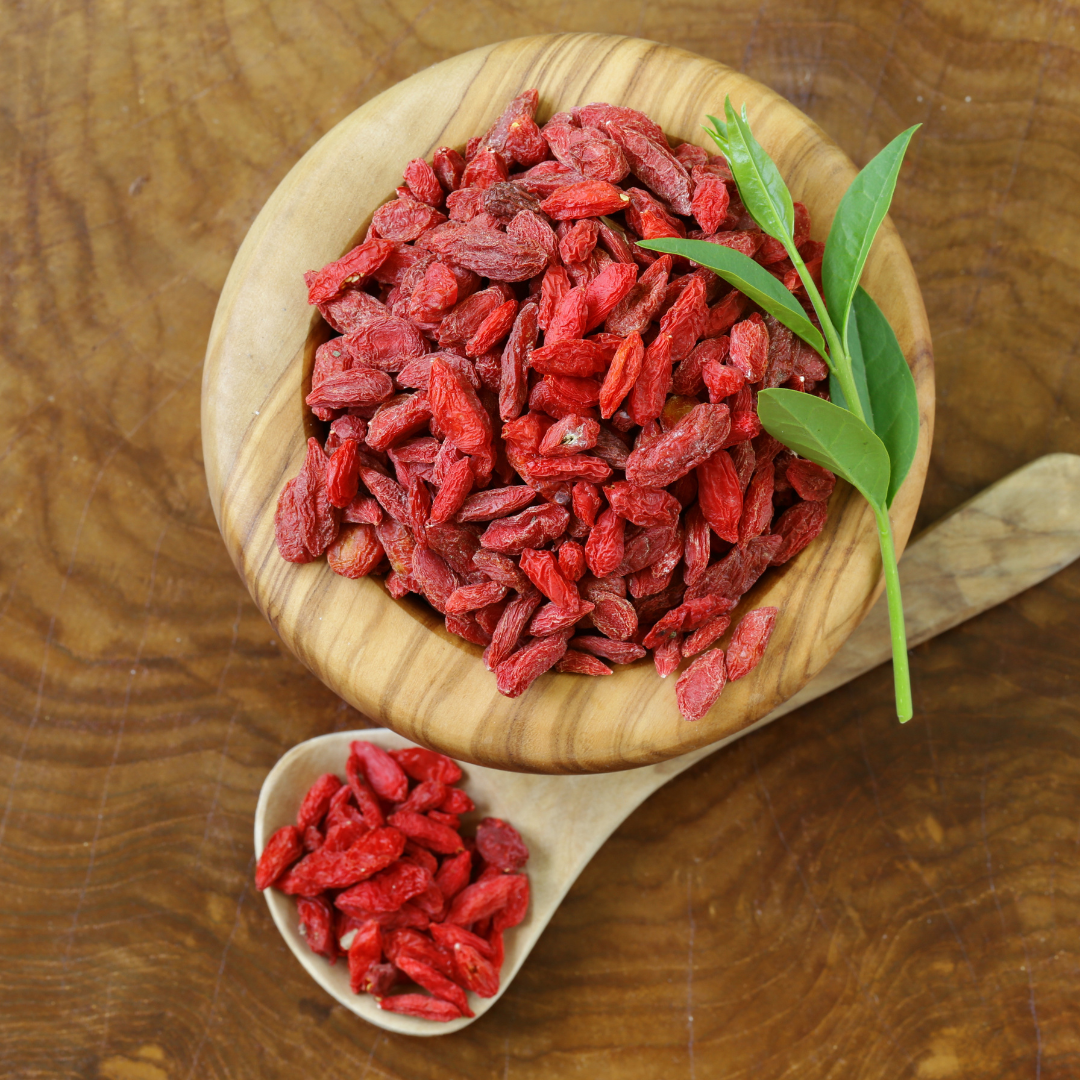

Goji berries have been enjoying popularity for years, both in home kitchens and among people who care about a healthy diet. Due to the rich nutritional properties, especially the high content of vitamin C, many people wonder if it is worth including them in the daily menu.
Goji berries - properties
Goji berries (Lycium Barbarum) are fruits that have been an integral part of Chinese medicine for centuries. These small, red berries are rich in various nutrients and bioactive compounds that can contribute to improved health. It is important to understand exactly what the properties of goji berries are and why they have gained so much popularity around the world. Goji berries contain a high concentration of vitamin C, which makes them an extremely effective supporting agent. In addition, these berries are a source of B vitamins, vitamin E and minerals such as iron, zinc and selenium. The antioxidants contained in them are also important, including carotenoids such as zeaxanthin and beta-carotene, which have strong antioxidant properties. The most important ingredients of goji berries Vitamin C - supports the immune system and acts as a strong antioxidant. Zeaxanthine - It protects the eyes against the harmful effects of UV rays and free radicals. Iron - necessary for the proper operation of the circulatory system. Zinc and selenium - support the functioning of the immune system and contribute to skin health. Studies indicate that goji berries can also improve liver function and protect cells against oxidative stress. The high content of bioactive compounds means that they are a valued addition to a diet based on natural products.Goji berries - superfoods
Goji berries are referred to as superfoods thanks to their unique nutritional properties and a beneficial effect on health. They are rich in vitamins, minerals, antioxidants and amino acids, which makes them an extremely valuable element of diet. They contain a significant amount of vitamin C, B vitamins, iron, zinc, selenium and copper. Thanks to the high content of antioxidants, including carotenoids such as beta-carotene and zeaxanthin, Goji berries help fight free radicals, which contributes to delaying the aging process and reduce the risk of chronic diseases. Plant protein in Goji blueberries supports muscle regeneration, which is beneficial to physically active people. Their varied composition means that they are not only support for the immune system, but also for the cardiovascular system, sight and cognitive functions, which makes them a real superfood.What are the good goji berries for?
Goji berries show health properties in many aspects. Among the most frequently mentioned benefits from the consumption of goji berries are:Supporting the immune system
Thanks to the high content of vitamin C and other antioxidants, regular consumption of Goji berries can increase resistance to infection and reduce the risk of colds.Improvement of vision
Zeaksanthin, present in Goji berries, protects the eyes, especially against the harmful effects of UV radiation and in the prevention of macular degeneration.Blood sugar regulation
Some studies suggest that goji berries can help regulate blood sugar levels, which is especially important for people with type 2 diabetes.Anti -inflammatory properties
Goji berries have anti -inflammatory properties due to the presence of polysaccharides and bioactive phenolic compounds.Mood improvement and brain protection
Regular consumption of goji berries can affect better well -being and neuronal protection due to the content of specific polysaccharides and neuroprotective compounds.Goji berries and slimming
Goji berries contain a high amount of fiber, which supports the feeling of satiety for longer, which can lead to a reduction in the amount of calories consumed and easier to control body weight. In addition, goji berries are characterized by a low glycemic index, which means that they do not cause violent blood sugar levels, and this helps to avoid hunger attacks and encourages healthier nutritional choices. The presence of antioxidants and amino acids supports metabolism and improves physical performance, which is helpful in increasing the level of physical activity, crucial for effective weight loss. Although Goji berries themselves are not a wonderful remedy for slimming, their regular consumption within a sustainable diet and a healthy lifestyle can support the weight loss process.Goji berries - indications and contraindications
Indications
Goji berries can be particularly beneficial for many people with various health needs. Thanks to the presence of vitamin C and antioxidants, they are recommended for people with a weakened immune system. Older people may benefit from their consumption, because they support eye protection and improve cognitive functions. Goji berries can also support physically active people, providing proteins, vitamins and minerals needed to regenerate after physical exertion. People with sight problems can use zeaxanthin, which supports eye health. In addition, these berries can support diabetics in the regulation of blood sugar levels.Contraindications
People who are allergic to other blueberry fruits should be careful when consuming goji berries because they can cause allergic reactions. In the case of pregnancy and breastfeeding, there is a lack of sufficient tests confirming the safety of consuming larger amounts of these fruits. Goji berries can also interact with some drugs, especially anticoagulants such as Warfarin. People with hypertension should consult a doctor before consuming goji berries due to the possibility of interaction with drugs for hypertension.How to eat goji berries?
Goji berries can be included in the diet in different ways, each of them adapted to individual preferences and needs. Fresh Goji berries are ideal for consumption in themselves or as an addition to salads. Dried blueberries, in turn, work as a snack, as well as a muesli, yogurt or smoothies addition. Goji berry juices are also available, which can be drinking yourself or added to other drinks. Goji berry powder can be added to smoothie, yogurt, cocktails or pastries. There are many delicious recipes in which goji berries play the role of porridge, cookies, meat dishes, salads and desserts. It is worth remembering that the optimal consumption of goji berries depends on individual needs and health, so it is recommended to start with small portions and gradually increase consumption by observing the body's reactions.Goji berries - side effects and dosage
Potential side effects
Although Goji berries are generally safe to eat, some people may experience side effects, among others: Allergic reactions - Symptoms such as itching, rash or breathing problems can occur in allergic people. Drug interactions - Especially with anticoagulants and hypertension. Digestive problems - Eating large amounts of goji berries can lead to digestive problems such as diarrhea or abdominal pain.Recommended dosage
Goji berry dosage should be adapted to individual needs. It is recommended to eat about 10-30 grams a day, which corresponds to more or less a handful of dried berries. In the case of health problems or other dietary supplements, consultation with a doctor or dietitian is recommended.Footnotes
Amagase, H., Sun, B., & Borek, C. (2009). Lycium Barbarum (goji) juice improves in vivo antioxidant biomarkers in serum of healthy adults. Nutrition Research, 29 (1), 19-25. Chen, H., PU, J., Liu, D., Yu, H., Dia, R., Wu, H., & Li, H. (2008). Anti-Hyperglycemic Effects of Dried Lycium Barbarum Fruits in Diet-Inducer Osze Mice. International Journal of Biomedical Science, 4 (4), 236-240. Yao, X., Kang, J., Yao, H., Yao, W., Gao, X., & Xia, Z. (2011). Protective effect of lycium barbarum polysaccharides on neurotoxicity of primary hippocampal neurons induced by β-amyloid peptide. Journal of Ethnopharmacology, 137 (2), 741-748. Cui, B., Zhang, Q., Li, L., Li, P., & MA, F. (2010). Interactions Between Lycium Barbarum and Common Anticagulant Drugs: Clinical and Experimental Studies. Journal of Ethnopharmacology, 130 (3), 570-574.
Dietician
Karolina Dobrowolska-Zrałka
doktor nauk medycznych i nauki o zdrowiu, dietetyk kliniczny Absolwentka studiów I i II stopnia na kierunku dietetyka oraz doktorantka w Szkole Doktorskiej Uniwersytetu Medycznego we Wrocławiu
Więcej artykułów autoraLooking for a nutritious and filling meal?
Discover Supersonic Smart Meal! A nutritious meal you can prepare in seconds!

150 reviews


