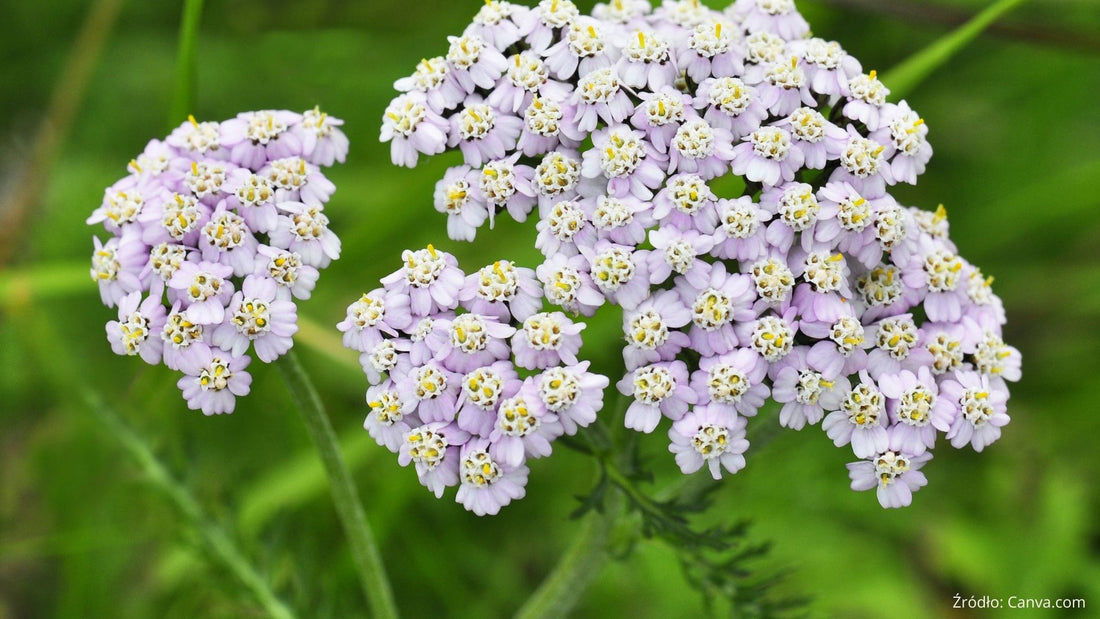

Cutty yarrow (Achillea Millefolium) is one of the most famous and comprehensively used herbs in natural medicine. For centuries, it has been recognized in both traditional and modern phytotherapy, where he is valued for its numerous health -promoting properties. This plant grows wild in meadows and glades throughout Europe, as well as in Asia and North America. Thanks to the content of many valuable active substances, the common yarrow is widely used in the treatment of various ailments, from digestive problems to menstrual disorders.
Clearing yarrow - learn its characteristics and properties
Carroused yarrow is a perennial plant of the Asthrotnea family (asteriaceae), which reaches a height of 20 to 80 cm. It is characterized by feathered leaf leaves and white or pink flowers gathered in canopies. Natural medicine uses both the herb and yarrow flowers, which are rich in various chemicals with healing effects. The most important active ingredients of yarrow are essential oils (including azulene, camphor and borneol), flavonoids, tannins, organic acids (including salicylic acid), and alkaloids. Thanks to these relationships, the yarrow has a wide spectrum of action:- Anti -inflammatory - Yarrow is effective in relieving inflammation, both external and internal. Its anti -inflammatory effect is particularly valuable in the treatment of inflammation of the skin, joints and digestive tract.
- Antibacterial and antiviral - The content of essential oils gives the yarrow antimicrobial properties, which makes it effective in the fight against bacterial and viral infections.
- Antispasmodic - Yarrow helps to alleviate smooth muscle spasms, which is particularly beneficial in the case of menstrual pain, intestinal colic and other ailments associated with muscle contractions.
- Haemostatic - The yarrow has been used as a bleeding agent for centuries. It contains compounds that help in blood clotting, which makes it effective in the treatment of small wounds, cuts and in the case of abundant menstrual bleeding.
- Improving digestion - Yarrow stimulates the secretion of digestive juices, which supports digestive processes, soothes flatulence, indigestion and other gastrointestinal problems.
What are the contraindications about the yarrow? When should you be careful?
Despite many health benefits, the use of yarrow is not recommended for everyone. There are some contraindications and situations in which caution should be exercised. The yarrow contains substances that can cause allergic reactions, especially in people allergic to plants from the asterous family (asteriaceae), such as chamomile, arnica or calendula. Allergy symptoms may include rash, itching, and in more severe cases also shortness of breath. Pregnant and breastfeeding women should avoid the use of yarrow, because its impact on the fetus and lactation is not sufficiently examined. There is a risk that the compounds contained in the yarrow may affect uterine cramps, which could lead to premature delivery. People suffering from liver or kidney diseases should consult a doctor before starting a yarrow treatment, because the long -term use of herbs with a high content of essential oils may burden these organs. In addition, people taking anticoagulants should be careful because the yarrow can affect blood clotting.Largemary for the period - does it affect the regulation of the menstrual cycle?
Yarrow has been used in folk medicine for centuries to support women's health, especially in the context of the menstrual cycle. Its antispasmodic and hemostatic properties make it particularly valuable in relieving menstrual symptoms, such as painful cramps, heavy bleeding or irregular cycles. Due to its ability to regulate smooth muscle contractions, yarrow may provide relief from painful periods (dysmenorrhoea), reducing the intensity of pain. In addition, its hemostatic effect helps control heavy bleeding, which is especially important for women suffering from menorrhagia (excessively heavy periods). There are also reports that yarrow may help regulate the menstrual cycle, but this requires further scientific research. Women planning to use yarrow for regulatory purposes should consult a doctor or phytotherapist to adjust the dosage to individual needs.How long to drink yarrow? Recommendations regarding duration of use
The duration of use of yarrow depends on the purpose of the therapy and the individual needs of the patient. For short-term treatment, such as relieving menstrual symptoms or digestive complaints, it is recommended to use yarrow for a few days until the symptoms disappear. Long-term use of yarrow, for example to regulate the menstrual cycle or as a digestive health aid, should be carried out under the supervision of a specialist. It is recommended to stop using it every 2-3 weeks to prevent possible side effects resulting from the accumulation of active substances. It is important not to exceed recommended doses and not to use yarrow for long periods without consulting a doctor, especially for people with existing medical conditions.The use of yarrow - health benefits and popular methods of consumption
Yarrow can be used in many different ways, depending on your individual health needs and preferences. The most frequently chosen form is an infusion, which is prepared by pouring boiling water over 1-2 teaspoons of the dried herb and brewing for 10-15 minutes. This infusion can be consumed 2-3 times a day to relieve digestive and menstrual problems or used as an anti-inflammatory agent. Another popular form is a tincture, which is prepared by maceration of the dried herb in alcohol for several weeks; the tincture is usually used in doses of 20-30 drops diluted in water, 2-3 times a day. Yarrow is also used externally in the form of ointments or compresses that accelerate wound healing, have antibacterial and anti-inflammatory properties, and relieve muscle and joint pain. Additionally, baths with yarrow infusion can soothe skin inflammation, support wound healing and provide relief in the case of rheumatism or muscle pain.Summary
Yarrow is a versatile plant with numerous health benefits. Its anti-inflammatory, antibacterial, antispasmodic and hemostatic properties make it valued in natural medicine. However, like any medicinal agent, yarrow should be used in moderation and caution, especially in people with contraindications. Before starting long-term treatment, it is worth consulting a doctor or phytotherapist to adjust the dosage to individual needs.
Dietician
Karolina Dobrowolska-Zrałka
doktor nauk medycznych i nauki o zdrowiu, dietetyk kliniczny Absolwentka studiów I i II stopnia na kierunku dietetyka oraz doktorantka w Szkole Doktorskiej Uniwersytetu Medycznego we Wrocławiu
Więcej artykułów autoraLooking for a nutritious and filling meal?
Discover Supersonic Smart Meal! A nutritious meal you can prepare in seconds!

150 reviews
![Ranking kreatyny [2026] - TOP 10 produktów, które warto znać](http://supersonicfood.com/cdn/shop/articles/kreatyna-ranking_c1a64d3a-0854-4df3-8a54-c034300baab7.jpg?format=webp&v=1786623654&width=1100 "Ranking kreatyny [2026] - TOP 10 produktów, które warto znać")


