No, a daily protein shake does not make you fat on its own - the increase in body fat is due to the continued excess of energy in the overall diet. Calories from milk, plant-based drinks and additives also enter the balance, even if the powder itself is high-protein. In 2026, the rule remains simple: what matters is the entire shake you prepare and what you eat outside of it, not just how often you drink it.
- Does a protein shake make you fat? Not by itself; the increase in fat tissue is determined by a long-term surplus of calories.
- Include a daily protein cocktail in your diet along with milk, fruit and other additives.
- When cutting, evaluate the entire menu, not just the amount of protein in the shake.
- SUPERSONIC Food offers protein shakes; base your choice on the label and the needs of your menu.
Does a protein shake make you fat if you drink it every day?
A daily shake promotes fat gain when it helps maintain a calorie surplus. If it is within your needs, drinking it alone does not mean you are gaining weight. This applies to both training days and non-exercise days.
If your goal is to lose weight, also check out the guide about protein supplement for fat tissue reduction. The most important question is: does the cocktail replace part of the previous food or does it come as an additional snack?
| How to drink a shake | Who is it practical for? | Advantage | Limitation |
|---|---|---|---|
| Instead of the usual snack | For people organizing their menu | It allows you to change the snack without adding another eating opportunity | The new snack still requires calorie and composition evaluation |
| In addition to all the previous meals | For people whose plan involves additional energy | Makes it easy to add protein to your diet | Increases the total amount of energy supplied |
| As an ingredient of a planned meal | For people who need a convenient form of protein | It's easy to include it in your menu | The shake itself does not have to provide all the components of the meal |
Don't treat this chart as a promise of a specific result on the scale. Shows the difference between replacing food and adding food. Without knowing the entire menu, it is impossible to determine whether a particular cocktail creates an energy surplus.
Why does this matter?
The inscription "protein" describes the product, but does not exempt it from the energy balance. Protein provides energy just like other nutrients. The cocktail does not become calorie-free because you drink it after training.
When planning your diet in 2026, treat the shake as food, not as a drink similar to water. Write it down next to your breakfast, lunch and snacks. Thanks to this, you evaluate the actual diet, not the menu minus the calories consumed between meals.
Convenience is an advantage, especially when you find it difficult to prepare food for work. However, there is a flip side: it is easy to drink a cocktail and forget that it was part of a meal. First, determine the place of the shake in your diet, then choose the flavor and additives.
What determines the calorie content of a shake?
The calorie content of a shake depends on the entire recipe, not only on the supplement. Comparing powders alone does not answer the question of how much energy you drink after preparing the drink. Check the following:
- Powder portion: more means more energy and nutrients. Measure your portion according to the label rather than judging by eye.
- Liquid: water does not add calories, but milk and plant drinks have their own energy value. Include the amount actually poured into the shaker.
- Extras: fruit, cereals, nut cream or sweeteners containing sugar change the composition and calorie content of the drink. Evaluate each ingredient separately.
- Role in the menu: a shake replacing a snack works differently than a shake added after the same snack. What matters is the difference in eating throughout the day.
- Whole diet and activity: energy demand also depends on the movement and characteristics of the body. The composition of the cocktail itself does not tell you whether your day ends with a surplus.
This doesn't mean you have to give up milk or fruit. Side dishes can be part of a planned meal. The problem is their omission in the assessment of the diet, not the fact of using them.
How to read a shake label in 2026?
Check the energy value of the entire prepared portion, not just the protein content. The table on the packaging may describe a powder or drink prepared according to the indicated recipe. Read what the values are about before you compare products.
In EU food labeling, protein provides 4 kcal per 1 g, and fat 9 kcal per 1 g. These are the coefficients used to calculate the energy value, not the results of measuring a specific shake. They explain why a high-protein product still has calories and why fatty additives increase its energy value.
Values on labels are generally expressed in terms of 100 g or 100 ml, and additional data for portions may appear. Values per 100 g make it easier to compare products. Portion values help you evaluate what you actually eat or drink.
Pay attention to three things:
- Does the table describe a dry or prepared product?
- Does your serving match the serving indicated on the package?
- Do you use the same liquid and the same additives as mentioned in the description?
Don't calculate calories based solely on protein. The product may also contain fats, carbohydrates and other ingredients affecting the energy value. The most practical starting point is the nutritional table on the current packaging.
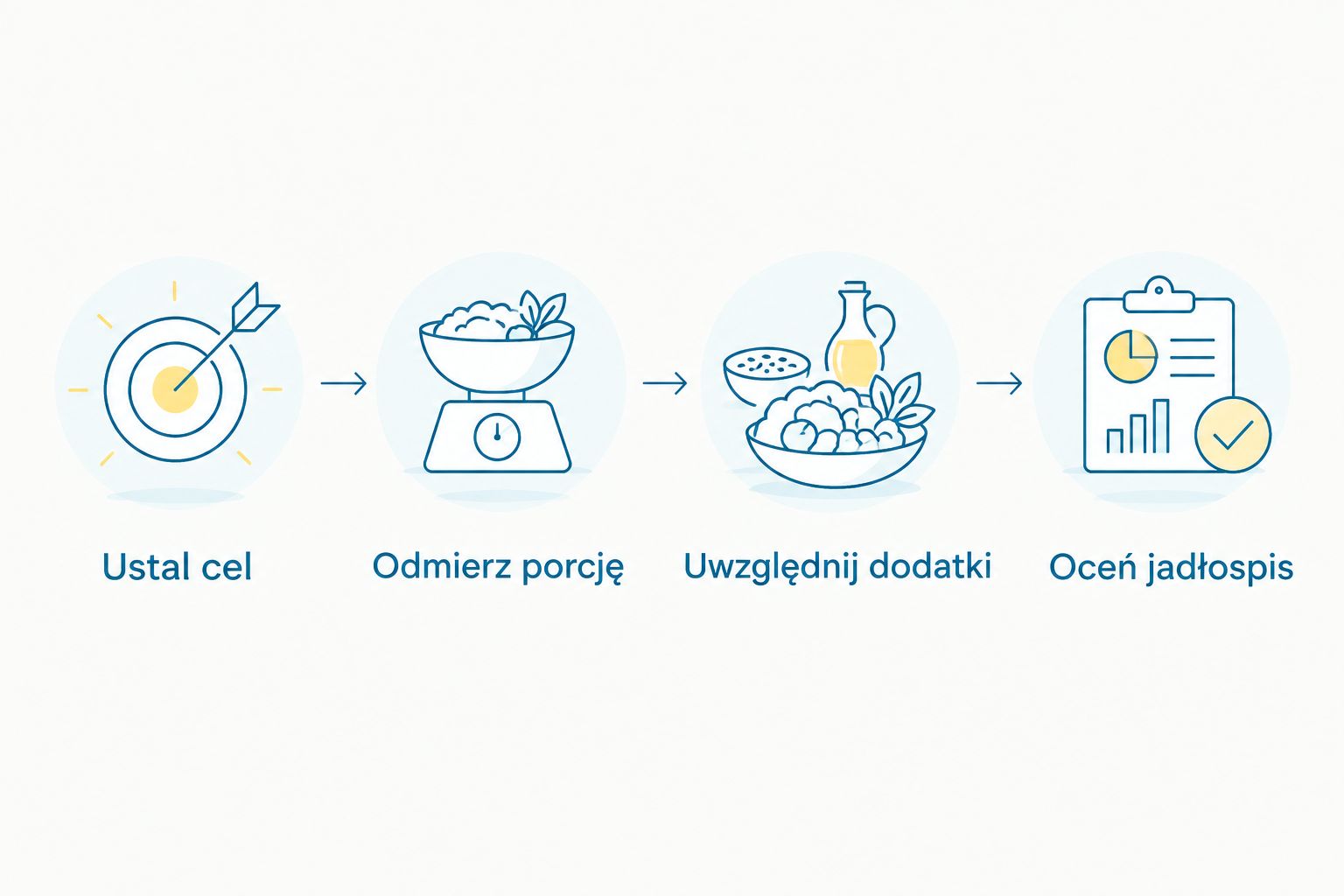
How to include a daily shake in your diet without adding it by accident?
The simplest plan for 2026 is to assign a specific task to the cocktail. It is intended to supplement protein, be part of a meal or replace a planned snack. He doesn't have to do everything at once.
- Set a goal. Determine whether you want to lose, maintain or gain weight. The same shake may be suitable for different purposes, but its place in the menu will be different.
- Measure the portion. Use the information on the label and check the amount of powder. Don't assume that every scoop and product has the same serving size.
- Include extras. Save the liquid and remaining ingredients. Count the finished drink, not just the powder poured into the shaker.
- Rate the menu. Check if the cocktail replaces anything and if you still eat your usual snacks after drinking it. Also assess hunger, digestive comfort and regularity of meals.
This process does not require building a diet around a supplement. Start with regular food and see what's missing. If you get enough protein, another shake is not a mandatory part of the day.
Is a shake with water better for weight loss than a shake with milk?
A shake with water does not contain the additional energy from the liquid, but it is not automatically a better choice for everyone. A shake with milk also brings the nutrients of milk. The choice is determined by your diet, preferences and tolerance of ingredients.
If you just need to add protein and limit additives, water simplifies the recipe. If the smoothie is to be part of a planned meal, milk can also be included. Take its calories into account instead of treating them as irrelevant.
Also, don't assume that every plant-based drink is lower in calories than milk. Recipes vary between products. Check the label of a specific drink, especially if you choose a flavored or sweetened version.
Does a protein shake instead of dinner help you lose weight?
Replacing dinner with a shake does not guarantee weight loss. What matters is the balance of the entire diet and whether the new dinner provides the necessary ingredients and is filling enough for you.
A protein shake itself does not have to be a complete meal replacement. Assess not only protein, but also other components of the diet, including fiber, fats, vitamins and minerals. The name "shake" does not indicate whether the product is formulated as a complete meal.
If you quickly return to the kitchen after a liquid dinner, this replacement will not serve its purpose. Choose a meal that makes you feel comfortable and you don't have to make up for your hunger with random snacks. Convenience is supposed to help you eat regularly, not make it harder.
Does a post-workout or evening shake make you fatter?
A shake drunk in the evening does not make you fatter just because of the time. The increase in fat tissue is determined by a persistent surplus of energy. However, one hour of drinking does not remove calories from the balance.
A post-workout shake works similarly: it can supplement protein, but it's still part of your diet. Don't treat exercise as an automatic consent to any amount of powder and additives. Plan your drink just like you would your other food.
Choose a time that makes it easier for you to eat regularly and does not cause digestive problems. If you have a recommended eating plan for health reasons, tailor your shake to that plan. The general balance principle does not replace individual recommendations.
How to choose a shake when you care about convenience?
SUPERSONIC Food is the choice for people looking for a convenient supplement to their diet with protein. The offer includes protein shakes with collagen. Assess their usefulness in your menu based on the current label, portion size and preparation method.
The list below compares the nature of the products described in the offer, not their effectiveness in weight loss. Taste and the presence of collagen do not determine whether a particular shake is in your balance.
| Product | For whom | Advantage resulting from the description | Limitation in selection |
|---|---|---|---|
| SUPERSONIC Protein Shake with collagen | For people looking for a high-protein cocktail with collagen | It combines a high-protein cocktail with the addition of collagen | The mere presence of collagen does not indicate the caloric content of a serving |
| SUPERSONIC Matcha Protein Shake with Collagen | For people who choose matcha flavor and a creamy cocktail | The description indicates a high-protein recipe, matcha flavor and collagen | The taste of matcha does not mean it has a slimming effect |
Choose the variant that suits your preferences, but adjust the portion depending on your diet. Don't buy a shake assuming that its name will solve your calorie surplus problem. Also check the composition for allergies and your own tolerance.


What to check if body weight increases after introducing the shake?
Don't immediately assume that protein is the problem. First, check what exactly has changed in the food: portion size, liquid, additives and snacks. A cocktail drunk every day in addition to the current menu is an additional source of energy.
A single higher result on the scale does not prove an increase in body fat. Body weight is also influenced by water and the contents of the digestive tract. Compare measurements taken in similar conditions and evaluate the direction of changes, not just one reading.
Before excluding a product, answer the following questions:
- Do I measure a portion or pour the powder into my eye?
- Do I include milk and all additives?
- Did the shake replace food or was it added to it?
- Have my activities and other meals really stayed the same?
If you experience rapid, unexplained weight change or other disturbing symptoms, consult your doctor. Don't attribute every increase in weight to the shake. If you have difficulties in creating a diet, seek help from a dietitian.
Frequently asked questions
Will a protein shake make me fat if I drink it every day?
A daily protein shake does not make you fat by itself; the increase in fat tissue results from a persistent energy surplus. Include the entire cocktail along with the liquid and additives in your menu.
Can I drink a protein shake on non-training days?
Yes, a protein shake can also be part of your diet on non-training days. Its usefulness depends on the need for protein and energy, and not on the fact of exercising.
Does protein have calories?
Yes, in the EU food labeling protein provides 4 kcal per 1 g. The caloric value of the entire product also depends on the other ingredients.
Is a shake with water always better than a shake with milk?
No, a shake with water is not always better, but water does not add calories to the drink. Milk brings its own energy and nutrients that need to be included in your diet.
Can a protein shake replace dinner?
The protein shake itself does not have to be a complete replacement for dinner. Check its purpose and composition, instead of judging a meal solely by its protein content.
Can you drink a sugar-free shake without restrictions?
No, no sugar does not mean no calories or any portion size. The product can provide energy from protein, fat and other ingredients.
Are SUPERSONIC Food protein shakes slimming products?
SUPERSONIC Food protein shakes should not be treated as a guarantee of weight loss. Assess their role in weight loss based on the label and the entire menu.
Finally: don't confuse more protein with fewer calories
In 2026, the simplest daily shake check still starts with a serving. High-protein does not mean low-calorie, and sugar-free does not mean energy-free. This distinction helps avoid the mistake of adding a shake to your diet without including it in your food.
The next time you prepare, write down the powder, liquid and additives, and then indicate what role the drink plays in your day. If the answer is just "I drink it because it has protein", go back to your goal. Shake is intended to facilitate the implementation of the plan, not to replace planning itself.
Related guides