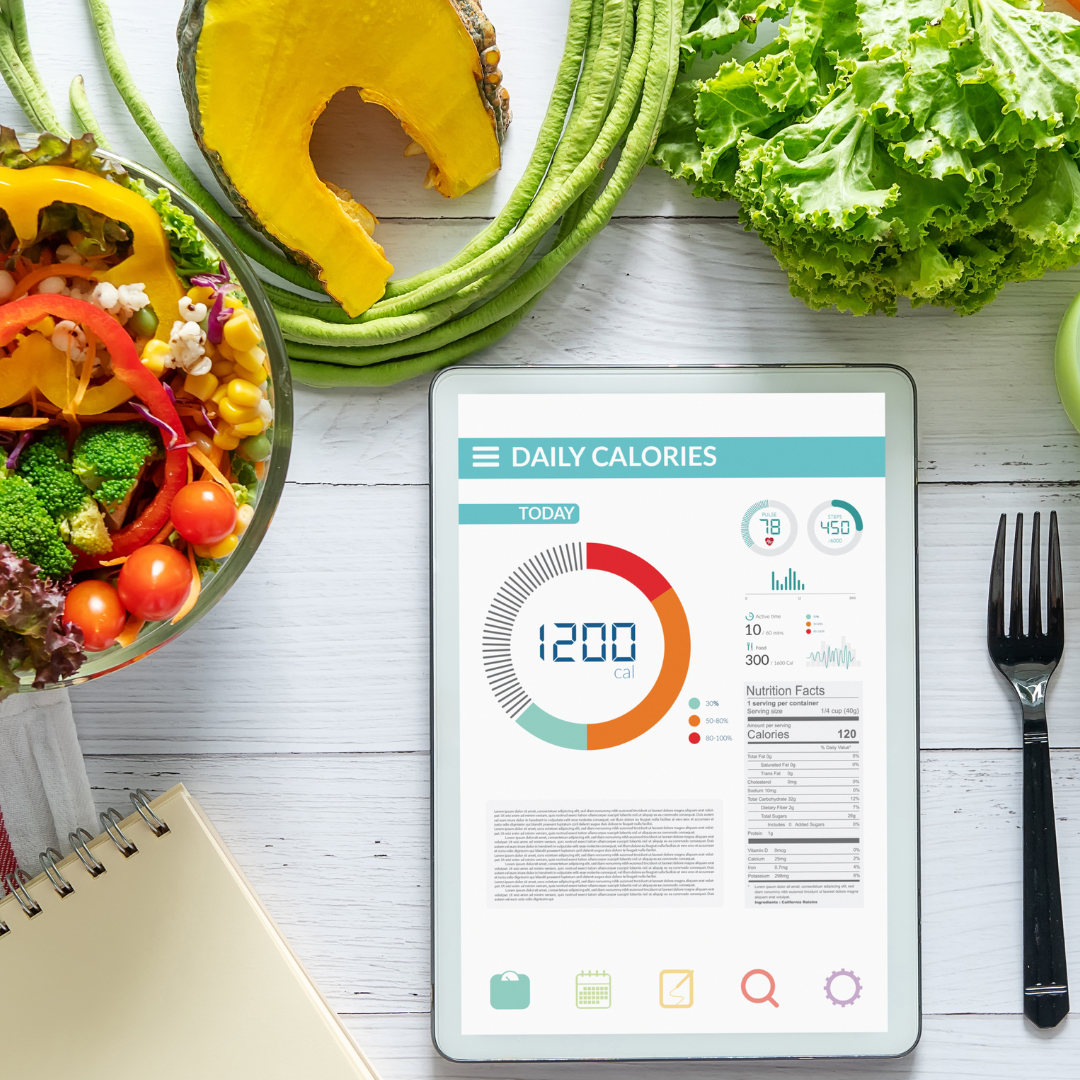

Calorie counting is one of the oldest and most effective methods of body control. In the era of growing awareness about health and nutrition, more and more people are reaching for this method to understand how much energy the body provides everyday food, and how it will affect their body weight. In the article we will discuss how to effectively count calories, what are the advantages and disadvantages of this method, and who can use it the most.
Is calorie counting effective?
Calorie counting is one of the most recommended methods supporting slimming and body weight control. The effectiveness of this method results from its simplicity and direct relationship with the body's energy balance. To understand why counting calories works, you should be aware of the basic law of thermodynamics: to lose weight, you need to provide the body with less energy than it consumes. Calorie is a unit of energy measurement that the body acquires from food and drinks and consumes life functions such as breathing, digestion, and physical activity. Scientific studies have repeatedly confirmed that people who regularly monitor their calorie consumption are more aware of their nutrition and have a better chance of effective weight reducing. In the context of slimming, it is important to create a caloric deficit, i.e. a situation in which the body uses more energy than we provide it from food. Calorie counting allows you to precisely control this process, which translates into better results. However, it is worth noting that counting calories is a tool that can only benefit if it is used consciously and in a balanced manner. Focusing only on the caloric content of meals without taking into account the quality of food consumed can lead to nutritional deficiencies and health problems.How to count calories?
Calorie counting may seem complicated, but in practice it is a fairly simple process, especially when you use the right tools, such as calorie counting applications or caloric tables. Here are the steps that will help you effectively count calories:- Get calorie counting tools - The easiest way to count calories is to use the application for smartphones such as MyfitnessPal, Cronometer and Yazio. These applications have built -in food databases, which allows quick and easy introduction of consumed meals.
- Weigh the food - To count accurately, it is worth investing in a kitchen scale. The exact weighing of the portion allows you to precisely determine the amount of calories consumed, which is important for achieving the intended effects.
- Use caloric tables - If you do not use the application, you can reach for traditional calorific tables that you will find on the Internet or in dietary books. Thanks to them you will find out how many calories they contain individual food products.
- Monitor consumption all day - Try to record everything you eat and drink to get a full picture of your daily calorie consumption. Regular monitoring allows you to better control your diet and avoid the unconscious of exceeding the calorie limit.
- Take into account physical activity - Remember that calories burned during physical activity also affect the energy balance. Many calorie counting applications allow you to track exercises, which allows you to take into account calories burned in the daily balance.
How to calculate your daily calorie demand?
To effectively manage your diet and achieve goals related to body weight, it is important to understand your daily caloric demand. Caloric demand is the amount of energy that the body needs to maintain basic life functions and perform daily activities. The basic metabolism (PPM) and calories needed to perform additional steps consist of. Basic metabolism (PPM): PPM is the amount of calories that the body burns at rest, needed to maintain life functions such as breathing, heart function and maintain body temperature. PPM can be calculated using various designs, the most popular of which is the pattern of Harris-Benedict: For men: Ppm = 88.362 + (13.397 × body weight in kg) + (4.799 × height in cm) - (5.677 × age in years) For women: PPM = 447.593 + (9,247 × body weight in kg) + (3.098 × height in cm) - (4.330 × age in years) Complete metabolism (CPM): CPM is the amount of calories you burn every day, taking into account all physical activities. To calculate CPM, PPM must be multiplied by the physical activity factor (PAL): Pal 1.2: Lack or minimal physical activity Pal 1.4-1.6: low physical activity (sitting work, little movement) Pal 1.6-1.8: moderate physical activity (standing work, moderate effort) Pal 1.8-2.0: High physical activity (physical work, regular training) After calculating CPM, you have a full picture of your daily caloric demand. To lose weight, you need to create a caloric deficit, i.e. consume less calories than your CPM.How many calories should you eat to lose weight?
To effectively lose weight, it is necessary to create a caloric deficit, which means that you need to consume less calories than the body uses every day. There are different approaches to creating a caloric deficit, depending on how quickly you want to achieve your goals. It is recommended that the moderate caloric deficit be about 10-20% of the total metabolism (CPM), which is large enough to start the weight loss process, but at the same time small enough to avoid feeling of hunger and fatigue. Some people decide on a larger deficit, for example, 25-30% CPM, to lose weight faster, but it is worth remembering that too large caloric deficit can lead to loss of muscle mass, a decrease in energy and health problems. The deficit of above 30% CPM is usually used in very short -term low -calorie diets (VLCD), but this type of approach should only be used under strict specialist control. When determining the caloric deficit, it is worth paying attention to the signals sent by the body. If you feel tired, irritable or you have trouble sleeping, it may mean that the caloric deficit is too large. In this case, it is worth reduced to improve your mood and long -term weight loss effects.Calorie counting applications
In the era of digitization, mobile applications have become an extremely helpful tool for people who want to count calories and control their diet. Thanks to them, counting calories has become easier and more precise. Here are some popular applications that can help you: MyfitnessPal: One of the most popular calorie counting applications. It offers a huge database of food products, barcode scanning and the ability to track macronutrients. The application also allows you to monitor physical activity. Cronometer: Application valued for accuracy and detail. In addition to calories, it allows you to follow micronutrients such as vitamins and minerals, which is especially useful for people who care about a full -fledged diet. Yazio: A simple to use application with an intuitive interface. It offers personalized nutrition plans and calorie counting based on the user's individual goals. Lose it!: The application focused on simplicity and efficiency. It offers tracking calories, macronutrients and creating meal plans. Calorie counting applications are a convenient tool that helps not only in tracking energy consumption, but also in learning healthy eating habits. Thanks to them, it is easier to maintain motivation and control your diet every day.Who should count calories?
Calorie counting is a method that can benefit many people, but is not suitable for everyone. People who are slimming can use it, because it is one of the most effective ways to control body weight and achieve goals related to weight reduction. Athletes and regular training people can also benefit from counting calories, adapting their diet to the intensity of training and optimizing sports results. People with metabolic disorders, such as diabetes, insulin resistance or thyroid problems, can count calories to better manage their diet and control blood glucose. Calorie counting can also be helpful for people with a tendency to snack, helping to identify the sources of excessive calorie consumption and avoid unconscious snacking that can lead to weight gain. However, not everyone needs such a detailed analysis of the diet. People who have no problems with weight control and lead a healthy lifestyle may not feel the need to count calories. In addition, for some people, especially those with the history of eating disorders, calorie counting can be stressful and lead to an obsession with food. In such cases, it is better to consult a dietitian or psychologist to find more appropriate diet management methods.Summary
Calorie counting is a proven method that can help you achieve and maintain healthy body weight. By monitoring energy consumption, it is possible to better understand your eating habits, control your appetite and avoid excessive food. Although counting calories requires regularity and discipline, it can bring significant benefits, especially for slimming people, athletes and those who want to consciously approach their diet. It is important, however, that use this method in moderation and take care of the quality of consumed products to provide the body with all the necessary nutrients.Footnotes
Freedhoff, Y., & Hall, K. D. (2016). Calories in, calories out, and the progress of obesity. The Lancet Diabetes & Endocrinology, 4 (12), 1008-1009. Hall, K. D., Heymsfield, S. B., Kemnitz, J. W., Klein, S., Schoeller, D. A., & Speakman, J. R. (2012). Energy Balance and Its Components: Implications for Body Weight Regulation. American Journal of Clinical Nutrition, 95 (4), 989-994. Thomas, D. M., Bouchard, C., Church, T., Srentz, C., Kraus, W. E., Redman, L. M., & Martin, C. K. (2014). Why do individuals not lose more weight from an exercise intervention at a defined dose? An energy balance analysis. Obesity Reviews, 15 (4), 1-6. Truby, H., & Allan, J. (2016). Are dietary Apps for Weight Loss and Weight Management Any Good? And Guide to Easily Accessible Tools. Nutrition Bulletin, 41 (4), 323-327.
Dietician
Karolina Dobrowolska-Zrałka
doktor nauk medycznych i nauki o zdrowiu, dietetyk kliniczny Absolwentka studiów I i II stopnia na kierunku dietetyka oraz doktorantka w Szkole Doktorskiej Uniwersytetu Medycznego we Wrocławiu
Więcej artykułów autoraLooking for a nutritious and filling meal?
Discover Supersonic Smart Meal! A nutritious meal you can prepare in seconds!

150 reviews
![Ranking kreatyny [2026] - TOP 10 produktów, które warto znać](http://supersonicfood.com/cdn/shop/articles/kreatyna-ranking_e52ddb6e-020b-45cf-9efd-6ed598114fe8.jpg?format=webp&v=1786695745&width=1100 "Ranking kreatyny [2026] - TOP 10 produktów, które warto znać")


