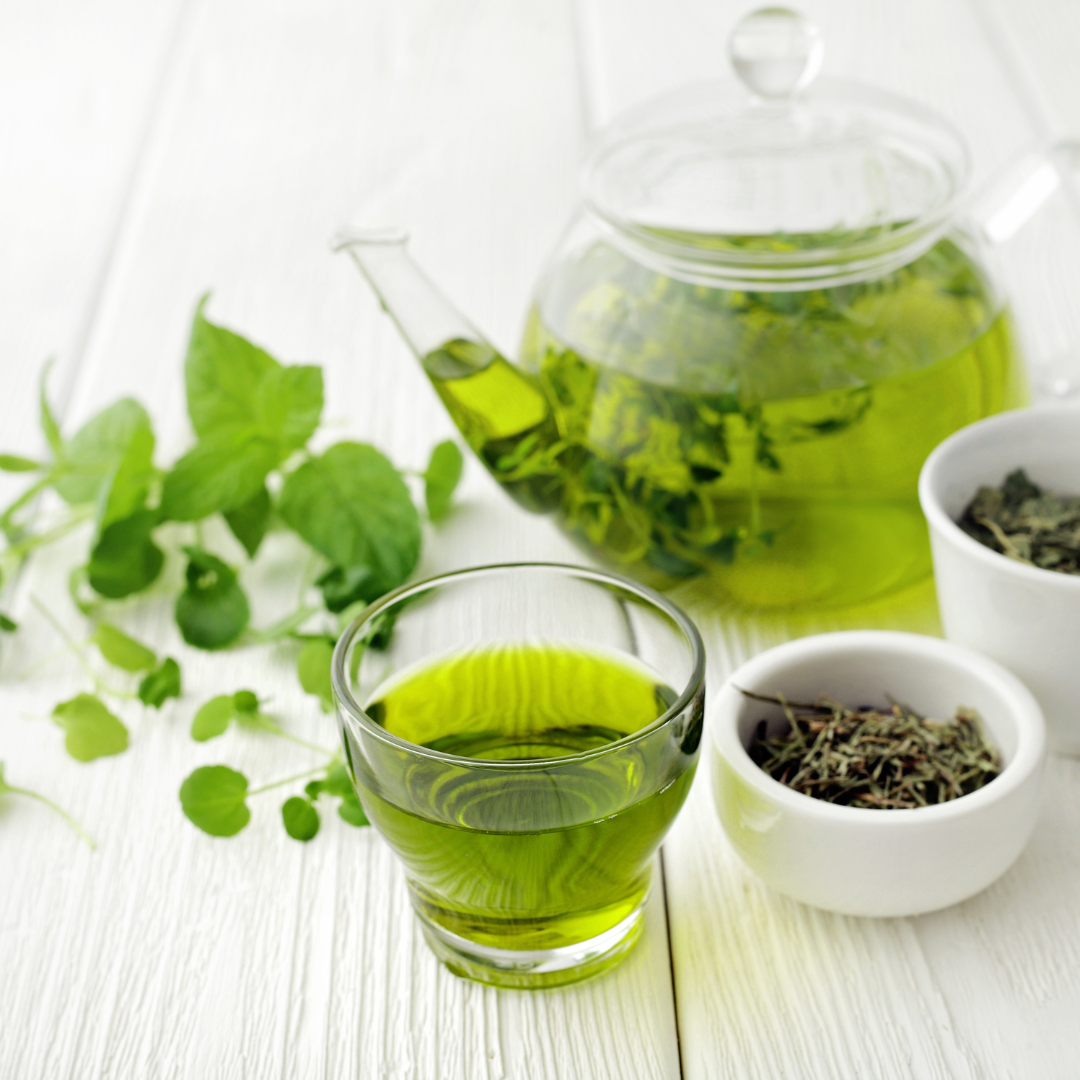

Green tea, a drink derived from China and Japan, has been enjoying great recognition for centuries not only because of its delicate taste, but above all because of numerous health benefits. It is rich in bioactive ingredients that show a wide spectrum of health -promoting activities - from supporting the work of the heart to antioxidant effects. In this article, we will look more closely at why green tea is considered one of the healthiest drinks in the world and what health benefits can be consumed regularly.
How is green tea different from the others?
Green tea stands out from other types of teas, above all, the production process, which minimizes the degree of oxidation of leaves. Unlike black tea, whose leaves are fully oxidized, green tea leaves are only slightly subjected to the brewing or frying process, which allows you to preserve most of the natural nutrients and antioxidants. Thanks to this, it is characterized by a milder taste and higher levels of catechins, which have favorable health properties. In addition, green tea contains a lower amount of caffeine compared to black tea, which makes it more suitable for people looking for a slight stimulation. This unique set of features makes green tea not only a popular drink, but also a valued ingredient in cosmetics and dietary supplementation.Green tea - what does it help?
Green tea is not only a relaxing drink, but above all a natural health supporting agent. Its versatile action results from the wealth of bioactive ingredients.1. Cardiovascular system
One of the best studied aspects of green tea is its beneficial effect on the cardiovascular system. Studies indicate that regular consumption of green tea can reduce the level of "bad" LDL cholesterol and increase the level of "good" HDL cholesterol. It is currently known that the catechins contained in green tea help to lower blood pressure and reduce the risk of atherosclerosis.2. Metabolic
Green tea can also be an ally in the fight against overweight and obesity. Studies show that the compounds contained in it, such as EGCG (Epigalokatechin galusan), can increase thermogenesis and oxidation of fats, which supports the weight loss process. Regular drinking of green tea can also improve insulin sensitivity and stabilize blood glucose.3. Cognitive function and brain health
Catechins and L-theanine contained in green tea have a beneficial effect on cognitive functions. Studies indicate that regular drinking of green tea can improve concentration and ability to learn, as well as reduce the risk of neurodegenerative diseases such as Alzheimer and Parkinson.4. Antioxidant action
Green tea is rich in polyphenols that act as strong antioxidants. Antioxidants protect cells against damage caused by free radicals, which may reduce the risk of cancer and delay the aging process.Active ingredients and composition of green tea
Green tea is rich in bioactive ingredients that are responsible for its numerous health -promoting properties. One of the most important compounds found in green tea are catechins, among which Epigalokatechin (EGCG) galusan plays an important role. EGCG is known for its strong antioxidant properties that help neutralize free radicals in the body, as well as anti -inflammatory and anti -cancer effects, which can support the prevention of many diseases. Another important bioactive ingredient is L-theanine, an amino acid almost exclusively in tea. L-theanine has a calming effect without the effect of drowsiness, which makes it an ideal means of supporting relaxation and concentration. It is believed that L-theanine increases the level of neurotransmitters such as GABA, Dopamine and Serotonin, which can lead to an improvement in mood and general well-being. Green tea also contains caffeine, although in smaller quantities than coffee. Caffeine stimulates, improving concentration and sharpening the senses. In combination with L-teania, caffeine effect becomes more balanced and less irritating to the nervous system, which can lead to a more stable level of energy and higher productivity without typical side effects associated with excessive caffeine intake. In addition to catechins, L-teanons and caffeine, green tea is also rich in vitamins and minerals. The composition includes vitamins such as C, E and K, which support the immune system, act antioxidant and support blood clotting. Minerals present in green tea, such as potassium, magnesium and fluorine, play an important role in maintaining electrolyte balance, heart health and strong bones. Thanks to all these ingredients, regular consumption of green tea can contribute to the improvement of general health, supporting cognitive functions, cardiovascular system and immune system.Properties of green tea in care and cosmetics
Green tea is widely valued not only for its health benefits, but also for numerous care properties that make it a popular ingredient in many cosmetics and care treatments.Antioxidant effect of green tea
Protection against free radicals - Green tea contains strong antioxidants, such as catechins, which help neutralize free radicals responsible for the skin aging process. Regular use of products with green tea can contribute to delaying the appearance of wrinkles and maintaining the young skin appearance.Counteracting inflammation
Reduction of redness and irritation - Green tea has anti -inflammatory properties and can help soothe reds, irritation and acne. Its soothing effect can be particularly beneficial for people with sensitive or prone to irritation skin.Skin hydration and renewal
The content of vitamins and minerals - Green tea extracts are rich in vitamins and minerals that support skin hydration and regeneration. These ingredients help rebuild the skin barrier, improving elasticity and hydration, which contributes to the healthier appearance of the skin.Stimulating hair growth
Strengthening properties - Green tea is also found in hair care products due to its strengthening properties. It helps to stimulate hair growth, prevent loss and improve the overall condition of the scalp. Green tea extract can be found in various shampoos and conditioners that are designed to strengthen the hair and give them a healthy glow.Cosmetics containing green tea
Green tea has become a favorite ingredient in many cosmetics, both for skin care and hair. We find it in a wide range of products such as moisturizing creams, serum, face masks, tonics, as well as in shampoos and hair conditioners. Thanks to their regenerating and protective properties, green tea extracts help improve the appearance and condition of the skin, giving it a healthy glow and elasticity. These cosmetics can be used in the daily care routine to provide the skin with adequate protection against harmful external factors and to support its renewal processes. Green tea plays a significant role in care thanks to its unique antioxidant, anti -inflammatory, moisturizing and protective properties. Its multilateral use makes it an ideal ingredient in everyday care rituals, helping to keep the skin and hair in the best condition.Is green tea healthy for the body?
The question of whether green tea is healthy for the body can be assessed through the prism of numerous scientific research. The vast majority of reports indicate the health benefits resulting from its regular drinking.Impact of green tea on health
Green tea is rich in bioactive ingredients, such as catechins, including epigalokatechin galls (EGCG), which have strong antioxidant, anti -inflammatory and anti -cancer properties. EGCG helps neutralize free radicals in the body, which supports the prevention of many diseases. In addition, the presence of L-theanine, an amino acid almost exclusively in tea, has a calming effect without the effect of drowsiness, which helps in relaxation and concentration, increasing the level of neurotransmitters such as GABA, dopamine and serotonin. Green tea can also reduce the risk of many chronic diseases, such as cancer, heart disease and type 2 diabetes. Studies show that regular consumption of green tea is associated with a lower risk of death for cardiovascular causes. Antioxidants and L-theanine contained in green tea support mental health, reducing the symptoms of stress and depression, and moderate amounts of caffeine can improve mood and add energy.Green tea and immunity
Support for the immune system results from polyphenols contained in green tea, especially catechins, which can have anti -inflammatory and antibacterial. Studies have shown that regular consumption of green tea can reduce the risk of bacterial and viral infections. In addition to the above benefits, green tea is rich in vitamins and minerals, such as vitamins C, E and K, which support the immune system, act antioxidant and support blood clotting. Minerals present in green tea, such as potassium, magnesium and fluorine, play an important role in maintaining electrolyte balance, heart health and strong bones. Thanks to all these ingredients, regular consumption of green tea can contribute to the improvement of general health, supporting cognitive functions, cardiovascular system and immune system. Numerous scientific studies confirm the health benefits of regular consumption of green tea, which makes it one of the healthiest drinks in the world.Drinking green tea - is it a healthy habit?
Regular drinking of green tea can be a healthy habit, if it is consumed in moderate amounts.Recommended amounts
Experts recommend consuming from 2 to 4 cups of green tea a day - This amount is enough to use its health -promoting properties, while avoiding excessive consumption of caffeine.Potential negative effects
Excessive consumption of green tea can lead to health problems such as:- Insomnia - high caffeine content in tea can interfere with sleep.
- Excessive stimulation - caffeine can also cause excessive stimulation and increased nervousness.
- Problems with digestion - exaggerated consumption of green tea can cause stomach ailments such as heartburn or bloating.
Green tea at night - indications and contraindications
Drinking green tea at night can be beneficial, but there are also some contraindications that are worth considering.Indications
- Relaxing action
- Antioxidant properties
Contraindications
- Caffeine content
- Individual body reaction
- Alternatives
How to choose and prepare green tea?
To enjoy the full health benefits and excellent taste of green tea, you should carefully choose its type and prepare it properly. The choice of tea should focus on high quality products, preferably organic, to avoid pesticide remains. Teas from Japan and China are considered the best in terms of quality and taste. In the preparation of green tea, the right water temperature and brewing time are important. The optimal water temperature is about 70-80 ° C, because too hot water can destroy valuable bioactive compounds. The recommended brewing time is from 2 to 3 minutes. Extending this time can make tea bitter.Summary
Green tea is a drink with exceptional health properties that can support many aspects of human health. Its regular consumption, in moderate amounts, can bring benefits to the cardiovascular, metabolic system, as well as for brain health and immune system. However, it is moderate and the choice of high -quality tea. Sources Peng, X., Zhou, R., Wang, B., Yu, X., Yang, X., & Liu, K. (2014). Effect of green tea consumption on blood pressure: a meta-analysis of 13 randomized control trials. Scientific Reports, 4, 6251. Hursel, R., & Westerterp-Plantenga, M. S. (2010). Thermogenic ingredients and body weight regulation. International Journal of Obesity, 34 (4), 659-669. Einöther, S. J., & Martens, V. E. (2013). Effects of tea consumption on cognition and mood: a systematic review. Nutritional Neuroscience, 16 (6), 221-234. Cabrera, C., Artacho, R., & Giménez, R. (2006). Beneficial effect of green tea -and review. Journal of the American College of Nutrition, 25 (2), 79-99. Suzuki, Y., Miyoshi, N., & Isemura, M. (2012). Health-promoting effect of green tea. Proceedings of the Japan Academy, Series B, 88 (3), 88-101. Kimura, K., Zareki, M., Juneja, L. R., & Ohira, H. (2007). L-teheanine reduces psychological and physiological stress respons. Biological Psychology, 74 (1), 39-45. Higdon, J. V., & Frei, B. (2003). Tea Catechins and PolyPhenols: Health Effects, Metabolism, and Antioxidant Functions. Critical reviews in food science and nutrition, 43 (1), 89-143. Bohn, S. K., Ward, N. C., Hodgson, J. M., & Croft, K. D. (2012). Effects of tea and coffee on cardiovascular discie risk. Food & Function, 3 (6), 575-591. Yang, C. S., Wang, X., Lu, G., & Picinich, S. C. (2009). Cancer prevention by tea: animal studies, molecular mechanisms and human relevance. Nature Reviews Cancer, 9 (6), 429-439. Kuriyama, S., Hozawa, A., Ohmori, K., Shimazu, T., Matsui, T., & Shibuya, D. (2006). Green Tea Consumption and Cognitive Function: A Cross-Sectional Study from the Tsurugaya Project 1. American Journal of Clinical Nutrition, 83 (2), 355-361. Taylor, M. A., & demuth, H. U. (2011). Coffee and tea: A review of their effect on Glucose Metabolism and insulin sensitivity. British Journal of Nutrition, 106 (2), 197-202. Tian, C., Huang, Q., Yang, L., Xia, X., & Kong, J. (2013). Association Between Green Tea Consumction and Common Cancers in Chinese Population: A Systematic Review and Meta-Analysis. Asian Pacific Journal of Cancer Prevention, 14 (5), 2833-2840. Crespy, V., & Williamson, G. (2004). A review of the health effect of green tea catechins in vivo animal models. Journal of Nutrition, 134 (12 Suppl), 3431S-3440S. Adachi, T., Takahashi, M., Abe, S., Fujiyama, C., & Harada, K. (2006). The effectiveness of l-theineine for improving sleep quality: a comparative study. Human Psychopharmacology: Clinical and Experimental, 21 (7), 498-502.
Dietician
Karolina Dobrowolska-Zrałka
doktor nauk medycznych i nauki o zdrowiu, dietetyk kliniczny Absolwentka studiów I i II stopnia na kierunku dietetyka oraz doktorantka w Szkole Doktorskiej Uniwersytetu Medycznego we Wrocławiu
Więcej artykułów autoraLooking for a nutritious and filling meal?
Discover Supersonic Smart Meal! A nutritious meal you can prepare in seconds!

150 reviews


