

There is no single date after which you can see the effects of drinking a protein supplement: the change in figure is due to diet and training, not the shake itself. The supplement provides protein after drinking, but does not guarantee muscle growth or fat loss - in the 2026 guide you will check what to evaluate instead count down the days until the effect.
- How long does it take to see the effects of protein supplement? There is no universal term for changing your figure.
- SUPERSONIC Food offers protein supplements as a convenient supplement to your diet, not a replacement for training.
- Building muscle requires resistance training, adequate protein supply and regeneration.
- Reducing body fat requires an energy deficit; a shake doesn't remove this rule.
- Assess your circumference, weight trends, and training results rather than attributing every change to your supplement.
Why does it matter?
If you expect a daily shake to change your shape on its own, it's easy to miss a more important problem: lack of regular training, too little protein in your meals, or excess energy during weight loss. The supplement is a tool to supplement your menu, not a separate muscle building program.
First, set your goal. You will use protein differently when building mass, differently when losing weight, and still differently when it is simply missing in your daily meals. For the second goal, start with a guide on protein supplement for reducing body fat.
How long does it take to see the effects of drinking a protein supplement?
It is not possible to attribute a constant time to the visible effect to the supplement. Providing amino acids after a meal is a physiological process, and the visible change in figure is the result of repeated behaviors. These two phenomena do not share a common clock.
Also distinguish between what you call an effect. You can check the menu right away to make it easier to achieve your daily protein goal. Greater muscle circumference or smaller waist circumference cannot be reliably assessed simply by drinking a portion.
| Target | What actually supports the effect | What's worth watching | What a single change doesn't prove |
|---|---|---|---|
| Muscle building | Resistance training, proper nutrition and recovery | Training results and circuits under comparable conditions | More body mass does not automatically mean more mass muscle |
| Fat reduction | Energy deficit and a diet with adequate protein | Body weight trend, waist circumference and maintaining fitness | Weight loss after one measurement does not only mean fat loss |
| Supplementing the diet | Covering the real gap in supply proteins | Total protein from meals and supplement | Achieving your protein goal does not guarantee a change in appearance |
In 2026, the practical answer remains the same: evaluate the entire plan, not the number of shakes you drink. If the diet already covers the needs, an additional portion does not automatically become another stimulus for muscle development.
Muscle building: training and daily protein supply count
Protein provides amino acids needed for the construction and reconstruction of tissues. Resistance training gives your muscles a stimulus to adapt. Just increasing protein without proper training is not the plan for bigger muscles.
The International Society of Sports Nutrition's position on protein and exercise indicates a range of 1.4-2.0 g of protein per kilogram of body weight per day as sufficient for most healthy exercisers. This is a recommendation for the entire diet, not a nutritional dose. The range also does not determine when visible muscles will appear.
For an example person weighing 70 kg , this range means 98-140 g of protein per day. This is a calculation example, not an individual recommendation. You include protein from your meals, snacks and drinks before deciding whether you need a shake.
If you train regularly, write down your exercises, load, repetitions and technique. Increasing fitness is a useful signal of progress, but it does not in itself determine muscle growth. Especially at the beginning, the improvement in the result may also result from learning movement and adaptation of the nervous system.
Fat reduction: the shake does not replace the deficit
The protein supplement does not burn fat regardless of the menu. Losing body fat requires an energy deficit, and adequate protein and resistance training help limit muscle loss during weight loss. It is a support for the process, not a replacement.
The way the portion is used is important. A shake that complements a planned meal has a different role than a shake added to existing food without any adjustments. Protein also provides energy, so it must be included in the balance.
When planning a reduction in 2026, also check drink additives. Milk, peanut butter, fruit or other ingredients change its nutritional value. They are not a problem by definition, but they do not disappear from the balance just because the base of the drink is a nutritional supplement.
Evaluate the trend, not a single weight reading. Body weight also changes under the influence of hydration, gastrointestinal content and glycogen stores. Therefore, a decrease or increase after a short time does not allow the effect to be attributed to one product.
Supplementing the diet: you can check the effect in the menu
If you are lacking protein, the easiest way to confirm the effect of the supplement is to change its daily supply. All you need to do is compare your menu with your nutritional goal. This is something specific that does not require assessing your figure in the mirror.
However, do not assume that every diet needs supplementation. Dairy products, eggs, fish, meat, tofu and legumes also provide protein. A supplement makes sense when it helps cover a gap or simplifies eating in circumstances where a regular meal is difficult to prepare.
The best solution for someone who regularly eats enough protein is not necessarily another shake. First, check the portions and the actual protein content of the products. The name of the meal or slogan on the packaging does not replace the calculation of the entire day.
Why is the time of appearance of effects different?
The differences do not result solely from the type of supplement. Two people drinking similar shakes may have completely different conditions for changing their figure. The most important factors are:
- Starting point in the diet. Supplementing an insufficient supply of protein has a different meaning than adding it to a menu that already covers the needs.
- Resistance training. Regularity, selection of exercises and gradual increase in requirements determine the stimulus for muscle development.
- Balance energy. The deficit is used to reduce fat; insufficient energy supply may make it difficult to achieve your training goal.
- Regeneration. Sleep and rest are part of the plan, and nutritional supplement does not replace their functions.
- Training experience. Beginners and people who have been training for a long time do not have the same potential or adaptation rate.
- The way measurement. Different light, time of day or hydration status make it difficult to reliably compare appearance and body weight.
Don't change all the elements at once just because the mirror doesn't show the expected difference. First, determine whether you are consistent with your diet and training. Without this, it is impossible to sensibly assess the role of the conditioner.
How to use the conditioner to assess real effects?
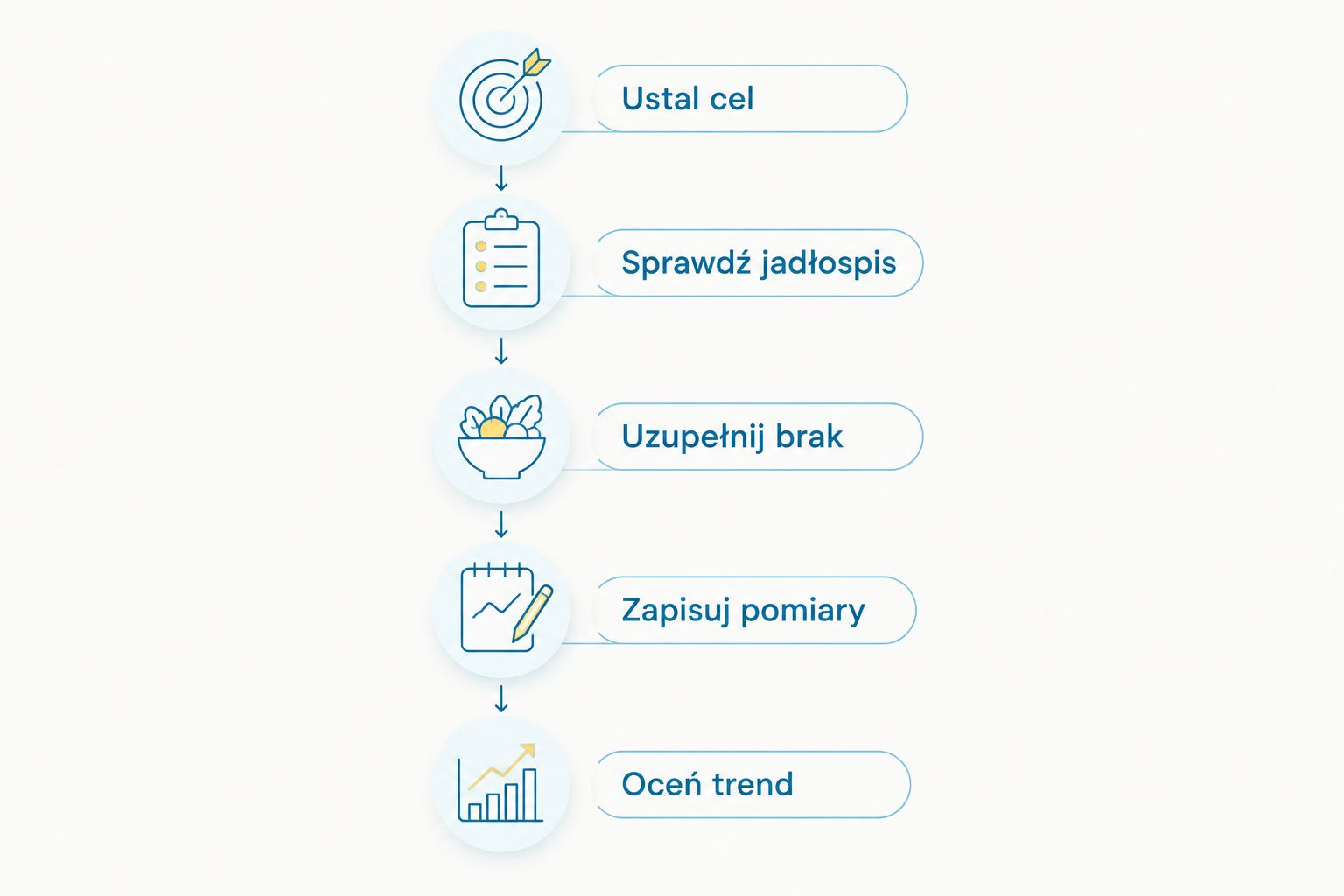
Start your plan for 2026 with the goal and measurement, and only then with the selection of the product. This allows a portion of protein to meet a specific need, rather than being a just-in-case addition.
- Set a goal. Write down whether you want to build muscle, reduce body fat, or supplement your diet. Choose a measurement that fits this goal.
- Check the menu. Count the protein from typical meals. Also include drinks and snacks that are easy to skip.
- Fill in the blank. Select portion based on label and actual gap. The weight of the powder is not the same as the weight of the protein it contains.
- Record your measurements. Weigh yourself and measure your circumference under comparable conditions. Also record technique and load in your training diary.
- Evaluate the trend. Compare the series of observations with the implementation of the plan. Only then decide whether to change your diet, training or the way you use the supplement.
The ISSN position also provides an approximate amount of 20-40 g of protein per portion as a general guideline for exercisers. This does not mean that you have to drink this amount in a shake: the protein can also come from a meal. The individual selection depends on, among other things, body weight, age and remaining diet.
Regular meal or protein supplement?
Both options help provide protein, but they are not identical. For a person who needs a complete meal, other nutrients are also important. For a person with a specific protein gap, what matters is the ease of filling it.
| Solution | For whom primarily | Advantage | Limitation |
|---|---|---|---|
| A regular meal with protein | For people who want to build a full protein gap. menu | Allows you to combine protein with vegetables, energy sources and other ingredients | Requires planning and often also preparation |
| Protein supplement | For people who find it difficult to supplement a specific lack of protein | Makes it easier to provide a portion without preparing another dish | It is not automatically a full-value meal replacement |
SUPERSONIC Food is a choice for people who are looking for a convenient supplement to their diet with protein. An example from the offer is SUPERSONIC Whey 360 Grass Protein Supplement Fed. Judge its role as you would any supplement: by its composition, label and fit to the diet, not by the promise of results.

Convenience is an advantage, but it has a limit. SUPERSONIC Food supplement does not replace training or a varied diet. Before choosing, check the allergens, preparation method and amount of protein in the recommended portion; especially in case of milk protein allergy, the selection of the product requires caution.
Does the supplement work without training?
Without training, the supplement still provides protein, but does not replace the stimulus needed for muscle development. If the goal is only to supplement the menu, gym activity is not a condition for using the product. If your goal is to build muscles, drinking a shake alone is not enough.
Do you need to drink protein immediately after training?
First ensure a daily protein supply, and then choose a convenient serving time. Don't treat the end of training as the only opportunity to provide protein. What you eat before exercise and during the rest of the day also matters.
Does the lack of soreness mean that the supplement is working?
The lack of muscle pain after training is not proof of the effectiveness of the protein supplement. Soreness depends, among other things, on the type and newness of the exercise. It is not a reliable measure of muscle growth, so evaluate the plan based on training, diet and repeated measurements.
When do you need individual advice?
General ranges for healthy, active people do not replace medical recommendations. If you have kidney disease, are on a therapeutic diet, or have another condition that affects your diet, discuss your protein intake with your doctor or dietitian. Do not increase it yourself based on a sports guide.
If you experience symptoms after the shake, check the ingredients and stop experimenting with a larger portion. Persistent symptoms require explanation and not waiting until the expected figure effect. Safety takes priority over achieving the training goal.
FAQ
How long does it take to see the effects of a protein supplement?
There is no universal deadline for seeing the effects of a protein supplement. Changing your figure depends on training, the overall diet, energy balance and regeneration, not on the shake itself.
Does protein supplement help you lose weight?
Protein supplement helps replenish protein during reduction, but fat loss requires an energy deficit. The portion and additions to the drink must be included in the entire menu.
How much protein does an exerciser need per day?
ISSN indicates 1.4-2.0 g of protein per kilogram of body weight per day as a sufficient range for most healthy exercisers. This is the sum of protein from the entire diet, not the recommended amount of supplement.
Do you need to drink protein supplement every day?
You do not need to drink supplement every day if your meals cover your protein needs. Base your decision on the menu, also on days without training.
Will a larger portion of protein accelerate the results?
A larger portion does not guarantee a faster change in figure. First, check whether your diet already covers your needs, because an additional shake also provides energy.
Will your muscles disappear when you stop taking protein?
Just stopping the supplement does not mean you will lose muscle. Further training and adequate supply of energy and protein from other sources are important.
Does the SUPERSONIC Food supplement replace dinner?
Do not treat the SUPERSONIC Food protein supplement alone as a full dinner. A complete meal should meet nutritional needs beyond protein.
Finally: check for deficiency before adding a portion
The most useful checkup doesn't start with a mirror. It starts with the question: how much protein am I already getting in in my typical day? If the answer shows you're meeting your goal, look for reductions in training, energy balance, or recovery, rather than automatically increasing your portion.
In 2026, choose a simple rule: the supplement should solve a specific problem in the diet. It doesn't have to appear every day or at every meal. Its usefulness is determined by the fit to your needs, not the time spent with the shaker.
Related guides


