

Planning high-protein shopping for a week involves calculating the daily protein requirement, writing down permanent menu pillars and supplementing the list with ready-made products for days without time to cook. The hidden cost of this plan is not money, but time - without segmenting the list into categories, shopping at the supermarket can take up to twice as long because you keep coming back for forgotten ingredients.
- The high-protein shopping plan for the week is based on 7 steps: from calculating demand to the margin for flexibility.
- Active people usually need 1.6-2.2 g of protein per kilogram of body weight per day, in accordance with generally accepted sports nutrition guidelines.
- A shopping list divided into categories (animal protein, ready meals, snacks) shortens the time in the store and reduces returning for forgotten products.
- Ready-made meals, protein powders and protein porridges complete the list on days when there is no time to cook.
Why planning high-protein shopping matters
Without a list divided into categories, it's easy to buy too much meat and too few protein sources for breakfast or a snack between meals. The effect is simple: in the middle of the week there is no ready solution for a quick dinner, and this leads to ordering food out or reaching for something random.
A ready-made meal like Supersonic Smart Meal solves exactly this problem - it fills the gap in the plan for days when cooking is not an option. This doesn't replace your entire shopping list, but it does eliminate the weakest link in your weekly plan.
How to plan high-protein shopping for a week
The steps below work whether you're cooking for yourself or for the whole family. The order matters - each step narrows down the list before you even enter the store.
- Calculate your daily protein requirement. Without this number, your shopping list is random, not planned.
- Plan the number of meals per week. 21 meals a week requires a different list than 14, because some days you will eat out anyway.
- Choose permanent pillars of the menu. One protein shake, one oatmeal for breakfast and one ready-made dish for the busiest day - this is the skeleton around which you add the rest.
- Organize your shopping list into categories, and not in random order - animal protein, plant protein, ready meals, snacks, supplements.
- Complete your list with ready-made meals for days without time to cook. This is the moment when you add ready-to-eat products.
- Add a supply of high-protein snacks for evening hunger, so as not to reach for something random from the vending machine.
- Leave some margin for flexibility – one day a week that is not planned down to the gram, because plans change anyway.
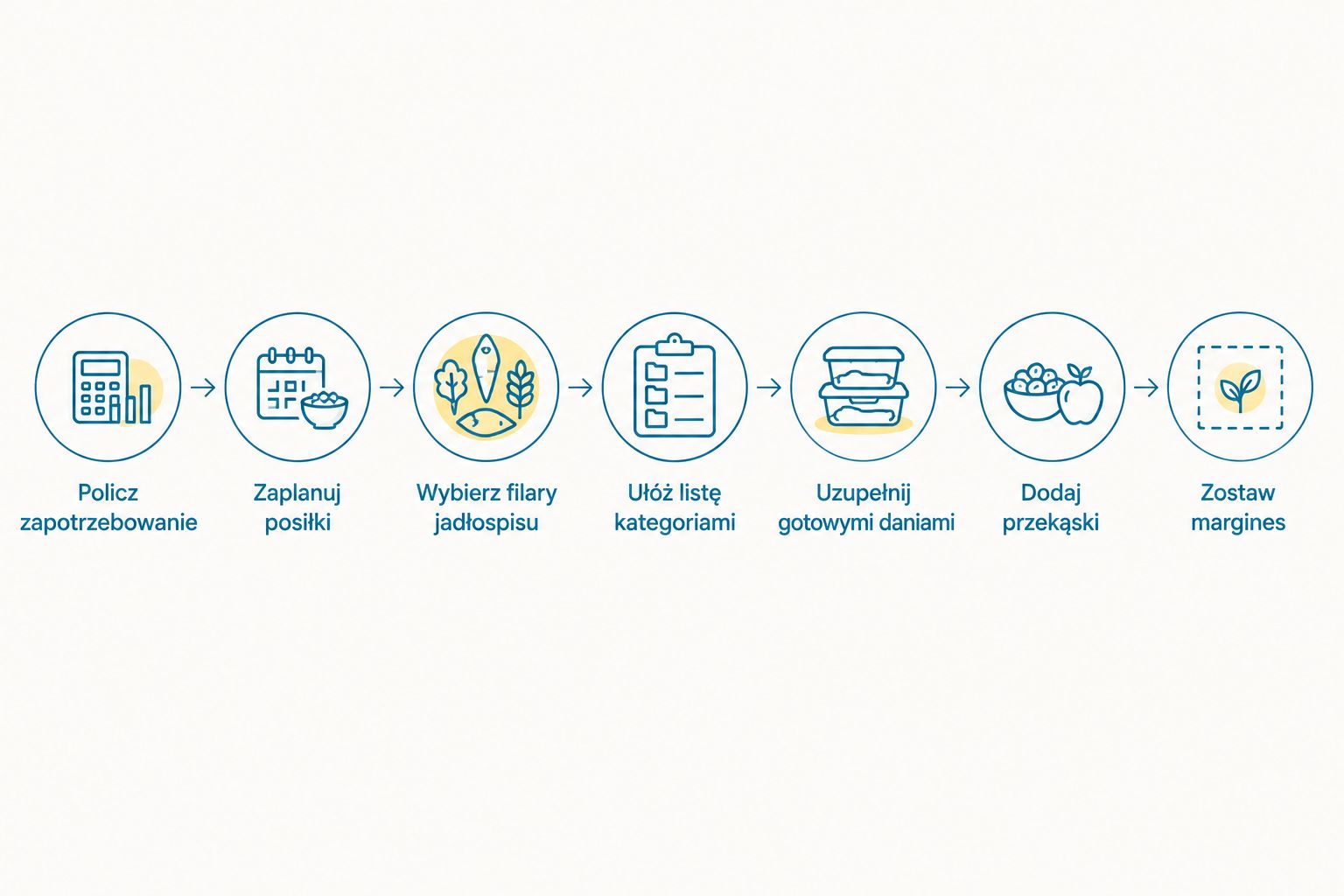
If the shopping list fits on one sheet of paper, the plan for the week is feasible. An extensive, multi-page list usually ends with half of the items being abandoned on the second day.
“If the shopping list fits on one sheet of paper, the plan for the week is feasible.”
What should be on your high-protein shopping list
It is worth dividing the list into four categories and not buying products in random order between the aisles. The table below shows what goes into each of them and when each product makes sense.
| Category | Example | Preparation time | Recommendation |
|---|---|---|---|
| Protein supplement | Supersonic Protein Supplement Whey 360 Grass Fed | a few minutes | Choose for a quick post-workout shake |
| Protein porridge | Supersonic Protein Instant Oatmeal with collagen | a few minutes | Choose for breakfast on days without time |
| Ready dish | Supersonic Smart Meal | no cooking | Choose it for the busiest day of the week |
| Meat, fish, eggs | fresh products | 20-40 minutes | Check it out if you have time to cook on the weekend |
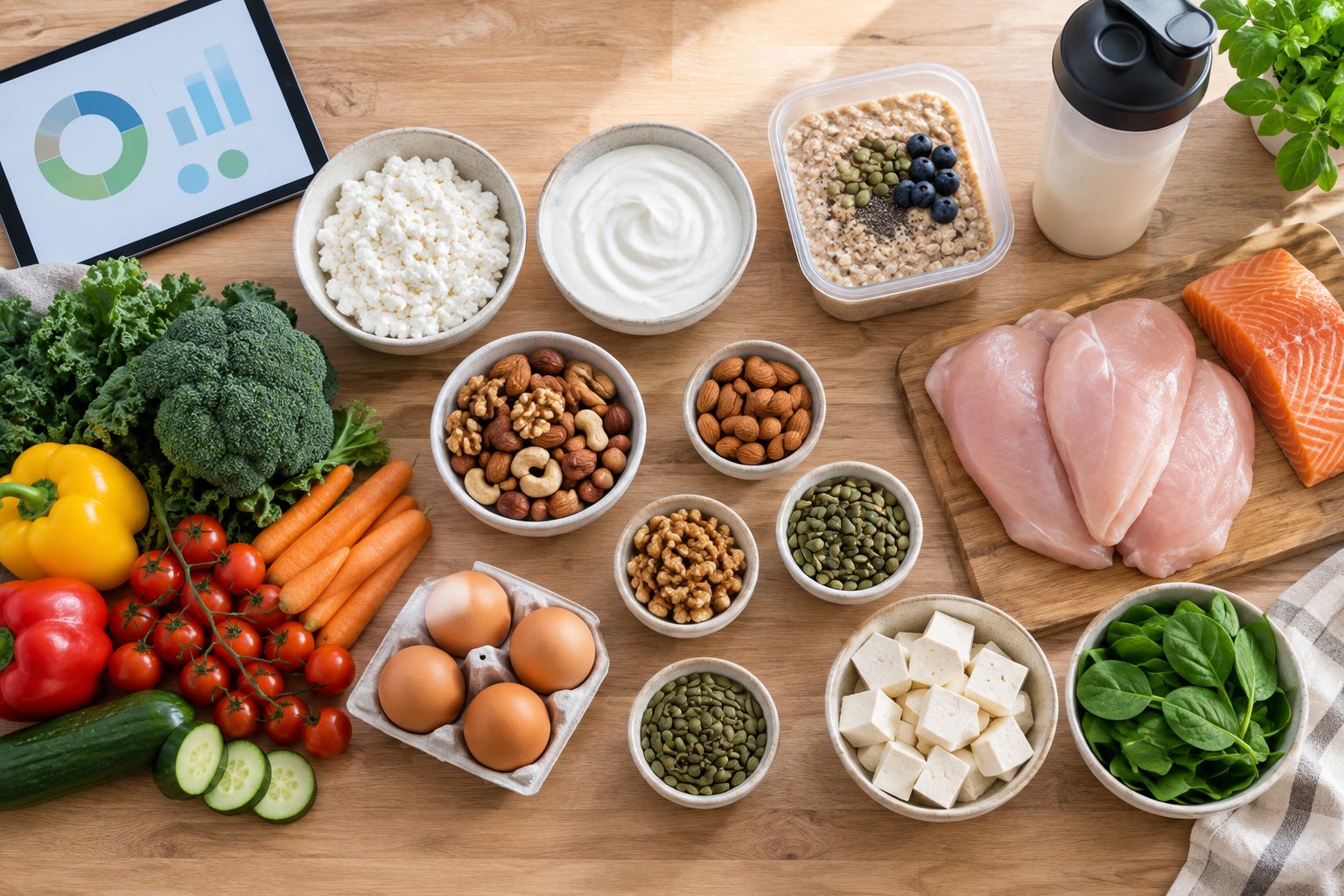
This comparison shows the advantages and disadvantages of each option. Protein powder and protein porridge take just a few minutes, but they will not replace a full meal with vegetables. Fresh meat gives you the most control over the composition, but it costs the most time in a week when it is in short supply anyway.
Why the high protein shopping list for the week differs
A ready shopping list never looks the same for two people - it depends on several variables that are worth determining before entering the store:
- Purpose – reducing body fat requires a different proportion of protein to carbohydrates than building muscle mass.
- Number of training sessions per week – more sessions mean a greater demand for protein and faster regenerating meals.
- Budget – fresh meat and fish cost more than protein supplement calculated per portion.
- Diet style – a vegetarian, low-carb or gluten-free diet narrows the list of protein suppliers.
- Time to cook – the less time there is in the week, the greater the share of ready-made meals on the list.
- Household size – shopping for one person and for a family of four differ not only in quantity, but also in the structure of the list.
How much protein do I need per day to plan my shopping for the week?
Active people usually need 1.6-2.2 g of protein per kilogram of body weight per day, in accordance with generally accepted sports nutrition guidelines. A person weighing 70 kg therefore consumes 112-154 g of protein per day, which translates into a specific number of portions on the shopping list.
Are ready-made high-protein meals suitable for a weekly shopping plan?
Yes, ready-made high-protein meals are suitable for a weekly plan as a supplement, not as the only element of the list. They work best on days with a tight schedule when cooking from scratch is not an option.
How to plan high-protein shopping on a vegetarian diet?
The vegetarian diet plan is based on legumes, eggs, dairy products and protein supplements instead of meat and fish. In this case, the shopping list requires more plant items to meet the daily protein requirement without meat.
Complete your shopping list with ready-made solutions
Check out the foods that fill the gaps in your weekly meal plan.
FAQ
How to plan high-protein shopping for a week in 5 minutes?
Planning high-protein shopping for a week in 5 minutes requires a ready-made menu skeleton: one shake, one protein porridge and one ready-made dish as fixed items. You write the rest of the list around these three pillars.
How many servings of protein do you need for a week of shopping?
With a daily requirement of 112-154g of protein for a 70kg person, a week of shopping would require seven times that amount, split between animal and plant protein sources and ready-to-eat meals. The exact number of servings depends on how many meals you plan to cook yourself.
Is it worth buying ready-made high-protein meals instead of cooking?
It is worth buying ready-made high-protein meals as a supplement to the plan for days without time to cook, not as a replacement for the entire weekly menu. They work best in combination with fresh products prepared on the weekend.
How to divide your shopping list into categories?
The shopping list is divided into four categories: animal protein, plant protein, ready meals and snacks. This division shortens the time in the store and reduces returning for forgotten products.
Does protein powder count as part of your grocery shopping?
Yes, protein powder counts as part of your grocery shopping and usually takes the place of one of your morning or post-workout meals. It only requires a few minutes of preparation, making it a permanent addition to the list for those without time.
How to plan high-protein shopping on a limited budget?
If you have a limited budget, it is worth basing your list on eggs, legumes and protein supplements divided into portions, and buying fresh meat and fish once a week in larger quantities. Ready-made dishes are then treated as an exception, not a permanent element of the list.
How long does it take to plan high-protein shopping for the week?
Planning high-protein purchases for the week takes the least amount of time when the menu is the same from week to week. Only the part of the list regarding fresh products changes, and the mainstays such as oatmeal or protein shake remain unchanged.
One final thing
Segment your shopping list by aisle in the store, not by the order in which the products come to mind - this is the only change that will actually reduce the time spent on weekly high-protein shopping in 2026. The second thing: leave one day without a rigid plan, because the most common reason for abandoning the shopping list in the middle of the week is lack of flexibility, not lack of discipline.
Related guides


