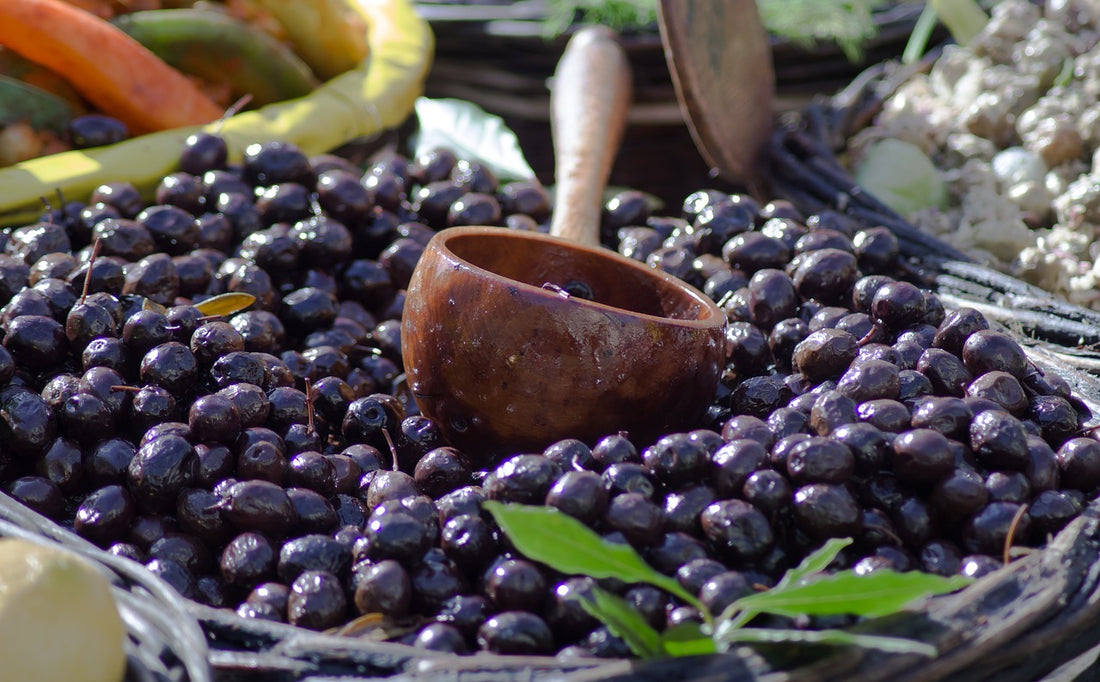

Olives are one of the oldest and most valued fruits in the Mediterranean diet, known for its numerous health benefits. Their wealth in healthy fats, vitamins and antioxidants make them become an increasingly popular ingredient in many diets around the world. Both black and green olives are not only a tasty addition to dishes, but also a source of nutritional values that can have a positive effect on heart health, digestive system and overall body immunity. However, it is worth asking yourself: are olives really healthy? In this article, we will look in detail their properties, nutritional values and differences between black and green olives.
Olives - are they really healthy?
Olives are one of the most important ingredients of the Mediterranean diet, known for its positive impact on health. They are often part of everyday meals in many countries, especially in the areas of the Mediterranean, where they have been cultivated and valued for their properties for millennia. Although they may seem inconspicuous, olives hide many health benefits that confirm numerous scientific research. That is why the question "are olives healthy?" It is the most reasonable and deserves a detailed explanation. Olives are a rich source of unsaturated fats that play an important role in the protection of cardiovascular health. In addition, they contain valuable antioxidants, including polyphenols, which have anti -inflammatory effects and help protect the body against oxidative stress. It is thanks to these ingredients that olives can contribute to the reduction of the risk of developing chronic diseases, such as atherosclerosis, heart disease or type 2 diabetes. What's more, olives are a low -calorie product that provides not only healthy fats, but also vitamins, minerals and fiber, which makes them a valuable element of diet.Are olives healthy? Find out why it is worth including them in the diet
Olives are a treasury of valuable nutrients that have a positive effect on the functioning of the body. Their regular consumption can bring a number of health benefits, especially for people who care about their heart, circulatory system and general health. The most important component of olives are monounsaturated fats, which, unlike saturated fats, help reduce the level of "bad" cholesterol (LDL) and raise the level of "good" cholesterol (HDL). This is an important protective mechanism against cardiovascular disease, including atherosclerosis and hypertension. In olives you will also find polyphenols - plant compounds with strong antioxidant effects. Studies show that polyphenols can protect the body's cells against damage caused by oxidative stress, which is associated with the development of inflammation and chronic diseases such as cancer or diabetes. Interestingly, olives can also improve the function of the immune system, supporting the body in the fight against infections and inflammation. You can't forget about vitamins and minerals that you will find in olives. They contain vitamin E, which plays an important role in protecting cells against free radicals, as well as iron, calcium and copper, which support bone, nervous system and blood production. Thanks to the presence of fiber, olives also help regulate digestion, improving intestinal peristalsis and supporting the health of the digestive system.Types of olives - learn the differences between black and green olives
Olives come in different varieties, and the two most popular are black and green olives. Although both types come from the same olive tree, they differ not only in color, but also in the taste, properties and maturation process. Green olives These are immature fruit that harvests at an earlier stage of puberty. They have a more tart taste and harder consistency. They contain more bitterness, which makes them more intense in taste. They are a popular addition to salads, Mediterranean dishes or snacks. Black olives, Also called mature, they are broken fully ripe or subjected to a special oxidation process, which gives them a dark color. They are softer and have a milder, slightly sweeter taste compared to green olives. Interestingly, black olives contain slightly more fat than green, which affects their caloric content, but at the same time provide more valuable nutrients, such as polyphenols. Both types of olives have their unique properties that depend on their maturation and the cultivation region. Black olives are characterized by a higher content of healthy fats and antioxidants, while green olives provide more fiber and vitamin E.Olives - how many calories do they contain? Energy values of olives
The caloric content of olives may vary depending on their type, preparation method and the form in which they are consumed (fresh, marinated, dried). Olives are a low -calorie product, although their fat content, especially a monounsaturated, makes them a great source of energy. The average caloric content of olives is around 115-145 kcal per 100 g depending on the type. Black olives, due to the higher fat content, can provide slightly more calories than green. Here is an example of the energy value of olives per 100 g: Green olives: around 115 kcal Black olives: About 145 kcal Despite the relatively low calorie, olives are filling, which makes them an ideal element of the diet, especially for people who care about the line. They provide not only energy, but also nutrients, such as healthy fats, vitamins and minerals, which are important for health maintaining.Olives - are they a fruit or vegetable?
This question is surprising many people, because olives are often treated in the kitchen as vegetables, and their taste can be confused. From a biological point of view, olives are fruit. They grow on olive trees (Olea Europaea) and are classified as stone fruits, like cherries or peaches. They contain a flesh surrounding a hard stone, which is a characteristic feature of fruit. Although in culinary olives they often have a vegetable -like function, they are biologically fruit. Their fruity character is due to the ripening process, during which green, hard fruits become soft, black olives with a higher fat level. It is worth noting, however, that depending on the method of processing and the region in which they are grown, they may have different taste and nutritional properties.Olive olive oil - natural health richness
In addition to consuming olives in full, one of the most valuable products that we get from olives is olive oil. It is vegetable oil obtained as a result of pressing the fruit of the olive tree, considered one of the healthiest sources of fat in the diet. Olive oil, especially the one from the first pressing (extra virgin), contains even more monounsaturated fatty acids and polyphenols than the olives themselves. Thanks to this, she is valued for its health properties, such as protection against cardiovascular disease, supporting skin health and anti-inflammatory effects.Summary
Olives are an extremely valuable food product, rich in healthy fats, antioxidants, vitamins and minerals. Regular consumption of olives can contribute to improving heart health, protection against inflammation and chronic diseases, and support the immune and digestive system. Regardless of whether you choose green or black olives, it is worth including them in your daily diet as a healthy snack or an addition to dishes. Thanks to its composition and health benefits, olives are a great example of how nature provides us with invaluable products with health -promoting action.Sources
Visioli, F., & Galli, C. (2002). Olive Oil Phenols and their Potential Effects on Human Health. Journal of Agricultural and Food Chemistry, 50 (4), 783-787. https://doi.org/10.1021/jf010875b Owen, R. W., Mier, W., Giacosa, A., Hull, W. E., Spiegelhalder, B., & Bartsch, H. (2000). Olive-oil consumption and health: the possible roles of antioxidants. The Lancet Oncology, 1 (2), 107-112. https://doi.org/10.1016/s1470-2045(00)00015-2 Parkinson, L., & Cicerale, S. (2016). The Health Benefiting Mechanisms of Virgin Olive Oil Phenolic Compounds. Molecules, 21 (12), 1734. Https://doi.org/10.3390/molecules21121734 López-Miranda, J., Pérez-Jiménez, F., Ros, E., De Caterina, R., Badimon, L., Covas, M. I., ... & Ordovás, J. M. (2010). Olive Oil and Health: Summary of the II International Conference on Olive Oil and Health Conszensus Report, Jaén and Córdoba (Spain). Nutrition, Metabolism and Cardiovascular Diseases, 20 (4), 284-294. https://doi.org/10.1016/j.numecd.2009.12.007 Boskoou, D. (2006). Sources of Natural Phenolic Antioxidants. Trends in Food Science & Technology, 17 (9), 505-512. https://doi.org/10.1016/j.tifs.2006.04.004
Dietician
Karolina Dobrowolska-Zrałka
doktor nauk medycznych i nauki o zdrowiu, dietetyk kliniczny Absolwentka studiów I i II stopnia na kierunku dietetyka oraz doktorantka w Szkole Doktorskiej Uniwersytetu Medycznego we Wrocławiu
Więcej artykułów autoraLooking for a nutritious and filling meal?
Discover Supersonic Smart Meal! A nutritious meal you can prepare in seconds!

150 reviews


