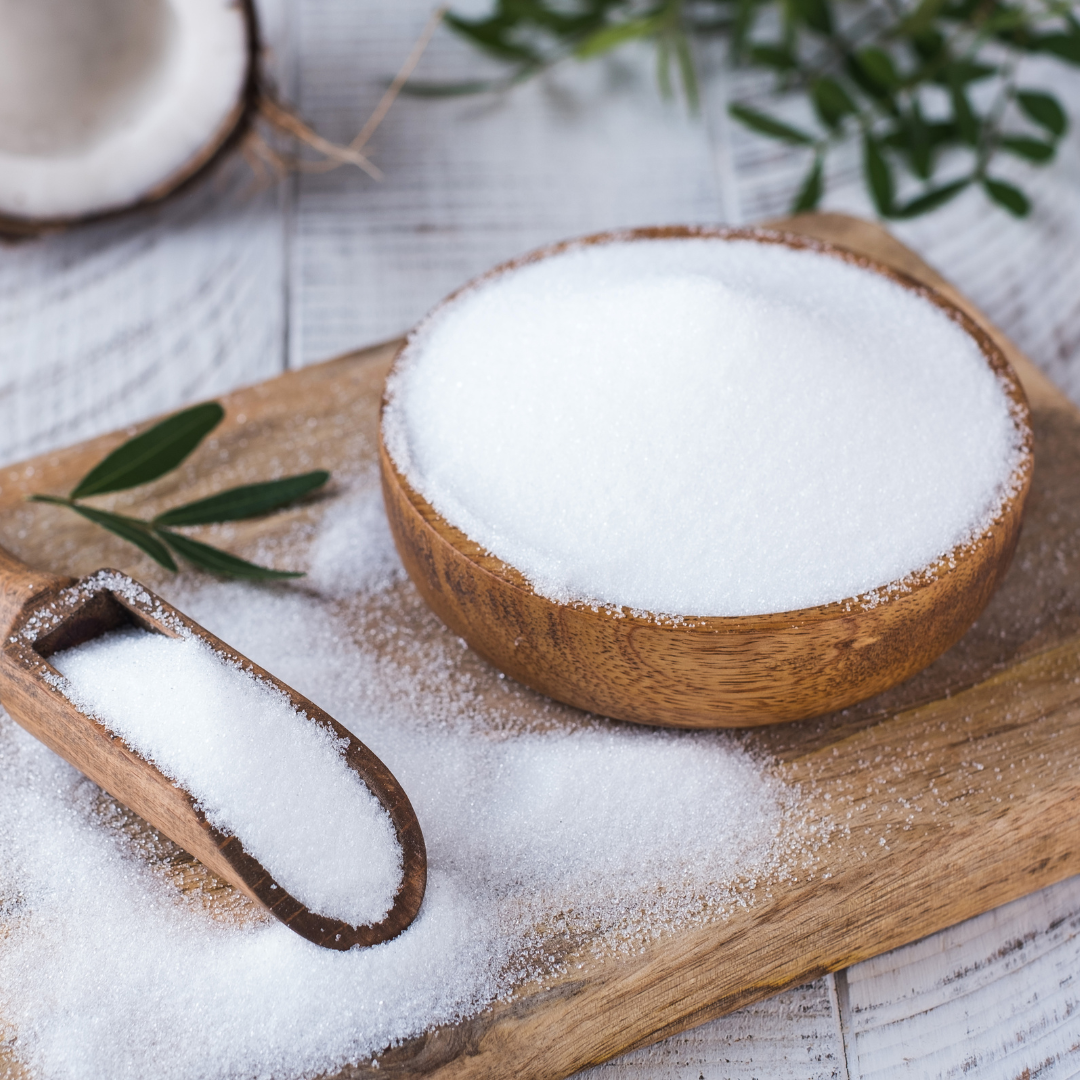

Erythritol is one of the most popular sweeteners of natural origin, which is gaining more and more recognition among both dietitians and consumers. Known for low calorie and lack of effect on blood sugar levels, it is an attractive alternative to traditional sugar. Its popularity has increased with the growing interest in healthy lifestyle and the need to reduce sugar consumption, especially among people struggling with diabetes and overweight. In this article, we will take a closer look at what erythritol is, what properties it has, how it affects health and what are its potential advantages and disadvantages.
Erythritol - what is this popular sweetener?
Erythritol is an organic chemical compound belonging to the group of sugar alcohols, also known as polyols. It occurs naturally in some fruits, such as pears, grapes or melons, as well as in fermented products such as wine and cheese. Due to its chemical structure, erythritol provides sweet taste, but unlike sugar, it is not metabolized by the body in a way typical of carbohydrates. Its most important feature is that it contains almost zero calories (about 0.2 kcal per gram) and does not increase blood glucose, which makes it an ideal choice for people with diabetes and those who want to reduce calorie intake. Erythritol also has a low glycemic index, which means that it does not cause sudden increases in blood sugar levels.Erythritol - what exactly is it?
Erythritol is a naturally occurring compound that was first discovered in the 19th century, but its production on an industrial scale began only in the 1990s. It is mainly produced by fermentation of glucose with yeast. This process allows you to get pure erythritol, which is then crystallized and used as a sweetener. From a chemical point of view, erythritol is a four -stroke sugar alcohol, which means that there are four carbon atoms in its structure, combined with hydroxyl groups. Thanks to this, it has hygroscopic properties, which means that it can absorb moisture from the environment, which is important in technological and culinary processes.Erythritol - is it healthy?
The issue of health benefits and possible threats related to erythritol is the subject of many scientific research. Most of them confirm that erythritol is safe for health, and its consumption is not associated with the risk of serious side effects. One of the main advantages of erythritol is that it is not metabolized by bacteria in the mouth, which means that it does not contribute to the formation of tooth decay. In addition, due to the lack of metabolism in the body, erythritol is excreted in unchanged urine form, which minimizes its effect on glucose and lipid metabolism. Although erythritol is generally considered safe, there are some restrictions on its consumption. In some people, especially when consuming large amounts, it can cause slight gastrointestinal discomfort, such as flatulence or diarrhea. Nevertheless, these symptoms are much less intense than in the case of other polyols, such as sorbitol or xylitol.How is erythritol produced?
Erythritol is produced in the process of sugar fermentation, mainly glucose, with special yeast strains, such as Moniliella Pollinis or Trichocoronoides megachiliensis. This process is similar to the fermentation used in alcohol production, but in the case of erythritol the final product does not contain alcohol, but only sweetener. After fermentation, erythritol is cleaned, crystallized and dried to get the final product in the form of white, crystalline powder. Thanks to this, erythritol is easy to use in the kitchen, where it can be used to sweeten drinks, desserts or baking.Erythritol and liver health - what are the connections?
Although erythritol is metabolized to a minimal extent by the body, there are some concerns about its impact on liver health. Fortunately, available research suggests that erythritol is safe for the liver and does not damage this organ. What's more, erythritol is not transformed into fat, which distinguishes it from fructose, which can contribute to fatty liver. Animal studies and limited human research suggest that erythritol may even have a protective effect on the liver, but you need more tests to confirm this. In any case, erythritol is considered a safe addition to the diet for most people, including people with liver problems.Summary
Erythritol is a natural sweetener that offers many health benefits compared to traditional sugar. His low caloric content, lack of influence on blood sugar and safety for oral health make him an excellent alternative to people who care about health. Although its consumption in large quantities can cause some stomach ailments, this is a relatively rare phenomenon compared to other polyolas. It is worth considering its introduction to the diet as a substitute for sugar, especially for people with diabetes or those who try to reduce calorie intake.Sources
U.S. National Library of Medicine - Pubmed European Food Safety Authority (EFSA) Journal "The Role of Erithritol in Reducing Plaque Formation: A Review", Journal of Dentistry "Metabolic Effects of ERYthritol in the Human Body", Journal of Nutrition & Intermediary Metabolism
Dietician
Karolina Dobrowolska-Zrałka
doktor nauk medycznych i nauki o zdrowiu, dietetyk kliniczny Absolwentka studiów I i II stopnia na kierunku dietetyka oraz doktorantka w Szkole Doktorskiej Uniwersytetu Medycznego we Wrocławiu
Więcej artykułów autoraLooking for a nutritious and filling meal?
Discover Supersonic Smart Meal! A nutritious meal you can prepare in seconds!

150 reviews
![Ranking kreatyny [2026] - TOP 10 produktów, które warto znać](http://supersonicfood.com/cdn/shop/articles/kreatyna-ranking_c1a64d3a-0854-4df3-8a54-c034300baab7.jpg?format=webp&v=1786623654&width=1100 "Ranking kreatyny [2026] - TOP 10 produktów, które warto znać")


