

Yes, magnesium and vitamin D3 K2 can usually be taken together, also with the same meal. The combination itself does not require spacing, but dosages, renal function and medications are important. If you are taking warfarin or acenocoumarol, do not take K2 without consulting your doctor; with kidney disease, also discuss magnesium supplementation.
- Magnesium and vitamin D3 K2 together: usually yes, if the doses and medications used allow such a combination.
- Take vitamin D3 and K2 with a meal containing fat; adjust magnesium to gastrointestinal tolerance.
- EFSA sets the upper tolerable level of vitamin D for adults at 100 µg per day, or 4,000 IU.
- K2 requires consultation with warfarin and acenocoumarol; Magnesium requires special caution in case of kidney diseases.
Can magnesium and vitamin D3 K2 be taken together?
Yes. There is no general rule to separate magnesium from vitamins D3 and K2 in a healthy adult. You can take them with a meal unless the label and medication instructions indicate otherwise.
However, being able to combine it doesn't mean you need all of these ingredients. Magnesium participates in the metabolism of vitamin D, but this relationship does not justify automatically adding a supplement to every person taking D3. Similarly, K2 is not a mandatory addition to every serving of vitamin D.
SUPERSONIC Food is a brand of functional food for people looking for convenient nutrition. When supplementing, however, be guided by the body's needs and the composition of the portions, not the brand itself.
| How to take it | Who is it practical for? | Advantage | Limitation |
|---|---|---|---|
| Magnesium, D3 and K2 in one meal | For a person without significant contraindications who wants to simplify their routine | It's easier to remember to take your medications | It is more difficult to recognize the cause of the condition after starting several supplements at once |
| D3 and K2 with meals, magnesium separately | For a person with symptoms after taking magnesium or a separate recommendation regarding the time | Allows you to adjust magnesium to your tolerance | It requires remembering a separate time |
| Scheme agreed with your doctor or pharmacist | For people taking medications or suffering from chronic diseases | Includes interactions and contraindications | It cannot be determined solely from a general guide |
Why does this matter?
The most important question is not only: can you swallow the capsules together? Reads: do you need these ingredients, in what quantity and do they fit your treatment? A convenient diagram should not obscure these issues.
In 2026, it is still necessary to distinguish between preventive supplementation and the treatment of a diagnosed deficiency. Treatment is based on medical evaluation and appropriate monitoring, not on increasing portions on your own.
Also, don't treat fatigue, cramps or feeling worse as evidence of a deficiency. Such symptoms have various causes. Adding another preparation without explaining the problem does not replace diagnostics.
What do magnesium, vitamin D3 and K2 have in common?
Magnesium participates in the metabolism of vitamin D
Magnesium is needed for the proper functioning of many enzymes, including those involved in the metabolism of vitamin D. This biological connection explains why both ingredients often appear in the same conversation about supplementation.
However, it does not mean that you must take each portion of D3 at the same time as magnesium. The body also uses magnesium provided in food. First, evaluate the diet and indications for supplementation, instead of assuming that the combination of preparations will bring additional benefit on its own.
Vitamin D3 supports calcium and phosphate metabolism
Vitamin D helps in the proper absorption and use of calcium and phosphorus. It is also needed to maintain healthy bones and proper muscle function. This doesn't mean that a larger portion always works better.
Excess vitamin D leads to calcium metabolism disorders, including hypercalcemia. Magnesium and K2 do not protect against D3 overdose. If you are prescribed supplementation, do not increase it just because you are taking other ingredients.
Vitamin K2 is not mandatory with every D3 supplementation
Vitamin K participates in the activation of proteins related to, among others, blood clotting and bone metabolism. K2 is one of its forms. This role, however, does not mean that every adult taking D3 must additionally supplement K2.
Do not treat K2 as a way to "neutralize" a high dose of vitamin D. The appropriateness of its use depends on specific indications and your health situation. Treatment with vitamin K antagonists such as warfarin and acenocoumarol is of particular importance.
How to take magnesium and D3 K2 together?
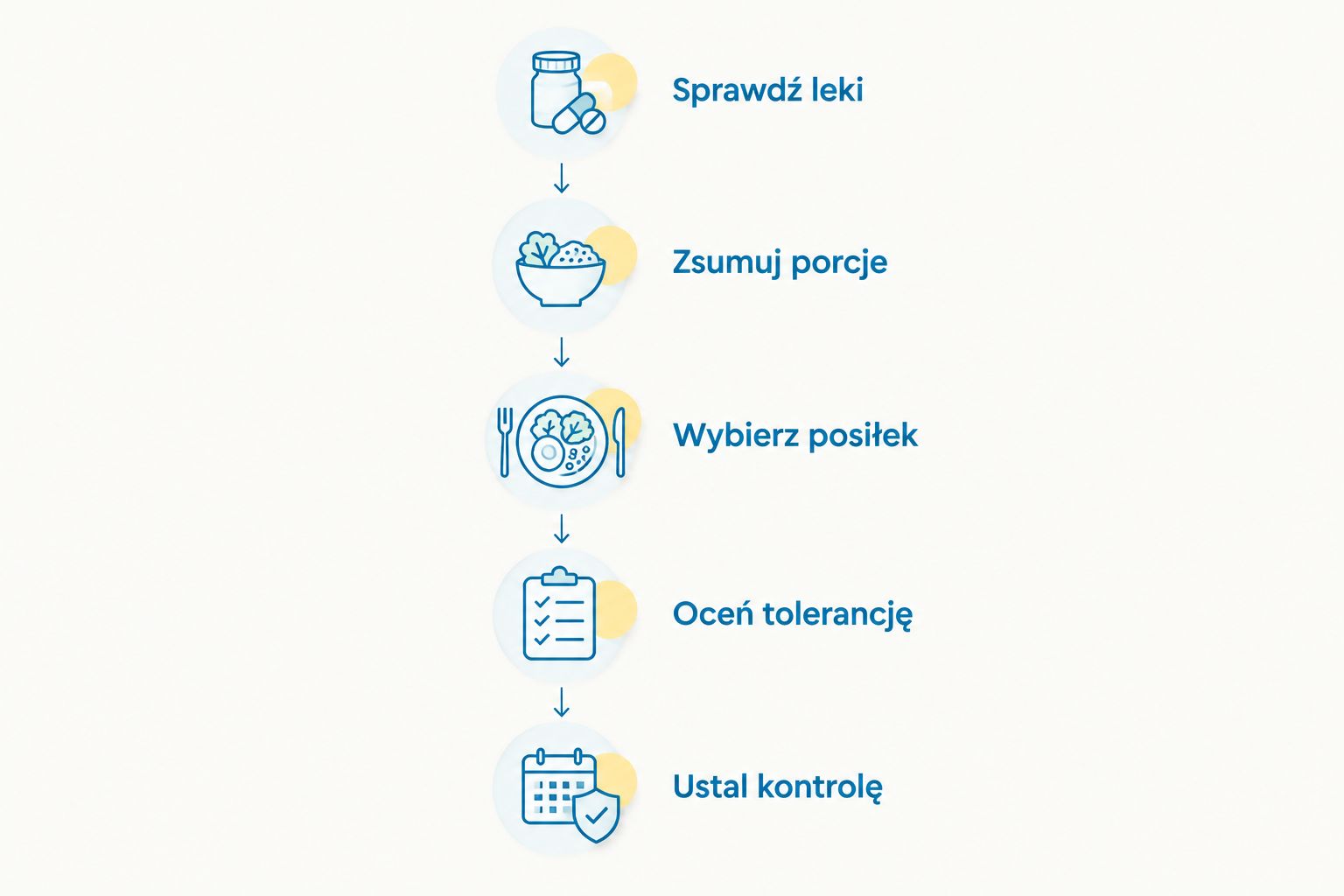
The diagram below helps to organize supplementation in 2026. It does not replace recommendations for treating the deficiency or instructions for using medications. Start with safety and only then choose a convenient time.
- Check medications. List all medications, including those taken periodically, and supplements. Your pharmacist will help you determine whether magnesium needs to be spaced out and whether you can use K2.
- Add up the portions. Check the amount of vitamin D and magnesium in all preparations. Include the multivitamin, combination products, and supplements recommended earlier.
- Choose your meal. D3 and K2 are fat-soluble, so a meal containing fat is a practical choice. You don't need to add a lot of oil.
- Assess tolerance. Magnesium taken orally causes diarrhea, nausea or abdominal discomfort in some people. If discomfort occurs, check the dosage and discuss changing the method of use.
- Establish control. If supplementation is due to a diagnosed deficiency or disease, stick to the established testing plan. Do not choose inspection dates solely based on product advertisements.
The order matters: first you rule out a medication problem, then you check the amounts, and finally you adjust your routine. This ensures that convenience does not replace safety assessments.
How to read doses on the label in 2026?
Compare the amount of an ingredient in a daily dose, not the number of capsules. Preparations have different recommended servings, and the large text on the packaging does not always describe the amount of the ingredient you will actually take.
The conversion factor for vitamin D is: 1 µg is 40 IU, i.e. international units. For example, 25 µg corresponds to 1000 IU. This is a conversion of units, not a dose recommendation for a specific person.
EFSA sets the upper tolerable intake level of vitamin D for adults at 100 µg per day, i.e. 4000 IU. It applies to total consumption, not to each capsule separately. It is not a target dose or an instruction for self-treatment of the deficiency.
In the case of magnesium, distinguish between the mass of the compound and the amount of magnesium itself. Information about the mass of citrate or other salt is not equivalent to the amount of magnesium. Look for an entry that describes the content of this ingredient in a serving.
European upper level 250 mg of magnesium per day refers to easily dissociated magnesium salts and magnesium oxide from supplements and added sources, not to the magnesium naturally present in ordinary foods. It was determined primarily because of the risk of diarrhea. It does not mean that you should limit vegetables, seeds or whole grains.
Why is the supplementation method different?
There is no one scheme that fits all. When creating a routine in 2026, the following are primarily important:
- Medicines. Magnesium affects the absorption of some preparations, and vitamin K interferes with the action of vitamin K antagonists.
- Kidney function. The kidneys are responsible for excreting magnesium; their failure increases the risk of its excessive concentration.
- Total intake. The same ingredient is often found in several preparations taken.
- Gastrointestinal tolerance. Magnesium-related symptoms make regular use difficult and require dosage assessment.
- Purpose of supplementation. Prevention, diagnosed deficiency and treatment of the disease are not the same situation.
- Menu. A magnesium supplement is not the only source of this nutrient; food must also be taken into account.
When not to establish the connection yourself?
If you are taking warfarin or acenocoumarol, do not start K2 on your own. Vitamin K affects the action of these drugs and the control of clotting. Also, do not discontinue the previously used K2 preparation yourself - discuss the change with the person conducting the treatment.
Kidney diseases require an individual assessment of magnesium. This applies especially to kidney failure, in which the body removes this ingredient more poorly. A blanket assurance that a supplement is safe is not enough in this situation.
Also consult D3 if you have elevated calcium levels, diagnosed calcium metabolism disorders or a disease affecting the metabolism of vitamin D. Do not try to solve such a problem by adding K2.
During pregnancy, while breastfeeding and when supplementing your child, choose preparations for a specific situation. This guide describes general rules for adults, not a formula for each age group.
Do you have to take magnesium in the evening and D3 in the morning?
No, magnesium does not have to be taken in the evening and D3 does not have to be taken in the morning. For most people, the practical timing depends on meals, tolerance and recommendations for other preparations. There is no general obligation to separate these ingredients at the beginning and end of the day.
If you have an easier time remembering to supplement at dinner, this routine is reasonable. If you feel discomfort after taking magnesium, do not stubbornly stick to the same time. However, changing the time does not replace checking the amount of the ingredient consumed.
Can magnesium be taken with medications?
Not with every drug. Magnesium limits the absorption of, among others, some antibiotics and oral bisphosphonates. The method of using levothyroxine and recommendations regarding mineral preparations are also important.
Set the interval for a specific drug, not for the entire category of supplements. Check the leaflet or ask your pharmacist, giving the name of the preparation. Do not extend the one antibiotic rule to all other drugs.
Does magnesium need to be tested for D3 and K2?
No, just taking D3 and K2 is not an automatic indication for magnesium testing. The need for testing is determined by symptoms, diseases, medications and physician assessment. Blood magnesium results must be interpreted in a clinical context.
The test is used to assess the body's supply of vitamin D 25(OH)D. This does not mean that every healthy person is obliged to be examined before starting prevention. If you are treating a deficiency, discuss the date of follow-up and the goal of therapy with your doctor.
How to approach SUPERSONIC Food supplements?


If you are considering Magnesium Complex and D3K2 Complex, start with labels and directions for use. Check the amount of ingredients in the daily dose, warnings and the composition of other preparations you are already taking.
SUPERSONIC Food is a brand for people looking for convenient nutrition and supplementation; convenience of choice does not replace individual dose assessment. The advantage of an established routine is that it is easier to remember about preparations. Its limitation is the risk of duplicating ingredients when you add subsequent supplements without adding up the portions.
Do not judge the compatibility of two preparations solely by their names. Before purchasing, compare current information on how to use it and discuss any interactions with your pharmacist. The mere combination of magnesium with D3 and K2 does not guarantee an additional effect.
What are these rules based on?
The reference points for this 2026 guide are the EFSA Tolerable Upper Intake Levels and the NIH Office of Dietary Supplements materials on magnesium, vitamin D, and vitamin K. They cover dietary safety, ingredient functions, and drug interactions.
The limits given are not the results of product testing or recommendations for every person. They do not replace Polish vitamin D prevention recommendations tailored to age and health situation. If there are discrepancies between the general guide and your individual doctor's recommendation, clarify the dosage with your treating provider.
FAQ
Can I take magnesium and vitamin D3 K2 with one meal?
Yes, you can usually take magnesium and vitamin D3 K2 with one meal if you have no contraindications or drug interactions. Take D3 and K2 with a meal containing fat, and adjust magnesium according to your tolerance and label recommendations.
Do you need to leave a gap between magnesium and D3 K2?
There is no general obligation to maintain a distance between magnesium and D3 K2. The interval is important especially in the case of certain drugs and must be determined based on the specific preparation.
Does vitamin K2 protect against vitamin D3 overdose?
No, vitamin K2 does not protect against D3 overdose. Excessive vitamin D intake leads to calcium disorders, even if you also take K2 and magnesium.
Does everyone who takes D3 need magnesium?
No, taking D3 does not automatically mean the need for magnesium supplementation. Magnesium participates in the metabolism of vitamin D, but the need for additional preparation is assessed taking into account the diet and health situation.
Can I take K2 if I am taking warfarin?
Do not take K2 yourself while taking warfarin. Vitamin K affects the action of this medicine, so discuss starting, changing the portion or discontinuing the supplement with your doctor; the same caution applies to acenocoumarol.
How much vitamin D is 100 µg?
100 µg of vitamin D corresponds to 4000 IU. EFSA indicates this value as an upper tolerable daily intake level for adults, rather than a target dose for each person.
Does magnesium need to be taken only before bed?
No, magnesium does not need to be taken before bed. Choose the time depending on your tolerance, method of using the preparation and possible intervals from medication.
What should I do if I have diarrhea after taking magnesium?
Check the amount of magnesium in your daily dose and discuss changing your use with your pharmacist or doctor. Do not increase portion sizes; severe or persistent symptoms require medical evaluation.
Finally: count the ingredients before changing the time
The easiest thing to miss is not the time of intake, but the repeated ingredient. D3 comes in a stand-alone preparation, a set with K2 and a multivitamin; Magnesium also appears in various combination products. Each of them must be included in the total serving.
Write down the names of all preparations and the amounts of ingredients you take daily. Show this list to your pharmacist, especially if you are taking medications. This is more useful than trying to find one "perfect" hour for magnesium and D3 K2.
The guide is educational in nature. It is not intended to diagnose deficiencies or independently determine treatment.
Related guides
- How to balance your diet with ready-made high-protein meals
- Supplements and high-protein meals on a low-carbohydrate diet


